


Ultimate Digital marketing is no longer optional — it is a powerful growth engine for modern businesses. However, the strategy that works for one business model may completely fail for another. Understanding the difference between B2B vs B2C digital marketing strategy is the key to building a high-converting, result-driven marketing system.
In this ultimate guide, you will discover the critical differences, proven strategies, high-impact channels, and powerful techniques that drive massive success in both B2B and B2C marketing.
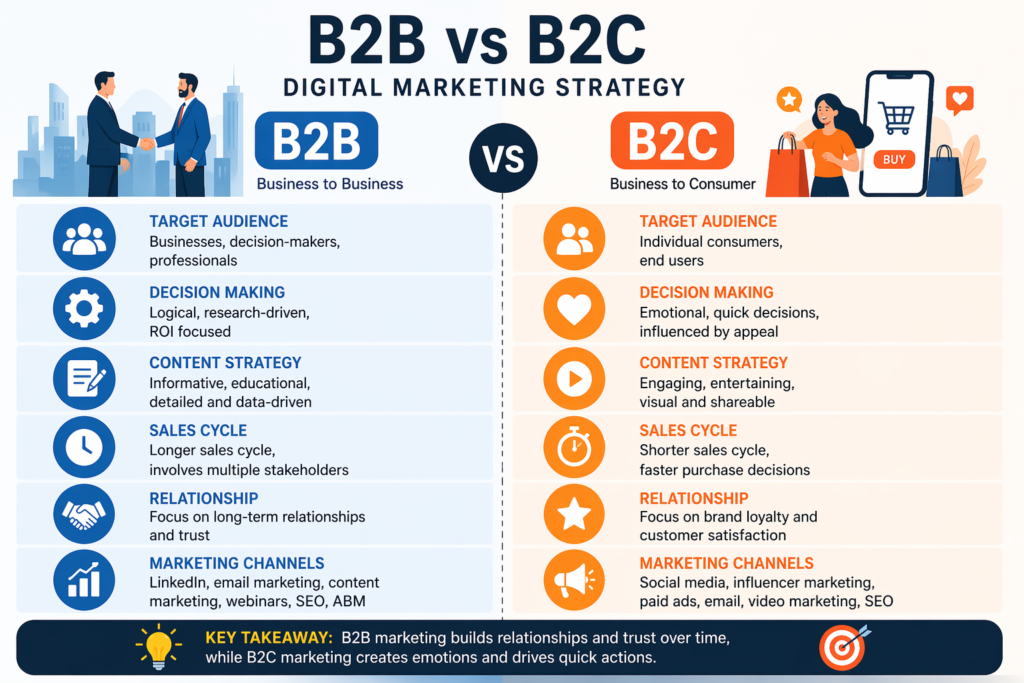
What is B2B Digital Marketing? (High-Value Lead Generation Strategy)
B2B (Business-to-Business) digital marketing refers to strategic marketing techniques used by companies that sell products or services to other businesses. The main goal is to generate qualified leads, build long-term relationships, and close high-value deals.
Key Characteristics of B2B Marketing
- Target audience: Business owners, CEOs, managers, decision-makers
- Longer and strategic sales cycle
- Logic-driven and ROI-focused decisions
- Relationship-based marketing approach
- High-ticket transactions
- Powerful B2B Digital Marketing Channels
- LinkedIn marketing for professional lead generation
- Advanced email marketing funnels
- Authority-building content marketing (whitepapers, case studies, industry reports)
- SEO-driven blog strategy for organic traffic growth
- Webinars and virtual events
- Account-Based Marketing (ABM) for targeted outreach
What is B2C Digital Marketing? (Fast-Growth Consumer Strategy)
B2C (Business-to-Consumer) digital marketing focuses on selling products or services directly to individual customers. The objective is to create strong brand awareness, emotional connection, and instant conversions.
Key Characteristics of B2C Marketing
- Target audience: Individual consumers
- Short and fast decision-making process
- Emotion-driven purchasing behavior
- Engagement-focused campaigns
- Scalable and repeat purchases
- High-Impact B2C Digital Marketing Channels
- Social media marketing (Instagram, Facebook, TikTok)
- Influencer marketing for viral reach
- High-converting paid ads (Google Ads & Meta Ads)
- Email campaigns with irresistible offers
- Short-form video marketing
- E-commerce SEO for traffic domination
Key Differences Between B2B and B2C Digital Marketing Strategy
Understanding these powerful distinctions can help you avoid costly marketing mistakes.
1. Target Audience Strategy
B2B marketing targets professionals and corporate decision-makers.
B2C marketing focuses on individual buyers seeking quick solutions.
2. Decision-Making Psychology
B2B decisions are logic-based, data-driven, and ROI-focused.
B2C decisions are emotional, impulse-driven, and experience-based.
3. Content Marketing Approach
B2B content is educational, detailed, and authority-building.
B2C content is engaging, entertaining, and visually compelling.
4. Sales Funnel Structure
B2B funnels are longer and require lead nurturing automation.
B2C funnels are shorter and optimized for rapid conversion.
5. Relationship vs Engagement Focus
B2B marketing builds long-term strategic partnerships.
B2C marketing builds brand loyalty and customer engagement.
Best B2B Digital Marketing Strategies for Explosive Growth
If you want predictable and scalable B2B growth, these strategies are essential:
1. Authority-Based Content Marketing
Create powerful blog posts, whitepapers, and case studies that position your brand as an industry leader.
2. LinkedIn Lead Generation Strategy
Use LinkedIn for strategic networking, targeted ads, and high-quality lead acquisition.
3. Advanced Email Nurturing Funnels
Develop automated email sequences that convert cold leads into loyal clients.
4. SEO for High-Intent Traffic
Target commercial and transactional keywords to attract serious decision-makers.
5. Account-Based Marketing (ABM)
Launch laser-focused campaigns targeting specific companies with personalized messaging.
Best B2C Digital Marketing Strategies for Maximum Sales
To achieve rapid sales growth in B2C, use these powerful techniques:
1. Social Media Domination
Create viral content, run contests, and use interactive posts to boost engagement.
2. Influencer Collaboration Strategy
Partner with trusted influencers to increase credibility and brand visibility.
3. Conversion-Focused Paid Advertising
Use retargeting ads and performance campaigns to maximize ROI.
4. High-Engagement Video Marketing
Short-form videos, product demos, and reels drive massive engagement.
5. Email Marketing with Irresistible Offers
Use limited-time discounts and exclusive deals to trigger immediate purchases.
Which is More Powerful: B2B or B2C Digital Marketing?
Both strategies are powerful — but they serve different purposes.
B2B marketing focuses on long-term revenue growth and high-ticket conversions, while B2C marketing drives fast sales, brand awareness, and scalable consumer engagement.
The secret to success is aligning your digital marketing strategy with your target audience and business model.
Conclusion:
The difference between B2B vs B2C digital marketing strategy lies in audience behavior, sales cycle, content style, and conversion process. Businesses that understand these differences can create high-converting campaigns, dominate their niche, and achieve sustainable growth.
Whether you operate in B2B or B2C, using a powerful, data-driven digital marketing strategy will unlock massive opportunities for business