


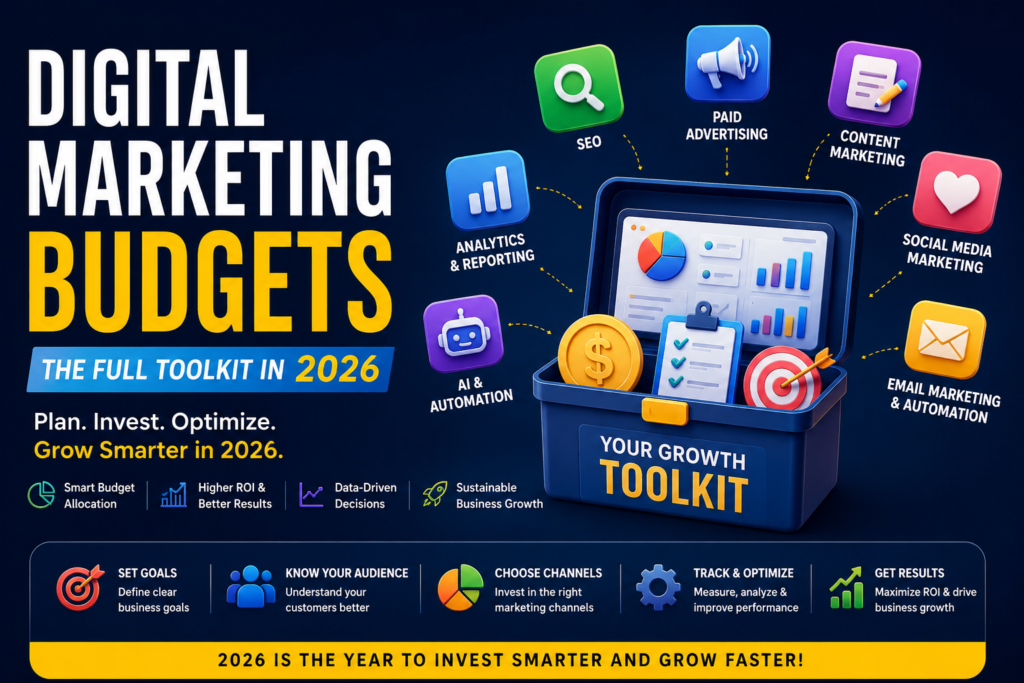
Digital marketing in 2026 is more advanced, competitive, and data-driven than ever before. Businesses are no longer investing randomly in advertisements. Instead, they are building a powerful Digital Marketing toolkit that combines SEO, paid advertising, social media marketing, content creation, email automation, analytics, and AI-powered tools.
A smart Digital Marketing Budgets is the secret weapon that helps businesses generate quality leads, increase brand awareness, improve customer engagement, and maximize ROI. Whether you run a startup, an eCommerce store, or a large enterprise, understanding how to manage your marketing budget effectively can completely transform your online growth.
In this complete guide, you will discover the most powerful digital marketing budget strategies, essential tools, budget allocation methods, and future trends shaping the online marketing industry in 2026.
Connect With Us: WhatsApp
Why Digital Marketing Budgets Are Crucial in 2026
A properly planned marketing budget helps businesses:
- Increase website traffic
- Generate high-quality leads
- Improve conversion rates
- Build long-term brand authority
- Reduce unnecessary spending
- Track campaign performance effectively
- Stay ahead of competitors
Without a clear budget strategy, businesses often waste money on ineffective campaigns and fail to achieve sustainable growth.
The Powerful Core Components of Digital Marketing Budgets
Search Engine Optimization (SEO)
SEO remains one of the most cost-effective and long-term digital marketing investments. Businesses in 2026 are heavily investing in:
- Keyword research
- Technical SEO
- Website speed optimization
- Mobile SEO
- Voice search optimization
- Local SEO
- AI-driven content optimization
SEO helps websites rank higher on search engines, bringing consistent organic traffic without relying completely on paid ads.
Paid Advertising
Paid advertising delivers instant visibility and faster results. Businesses allocate a large part of their marketing budget to:
- Google Ads
- Facebook and Instagram Ads
- YouTube Ads
- LinkedIn Advertising
- Display campaigns
- Retargeting ads
Paid campaigns are highly effective for lead generation, sales, and brand awareness when managed strategically.
Online marketing planning in 2026 is essential for business growth and brand visibility
Content marketing is one of the most powerful growth strategies in 2026. High-quality content helps businesses educate, engage, and convert customers.
Popular content investments include:
- Blog writing
- Video content
- Infographics
- Landing pages
- Case studies
- Educational guides
- Advertising
- AI-assisted content creation
Strong content improves SEO rankings and builds customer trust.
Social Media Marketing
Social media platforms continue to dominate digital engagement. Businesses invest in:
- Social media management tools
- Influencer marketing
- Reels and short-form videos
- Community engagement
- Paid social campaigns
- Brand storytelling
A strong social media presence increases brand loyalty and audience interaction.
Email Marketing and Automation
Email marketing still delivers one of the highest returns on investment. Businesses use automation tools for:
- Lead nurturing
- Personalized campaigns
- Newsletter marketing
- Customer retention
- Promotional campaigns
Automation saves time while improving customer communication and conversions.
Analytics and AI Marketing Tools
Data-driven marketing is essential in 2026. Businesses invest in advanced analytics tools to track performance and optimize campaigns.
Popular investments include:
- Website analytics
- Heatmaps
- Conversion tracking
- AI reporting tools
- Predictive analytics
- Customer behavior analysis
These tools help businesses make smarter marketing decisions.
Smart Budget Allocation Strategies
A winning Digital Marketing budget should balance long-term growth and short-term results.
Recommended Budget Allocation:
| Marketing Channel | Budget Percentage |
|---|---|
| SEO | 20% |
| Paid Advertising | 35% |
| Content Marketing | 15% |
| Social Media | 15% |
| Email Marketing | 5% |
| Analytics & AI Tools | 10% |
Businesses should continuously optimize their budget based on campaign performance and business goals.
Common Digital Marketing Budget Mistakes to Avoid
Many businesses fail because they make these costly mistakes:
- Ignoring SEO completely
- Spending too much on ads
- Not tracking conversions
- Creating low-quality content
- Avoiding automation tools
- Failing to test campaigns
- Ignoring mobile optimization
Avoiding these mistakes can significantly improve marketing ROI.
Future-Proof Digital Marketing Trends in 2026
The future of digital marketing is becoming more personalized and AI-driven. Businesses are expected to invest heavily in:
- AI-powered marketing automation
- Voice search optimization
- Video-first marketing
- Omnichannel campaigns
- Predictive customer targeting
- Interactive content
- Privacy-focused advertising
Companies that adapt quickly to these trends will dominate the digital market.
Frequently Asked Questions (FAQs)
1. What is a digital marketing budget?
A digital marketing budget is the planned amount of money businesses spend on online marketing activities such as SEO, ads, content marketing, and social media.
2. Why is SEO important in digital marketing budgets?
SEO helps generate long-term organic traffic and improves website visibility without relying completely on paid advertisements.
3. How much should businesses spend on digital marketing?
Most businesses spend between 7% to 15% of their total revenue on digital marketing, depending on industry and growth goals.
4. What are the best tools for digital marketing in 2026?
Popular tools include Google Analytics, SEMrush, Ahrefs, HubSpot, Canva, ChatGPT, and AI-powered automation platforms.
5. Is paid advertising better than SEO?
Both are important. Paid advertising delivers fast results, while SEO provides long-term sustainable traffic.
6. How does AI help digital marketing?
AI helps automate campaigns, personalize customer experiences, analyze data, and improve marketing efficiency.
7. What is the biggest digital marketing trend in 2026?
AI-powered automation and personalized marketing experiences are among the biggest trends in 2026
8. Why is content marketing important?
Content marketing builds trust, improves SEO rankings, educates audiences, and increases conversions.
9. How can businesses reduce marketing costs?
Businesses can reduce costs by improving SEO, using automation tools, optimizing campaigns, and targeting the right audience.
10. What is the future of digital marketing?
The future of digital marketing includes AI automation, voice search, advanced analytics, immersive experiences, and data-driven personalization.
Conclusion
Digital marketing budgets in 2026 are no longer just about spending money — they are about building a powerful growth engine for long-term business success. From SEO and paid advertising to AI-powered automation and advanced analytics, every part of the digital marketing toolkit plays a crucial role in maximizing online visibility and revenue.
Businesses that invest strategically, track performance consistently, and adapt to emerging trends will gain a massive competitive advantage in the digital world. A smart, flexible, and data-driven marketing budget is the ultimate key to dominating the online market in 2026 and beyond.