

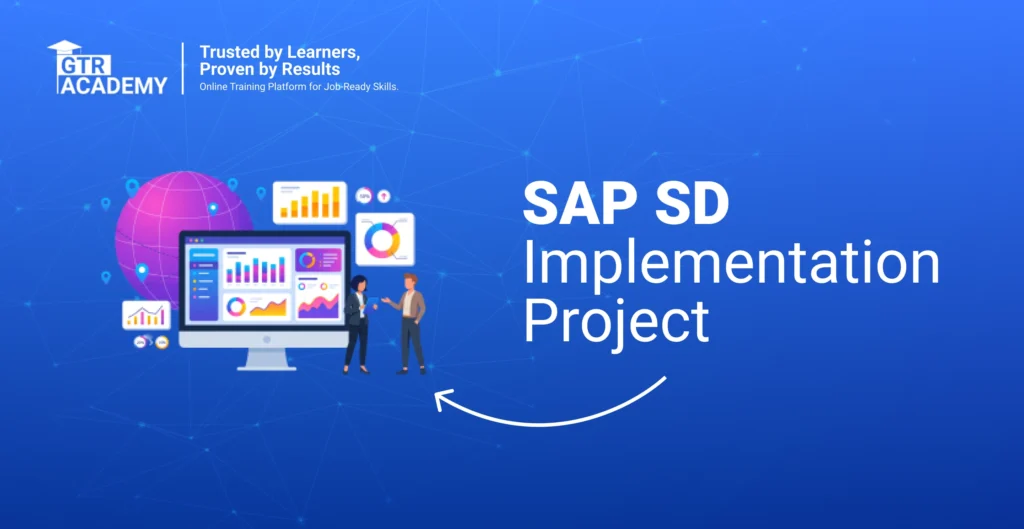
The sales and distribution processes of SAP are implemented in a clear sequence. A typical SAP SD implementation project consists of six phases from scoping to post go live support. SAP SD (Sales and Distribution) is the module of the management of customer inquiries, quotations, sales orders, delivery, billing and pricing. Below each stage is described in layman terms and then some tips are given on how to develop skills to work on such projects.
Connect With Us: WhatsApp
What Is SAP SD, and What Does It Cover?
SAP SD controls the Order to Cash cycle. This course is closely related to Materials Management (MM), Finance (FICO) and Production Planning (PP).
The main parts are as follows:
- Material and customer master data
- Pricing and Condition Approach
- Sales document processing (inquiry, quotation, order)
- Shipping & delivery
- Billing & Invoicing
- Operational and credit management results
What Are the Key Steps in an SAP SD Implementation?
Most projects are using SAP’s Activate methodology, which is tailored for the business.
1. Project Preparation
The team will set scope, goals, timelines, budget and roles. All three are interfaced with SD so sales, logistics and finance stakeholders are identified early on.
2. Business Blueprint (Explore)
The consultants run workshops to record the current state of how the company sells: what kinds of orders, pricing rules, shipping points, billing requirements, etc. The output is a blueprint that defines business requirements and maps them to SAP standard process and Gaps.
3. Configuration (Realize)
This is where the SD consultant rolls up their sleeves Typical duties include
- Defining the enterprise structure (sales area, distribution channel, division)
- Setting Up Sales Document Types and Item Categories
- Designing Pricing Procedures and Condition Types
- Define shipment types, delivery types and billing types
- MM Integration with FICO
4. Data Migration and Testing
Loading and cleaning of customer masters, material masters and open orders To this is added layered testing i.e. unit testing, integration testing across modules and user acceptance testing (UAT).
5. Training and Cutover Preparation
Business users are trained on new processes and a detailed cutover plan is developed including data freeze, final loads and rollback options.
6. Go-Live and Support
The system is live and the hyper care period starts, where consultants will be fixing issues on the fly and stabilizing the operations.
Who Should Learn SAP SD?
This can be useful for fresh graduates, sales and logistics professionals, ERP support staff or for anyone moving into SAP Consulting. Knowing the basics of business processes helps, but you don’t need to know how to code to begin.
How to Choose the Right SAP SD Training
If you would like to work on real projects, the quality of your SAP SD Training is important. When looking for the best SAP SD training course options consider:
- Curriculum covering the entire order-to-cash cycle for the industry
- Practical trainers with hands-on implementation experience
- Real time experience on a live SAP system Real scenarios like pricing configurations, billing instances
- Classes live or flexible to suit your schedule.
- Resumes & Interview Assistance
- 100% Job Assistance & Career Counseling Certification guidance (If Applicable)
A good SAP SD course will teach you how to Configure and troubleshoot and not just memorize the screens.
Where GTR Academy Fits In
GTR Academy provides SAP SD Training with real-time practice, project-oriented learning, expert trainers, interview preparation, and 100% Placement Assistance. Its practical approach helps learners understand each implementation phase and how configuration decisions affect real-world business operations.
Frequently Asked Questions
1. How long does an SAP SD implementation project take?
Depends on company and size of scope. Small rollouts can take months. Big projects with multiple countries can take a year or more.
2. What is the role of an SAP SD consultant in an implementation?
They gather requirements, configure the SD module, coordinate testing, help with data migration and help users post go live.
3. What are the main phases of an SAP SD implementation project?
The major phases are: project preparation, business blueprint, configuration, testing and data migration, cutover and training and go live support
4. Is SAP SD certification necessary to work on projects?
Although you don’t need a SAP SD certification, it can help to enhance your profile and demonstrate to employers that you possess validated knowledge.
5. What should I look for in an SAP SD course?
Learn about real system access, real life scenarios, expert trainers, interview prep and career support.
Connect With Us: WhatsApp
Recommended Blogs:
Data Scientist in India: What Should You Learn to Become Job-Ready?
SAP SD Course vs SAP SD Certification: What Is the Difference?
Conclusion
The approach to a SAP SD Implementation Project is systematic and comprises of: Preparation, Blueprinting, Configuration, Testing, Training and Go-live Support. Understanding these steps really puts you ahead, whether you’re looking to join a project team or develop as a consultant. Look for training that mixes concepts with hands-on configuration and career support. Consider getting a SAP SD certification to prove your skills.