

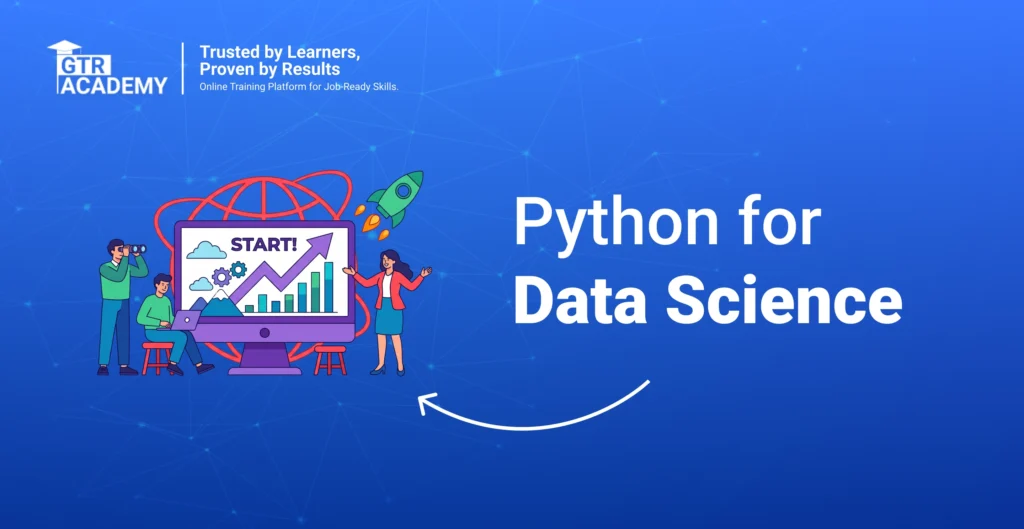
If you want to get into analytics, or AI, the most useful first step is to learn Python for Data Science. Python is an easy to learn language for new beginners. Data scientists use it for data cleaning, pattern finding, visualization, and training models with machine learning. The roadmap is about what to learn, in what order and how to pick the best training.
Connect With Us: WhatsApp
What Is Data Science, and Why Python?
Data science is about using statistics, programming and machine learning to turn raw data into useful knowledge. Data science can be used by a retailer to try and predict demand next month, just as a bank can use it to flag suspicious transactions.
Here are 3 reasons Python has become the default in the industry: Its syntax is almost plain English like, has a huge library ecosystem, and connects easily with databases, cloud platforms and AI tools.
What Should You Learn, Step by Step?
Step 1: Python Basics Variables, data types, loops, functions, file handling basics.
Step 2: Get to know the data Learn Numpy for numerical work. Learn how to clean and analyze tabular data using Pandas.
Step 3: Imagine it. Matplotlib and Seaborn are all about converting numbers into charts that people can act upon.
Step 4: SQL & Stats SQL & Stats : Hypothesis testing , distributions and probability . SQL to pull data from databases.
Step 5: Learn Machine. scikit-learn offers classification, regression and clustering.
Step 6: The basics of generative AI Deep learning and AI models are becoming increasingly common in modern programs, and many students want to opt for an online Data Science AI Course rather than a purely traditional one.
Which Tools Do You Need?
Pandas and Numpy for coding in Jupyter notebook or Google colab Scikit-learn for building models. Git for version control You can make business dashboards in Power BI or Tableau.
Which Projects Should Beginners Build?
Projects show your skill way more than certs do. Good projects for beginners are:
- Dashboard & Sales Data Analysis
- House price forecasting
- Customer Churn Prediction
- Movie recommender system .
- Product Review Sentiment Analysis
Upload your code to github, so that recruiters can see it.
Who Should Learn It?
Students, recent graduates, professionals seeking a career change and analysts looking to upskill. No computer science degree required, but comfort with basic math helps.
What Careers Does It Lead To?
Common job titles include: data analyst, business intelligence analyst, junior data scientist, and machine learning associate. It’s city to city, skills and market conditions. Do the work to gain real skills.
How to Choose the Right Data Science Course
A good data science course should teach you:
- Industry relevant curriculum in Python, statistics, SQL, machine learning & AI
- Trainers are practitioners who have worked on actual projects
- Live coding, practical exercises, no slides.
- Portfolio projects for your portfolio.
- Live, flexible classes that integrate into the lives of students and working professionals
- Interview prep (mock interviews, resume help, etc. )
- 100% Job Assistance & Career Guidance
- Credibility-adding certification
Read syllabi, ask to see sample projects and talk to previous learners before you sign up. When looking into the AI online courses, make sure the program includes doubt clearing sessions and recorded backups.
GTR Academy provides Data Science with AI Training focused on practical learning, expert-led sessions, hands-on projects, interview preparation, and 100% Placement Assistance to support learners in their career journey.
Frequently Asked Questions
1. Is Python for data science easy for beginners?
Yes. Python is one of the easier languages to learn due to simple syntax. Most beginners can get the hang of the basics within four to six weeks of consistent practice.
2. How long does it take to learn data science with Python?
The majority of learners will need 6-9 months to be job ready, depending on the amount of practice time and experience they have.
3. Do I need a math background for a data science course?
No advanced math needed to start. A little basic algebra, stats and probability will get you started, and you can build up a deeper knowledge as you go along.
4. Can I learn data science and AI online?
Yes. A quality online data science AI course with live classes, projects and mentor support can be as effective as classroom training.
5. What should I look for in AI online course training?
Look for practical curriculum, experienced trainers, real time projects, interview preparation, certification & placement assistance.
Connect With Us: WhatsApp
Recommended Blogs:
How to Start a Data Science Career in 2026
SAP FICO Course Fees in India 2026: Complete Cost Guide
Conclusion
Python for Data Science: Step-By-Step Manual: Basics, Data Processing, Visualization, Statistics, SQL, Machine Learning, AI Get some hands on experience. Learn to do, with expert mentors and career support. The important thing is consistency not speed.