
Mastering the intersection of finance and technology is the most definitive way to secure a high-paying, future-proof career. This comprehensive guide explores why SAP FICO Certification Training remains the gold standard for enterprise resource planning and how you can leverage certification to double your salary and career prospects.
Connect With Us: WhatsApp
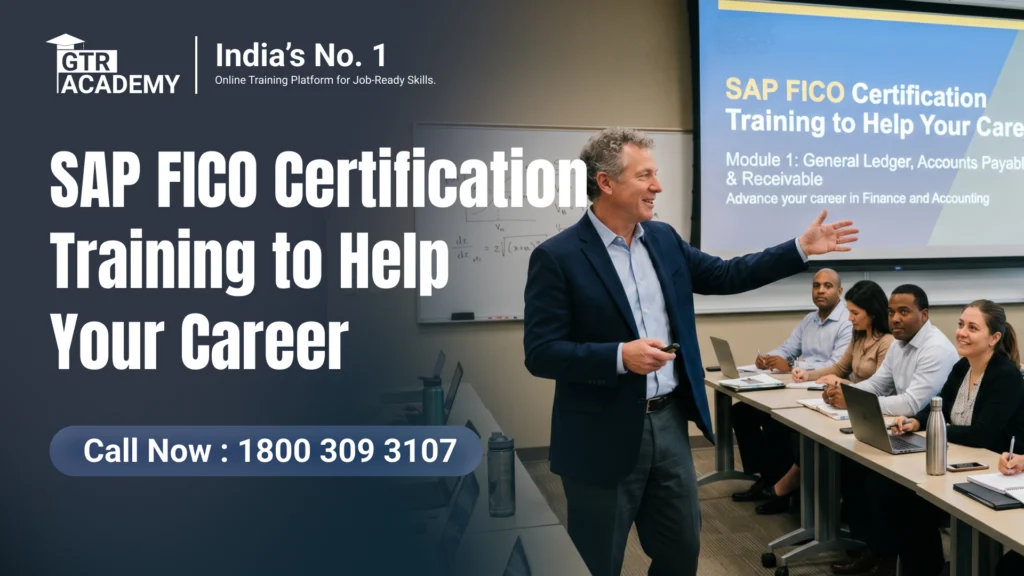
SAP FICO Certification Training to Help Your Career
A few years ago, one of my friends was stuck in a typical accounting job that paid average wages, required long hours, and offered little chance for advancement. He works as a SAP FICO consultant now, makes almost twice as much money, and recruiters call him instead of him looking for jobs.
What happened?
He paid for SAP FICO Certification Training to help his career. That’s the truth today: skills that mix finance and technology are not only useful, but also very useful. SAP FICO is right in the middle of that intersection.
Why SAP FICO Is Still Popular (And Getting More So)
Let’s not make it too hard. Every business, no matter how big or small, needs to handle its money. Not just basic bookkeeping, but also keeping track of finances in real time, making sure you follow the rules, reporting, and making predictions.
That’s where SAP FICO comes in. Companies use SAP to automate everything instead of having to deal with Excel sheets and manual entries. And they need professionals who have been trained to run that system. That’s why people who have SAP Certification don’t stay out of work for long.
The Role of SAP FI (Financial Accounting)
The “FI” module is the backbone of the system, focusing on external reporting. It allows organizations to manage financial transactions in a unified way, providing a clear picture of the company’s financial health to stakeholders, banks, and tax authorities.
The Role of SAP CO (Controlling)
The “CO” module is designed for internal decision-making. It provides the data needed to plan, track, perform, and report on costs. By understanding cost centers and profitability analysis, management can make informed choices about the company’s direction.
Who Should Really Think About Taking This Course?
You don’t have to be a computer whiz to learn SAP FICO. In fact, most people who do well in this field have a background in finance. If you fit into any of these groups, an online SAP FICO Certification course could really change the course of your career:
- A B.Com or M.Com graduate who is wondering, “What’s next?”
- An MBA student in finance who wants to move up in their career.
- Someone who works in accounting but feels stuck.
- Even someone who works in IT and wants to move into functional roles.
What Makes SAP FICO Training a Good Idea?
There are a lot of courses out there, so let’s be honest: why this one?
It Fills a Real Need
Companies don’t just want bookkeepers anymore. They want people who know how systems work. SAP FICO gives you an edge in a competitive market where digital literacy is mandatory.
It Pays Well (And All the Time)
Entry-level pay is good, but you can make a lot more money as you gain experience. The jump is clear in just a few years. Unlike general accounting, SAP consulting offers a steep salary trajectory.
It’s Not Going Out of Style
Some tech skills fade over time, but ERP systems like SAP are deeply rooted in businesses. They won’t be going away any time soon. As companies migrate to S/4HANA, the demand for FICO experts is only increasing.
What You’ll Really Learn (No Fluff)
A good online SAP FICO certification course doesn’t just teach theory. It’s learning by doing. You’ll work on practical modules that mirror real-world business scenarios.
Core Components of SAP FI
- General Ledger (GL) Accounting: The core of FI where all financial data is recorded.
- Accounts Payable (AP): Managing vendor transactions and payments.
- Accounts Receivable (AR): Handling customer invoices and incoming payments.
- Bank Accounting: Managing bank transactions and reconciliation.
- Asset Accounting (AA): Managing the lifecycle of fixed assets from acquisition to retirement.
Core Components of SAP CO
- Cost Element Accounting: Categorizing costs and revenues.
- Cost Center Accounting: Tracking where costs are incurred within the organization.
- Profit Center Accounting: Evaluating the profit and loss of individual business units.
- Internal Orders: Tracking costs for specific short-term projects.
- Profitability Analysis (CO-PA): Analyzing the profitability of segments by product, customer, or region.
Online vs. Offline Training: Which is Better?
Take Online Training if:
- You’re either working or going to school.
- You need to be able to change your schedule.
- You like to learn at your own speed.
Choose Offline Training if:
- You learn better in a physical classroom environment.
- You want to talk to people and instructors directly.
- You need a more disciplined, structured routine.
A lot of people today like a SAP online course with placement because it gives them both freedom and professional support.
A Quick Look at Placement in the Real World
Let’s be honest: no course can promise you a job. But a good SAP FICO course with job placement can definitely help you get a job by:
- Helping you make a strong, ATS-friendly resume.
- Giving practice interviews to build confidence.
- Getting you in touch with a network of recruiters.
Ultimately, your practice and understanding of the system are what really count during the hiring process.
Career Opportunities After SAP FICO
You can do more than one job after you finish your training. The versatility of the certification allows you to enter various sectors, including Manufacturing, IT, Finance, and Consulting.
- SAP FICO Consultant: Implementing and configuring the system for clients.
- Financial Analyst: Using SAP data to drive business insights.
- Accounts Executive: Managing daily financial operations within the SAP environment.
- ERP Consultant: Advising businesses on how to optimize their enterprise resources.
How to Pick the Best Training Center
This part is very important. The most expensive SAP FICO training school in India is not always the best one. Always conduct thorough research before enrolling.
What to look for:
- Expert Trainers: Instructors should have real-world industry experience.
- Hands-on Work: Look for courses that emphasize live server access over PowerPoint slides.
- Server Access: Ensure you get enough “lab time” to practice transactions.
- Placement History: Check their track record for helping students secure roles.
Common Pitfalls: Things You Shouldn’t Do
Many people begin SAP FICO but don’t see any results. It usually comes down to a few common errors:
- Only thinking about theory: You cannot learn SAP by just reading; you must practice.
- Lack of Consistency: Not practicing on a regular basis leads to forgetting complex configurations.
- Choosing Price over Quality: Picking the cheapest course often results in outdated materials or poor support.
- Unrealistic Expectations: Expecting instant results without putting in the study hours.
Frequently Asked Questions
1. Is it hard to learn SAP FICO?
Not really. While the system is vast, you can learn it step by step if you know the basics of accounting. The logic follows standard financial principles.
2. Is it possible to do SAP FICO without a background in finance?
It is possible, but it helps immensely to know about finance. Those without a background may need to spend extra time learning accounting fundamentals first.
3. How much does it cost to get the SAP FICO certification?
Usually between ₹70,000 and ₹1,50,000. This typically includes the training program and the official certification exam fee.
4. Are there any free SAP classes?
Yes, but free SAP online courses with certificates are usually only for the basics. For professional-grade consulting skills, paid training is generally required.
5. How long does it take to finish?
Depending on your pace and the depth of the course, most programs last between 2 and 4 months.
Connect With Us: WhatsApp
Recommended Blogs:
Data Science vs AI: Which Career is Better? 2026
Best SAP MM Certification Cost & Course Details 2026
Where to Learn SAP SD in Pune with Live Projects & Job Assistance in 2026?
Last Thoughts
Learning SAP FICO can be a good idea if you feel stuck in your current job or don’t know what to do next. It’s not a quick way to get what you want, but it’s a strong, reliable way. There is a real need. There are chances available. But the result depends on how seriously you take it, just like with any other skill.