
A good SAP FICO Online Training program should include hands-on projects that are similar to real finance operations like enterprise structure setup, GL and sub-ledger configuration, procure-to-pay and order-to-cash cycles, asset accounting, period-end closing, and cost center reporting. Without these you learn theory, but you cannot work on a live system.
Connect With Us: WhatsApp
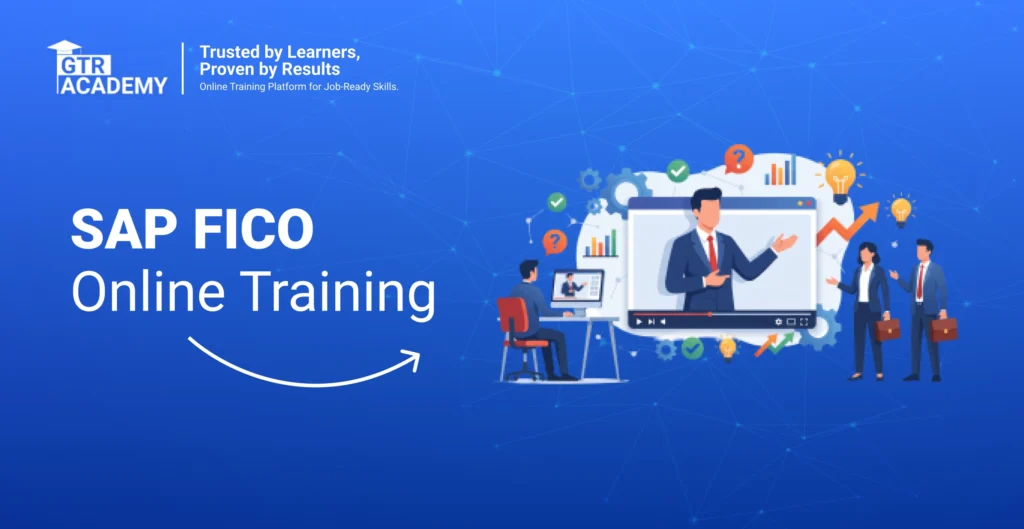
What Is SAP FICO?
SAP FICO contains two modules of SAP ERP. FI (Financial Accounting) captures the external financial transactions of the company including ledgers, payables, receivables and statutory reporting. CO (Controlling) is for internal management accounting such as cost tracking, budgeting and profitability analysis.
FI is “What did we earn and spend?” CO is “Where, and why? So, learning the SAP FICO module means understanding them both.
What Will You Learn in SAP FICO Training?
A good curriculum includes:
- Enterprise structure : company code, chart of accounts , fiscal year variants
- Accounts Payable & Accounts Receivable General Ledger
- bank and asset book
- Internal orders, cost centers, profit centers
- Integration with MM and SD
- Financial reporting and period end close
Most training is done in a SAP S/4HANA or ECC practice system. No ABAP knowledge is required, but elementary accounting knowledge is helpful.
Which Practical Projects Should SAP FICO Training Include?
Look for projects such as these:
- Defining Enterprise Structure. Create a company code Assign a company code to a chart of accounts Define fiscal year variants Define posting periods This is the basis of any implementation.
- GL Account Configuration and Posting Create chart of accounts. Define account groups. Post journal entries including recurring and parked documents.
- Procure to Pay Cycle. Set up vendor master data and automatic payment programs. Performing a full cycle from purchase order to goods receipt, invoice verification and payment to vendor.
- Order to Cash Process. Process customer invoices, incoming payments, dunning and credit management integrated with SD.
- Assets accounting. Define asset classes, depreciation areas and perform acquisition, depreciation and retirement.
- Project Control. • Set up cost centers, allocation cycles, internal orders and basic profitability analysis report.
- Month End & Year End Closing. Foreign currency valuation, accruals, depreciation runs and balance carry forwards. Most of the time of real finance teams is spent on closing.
Good training ties these together into one end-to-end business scenario instead of treating each as an isolated exercise.
Who Should Take SAP FICO Training?
- Commerce, Accounting & MBA Finance Graduates
- Accountants and Finance executives in practice changing to ERP roles
- SAP consultant / analyst jobs for freshers
- SAP Implementation or Support Professionals in Training.
How Do You Choose the Right Training?
Consider these factors:
- Current curriculum: Is S/4HANA part of it, not just legacy ECC?
- Experienced trainers: preferably people who have been working on implementations.
- Practical System Access Practice is more important than slides
- Real world projects: Before you sign up, ask for the list of projects.
- Live classes + recordings for revision (Flexible schedule)
- Interview Advice and Career Support including Resume Assistance and Mock Interviews.
- Placement help: Find help that’s real, not false hope.
- Certification guidance: “ SAP FICO certification is provided by official SAP exams and training should prepare you for the syllabus.
What Mistakes Do Beginners Make?
- Memorizing T-codes and not knowing the accounting logic
- Without integration with MM and SD
- Ignoring end of period close
- Selecting a course with no practice system access
Where Does GTR Academy Fit In?
GTR Academy provides SAP FICO training with practical learning, expert trainers, project-based sessions, interview preparation, and 100% placement assistance. Learners work on real business scenarios through guided projects and career preparation. Results always depend on individual effort and skills.
Frequently Asked Question
1. What projects are included in SAP FICO online training?
Standard projects include the configuration of enterprise structure, GL, procure-to-pay, order-to-cash, asset accounting, cost center accounting and period-end closing.
2. Is SAP FICO training suitable for beginners?
Yes. A good program teaches SAP concepts from scratch and basic accounting knowledge is enough.
3. How long does SAP FICO training take?
Most programs last 2 to 3 months, depending on batch pace and depth of practical work.
4. Do I need SAP FICO certification to get a job?
Not always but certification makes you more attractive.” Employers also like to see you have project experience.
5. Can SAP FICO online training give me real project experience?
Yes, if it offers system access and end-to-end scenarios. Check out the list of projects before you join.
Connect With Us: WhatsApp
Recommended Blogs:
How Does SAP MM Training Teach Purchase Order Management?
What Does SAP FICO Training Teach You About Business Finance?
Conclusion
The best SAP FICO online training covers enterprise setup, GL, AP/AR, Asset Accounting, Controlling, Integration Scenarios and Closing exercises all on a real SAP system. Pick a program with current content, experienced trainers, and good career support, and use the projects to build a portfolio you can talk about in interviews.