
Choosing an SAP functional module can be hard. MM, FICO, SD and more all connect business processes to enterprise software. The main difference is the business responsibility. An SAP SD Course is mainly about sales, customer orders, pricing, delivery, billing and the entire Order-to-Cash process.
Connect With Us: WhatsApp
What Makes SAP SD Different?
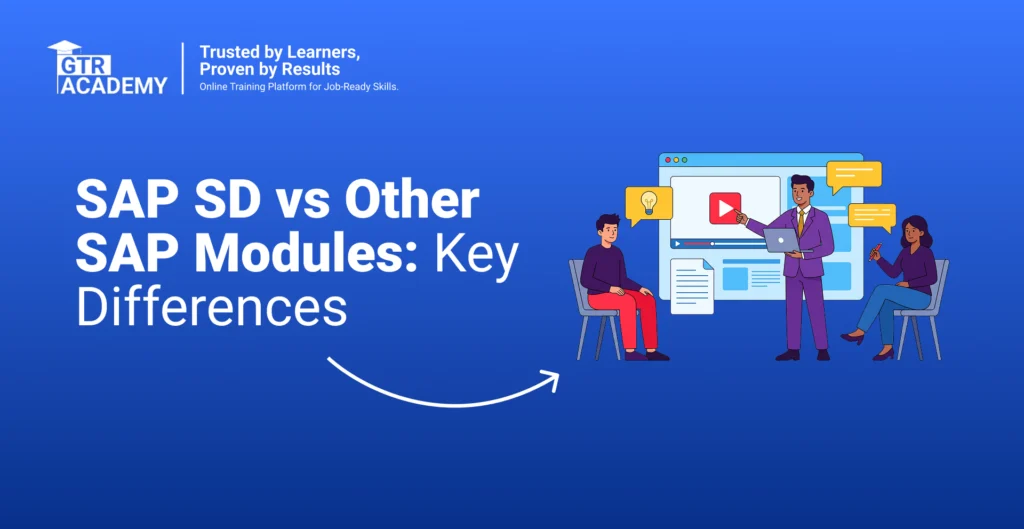
SAP SD (Sales and Distribution) is integrated to the customer-facing side of a business. Other functional modules concern finance, procurement or production. SD addresses how a company sells and delivers products or services.
An example of a typical SD process can include:
- Customer inquiry and quote
- Create sales order
- Availability & Delivery handling
- Picking and goods issue
- Invoicing and billing
- Sales reporting – customer related
This makes SD especially useful for those learners interested in sales operations, logistics and customer order management.
SAP SD Course vs Other SAP Functional Modules
The biggest difference is better seen when you look at their core business areas:
| Module | Primary Business Focus |
|---|---|
| SAP SD | Sales, distribution, pricing, delivery, billing |
| SAP MM | Procurement, purchasing, inventory, materials |
| SAP FICO | Financial accounting and controlling |
| SAP PP | Production planning and manufacturing |
These modules are not independent. For example, an SD billing document would impact finance and sales requirements could interact with material and inventory processes.
Learning SD also gives students an understanding of cross module integration which is vital for functional consulting.
What Do You Learn in an SAP SD Course?
A good program should not only explain transaction codes. Learners should understand how business processes work from beginning to end.
The common important areas are:
- Structure of enterprise and organizational elements
- Material and customer master data
- Processing of sales documents
- Pricing and condition methods
- Checks for availability
- Shipping & Delivery process
- Selection and dispatch of goods
- Processing Billing and Invoicing
- Credit management policies
- Determination of output
- MM and FICO integration
- Fundamentals of troubleshooting and configuration 2.
Practical exercises are very helpful because it helps the learners comprehend the reason behind a process, not just memorizing.
Why Practical Learning is Important in SAP SD Training
SAP SD is process oriented and hands on practice can make a huge difference. Students should not only study theory but also work through realistic scenarios such as creating a sales order, processing a delivery, completing goods issue and generating billing.
Ideally, a good SAP SD training program should have:
- Live system practice
- Business scenarios
- Demonstration of configuration
- Troubleshooting activities
- Hands-on project experience
- Interview style questions
This method helps in bridging the gap between the classroom learning and duties of a functional SAP professional.
Who Should Choose SAP SD?
SAP SD is good for:
- Recent grads looking for ERP careers
- Sales and distribution specialists
- Logistics & Business Process Professionals
- SAP Functional Consulting for Beginners
- SAP career transition for working professionals
You don’t need to be a pro programmer. SAP SD is mainly a functional area, but some basic technical knowledge is helpful in interacting with developers and technical teams.
How to Choose the Best SAP SD Training Course
Compare programs on learning quality not just price or length of course before signing up.
Search for:
- Curriculum focused on end-to-end sales processes, relevant to the industry.
- Hands-on Trainers who can provide real life Business Scenarios.
- Hands-on work in a SAP environment.
- Real-life projects demonstrating process knowledge.
- Flexible learning options including live online classes where applicable
- Interview Preparation and Career Coaching.
- SAP SD Certification Guidance: How Certification Fits Your Career Plan
- 100% Placement Assistance if career support is an important need.
GTR Academy is a place for students who are looking for practical SAP training, professional trainers, real-time projects, interview guidance, career support and 100% Placement Assistance.
Common Mistakes Beginners Should Avoid
Don’t choose a program that advertises a short duration or low fee. And don’t only focus on transaction codes. Much more valuable learning for the long-term is to understand business flow and integration between SD, MM and FICO.
Frequently Asked Questions (FAQ’s)
What is SAP SD Course?
An SAP SD course covers sales and distribution processes such as sales orders, pricing, delivery, shipping, billing and integration.
Difference between SAP SD and SAP MM?
SAP SD deals with sales and customer distribution processes and SAP MM deals with procurement, purchasing and inventory management.
Is SAP SD good for freshers?
Yes. Basic knowledge of business process and structured practical training help beginners to learn SAP SD.
Do I need SAP SD certification for job?
The certification may be proof of your knowledge, but you also need to have practical SAP skills, an understanding of processes and relevant experience.
What should be the best SAP SD training course content?
The best SAP SD training course should cover practical system exercises, end-to-end business scenarios, integration concepts, projects, interview preparation and career guidance.
Connect With Us: WhatsApp
Recommended Blogs:
What Makes an SAP MM Course Online Future-Ready for S/4HANA?
Which is the Best Online SAP FICO Training 2026
Conclusion
The main difference is that it is very sales and customer order process oriented. SAP SD course includes business process knowledge, system functionality, pricing, delivery, billing and cross module integration. If these areas are relevant to your career interests, choose training that emphasizes hands-on learning, projects, expert mentoring and career support over theory.