

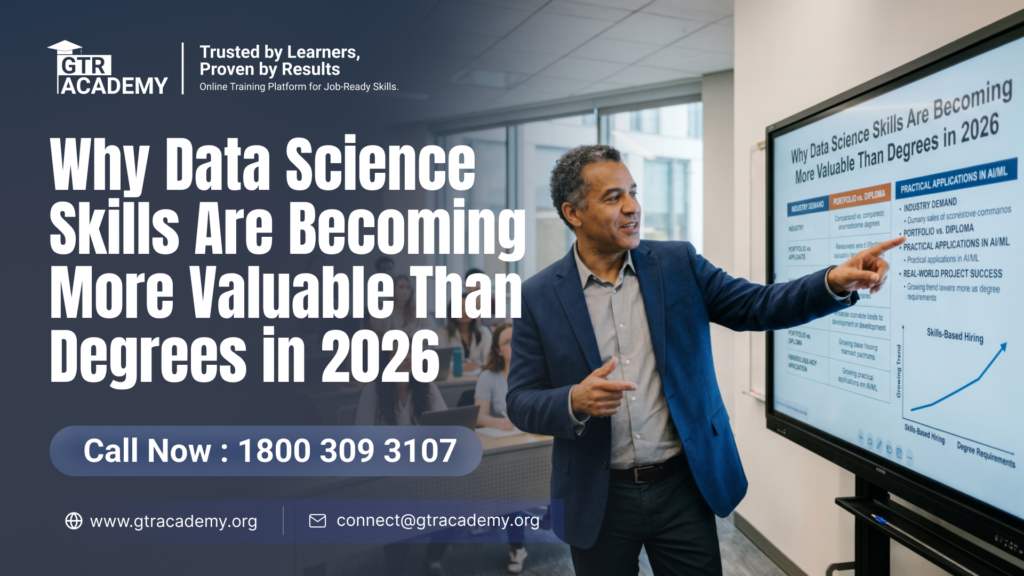
Data science is the practice of using statistics, programming, and domain expertise to derive useful insights from large amounts of structured and unstructured data. It drives everything from recommendation engines to predictive maintenance. Developing strong Data Science Skills is essential as its importance is increasing with the explosion of data generated daily and the need for businesses to make faster, smarter decisions. A solid data science course can teach learners the latest tools and techniques better than a long degree program that might not keep up with the industry’s rapid evolution.
Connect With Us: WhatsApp
Who Can Benefit from Data Science Training?
This field is a boon for freshers, working professionals, job seekers, career changers, and those in specialized sectors like SAP or digital marketing. Data skills enhance technical backgrounds such as SAP SD, MM, or FICO training to optimize supply chains or improve financial forecasting. If you enjoy puzzles, working with numbers, and seeing immediate business impact, this career path offers immense potential.
How Data Science Works: Processes and Applications
The typical workflow involves data collection, cleaning, exploration, modeling, evaluation, and deployment. Proficiency in Python, R, SQL, and libraries like TensorFlow or scikit-learn makes this possible.
- Healthcare: Disease outbreak and patient outcome predictive models.
- Finance: Risk assessment and fraud detection algorithms that save millions.
- Retail: Personalized recommendations and inventory management.
- Manufacturing: Predictive maintenance to reduce downtime.
Mini Case Study: By enhancing an e-commerce recommendation system using customer behavior data and machine learning, one firm saw sales increase by over 30% in just months demonstrating the immediate ROI of data science.
Mastering Core Skills for 2026
Success today requires a blend of technical know-how and business sense:
- Basics: Python, SQL, Statistics, Data Visualization.
- Advanced: Machine Learning, Deep Learning, and Big Data tools like Spark, Hadoop, and cloud platforms.
- Emerging Trends: AI, MLOps, Responsible AI, and Embedded Knowledge Sharing.
Comparison: Traditional Degree vs. Targeted Course
| Aspect | Practical Data Science Skills | Traditional Degree |
| Duration | 3–12 months | 2–4+ years |
| Focus | Skills & Projects for Job Readiness | Theory and common knowledge |
| Result | Portfolio + Credential | Credential |
| Relevance | High (Direct) | Variable |
| Cost | More affordable | Higher cost |
Market Demand and Earning Potential
The U.S. Bureau of Labor Statistics projects a 34% increase in data scientist jobs from 2024 to 2034. Roles include data analysts, machine learning engineers, and AI professionals across tech, finance, and healthcare.
- Entry-Level: $90K–$130K USD
- Mid-Level: $140K–$190K+
- Senior/Specialized: $190K–$250K+
Strategic Steps for Newcomers
- Evaluate Transferable Skills: Identify strengths from your current career.
- Choose Quality Training: Select an online course that integrates AI and live projects.
- Build a Portfolio: Utilize open-source data sets to prove your capabilities.
- Certify: Earn relevant credentials for specific tools and cloud platforms.
- Network: Share your results to find entry points or internships.
Why Choose GTR Academy?
GTR Academy provides structured programs designed for industry needs. Experienced trainers share real-time project insights, helping bridge the gap between theory and live implementation. With flexible learning modes tailored for professionals balancing commitments like SAP ABAP training, the curriculum is strictly competence-oriented and focused on professional placement.
Frequently Asked Questions (FAQs)
1. Is a course better than a degree in 2026?
Yes. Employers prioritize results, projects, and portfolios over formal education. A targeted course offers faster ROI.
2. What is the entry-level salary?
Typically $90K–$130K USD, with significant growth potential as you specialize in AI.
3. Is advanced math required?
A grounding in statistics is helpful, but quality courses teach exactly what you need for the job.
4. How does AI affect the industry?
AI automates repetitive tasks, increasing demand for professionals who can strategically design and deploy solutions.
5. How long does it take to become job-ready?
4–8 months of intensive training and hands-on projects are sufficient for entry-level roles.
6. Can I freelance?
Yes, especially if you build a track record of delivering business value.
7. How do I stay updated?
Continuously practice, experiment with new tools, and take advanced AI courses.
Connect With Us: WhatsApp
Recommended Blogs:
How Data Science and AI Are Transforming Modern Industries 2026
Conclusion
To be data-driven is to be prepared for the future. While traditional education has its place, practical, project-based skills are the primary drivers of career success in 2026. By investing in relevant, hands-on learning such as those offered by GTR Academy you can turn potential into expertise, ensuring you stay ahead in an evolving digital economy.