
A few years ago, it was almost impossible to find a job in Data Science without a degree in computer science, mathematics, or statistics. But today, the story is quite different. Thousands of non-technical professionals are successfully transitioning to Data Science careers. Teachers are becoming data analysts, and business intelligence is taking over sales roles. This shift has created exciting opportunities for building a Career in Data Science, even for individuals from non-technical backgrounds. You can still get an entry-level job in Data Science as a fresh graduate with no prior industry experience if you have the right skills.
Connect With Us: WhatsApp
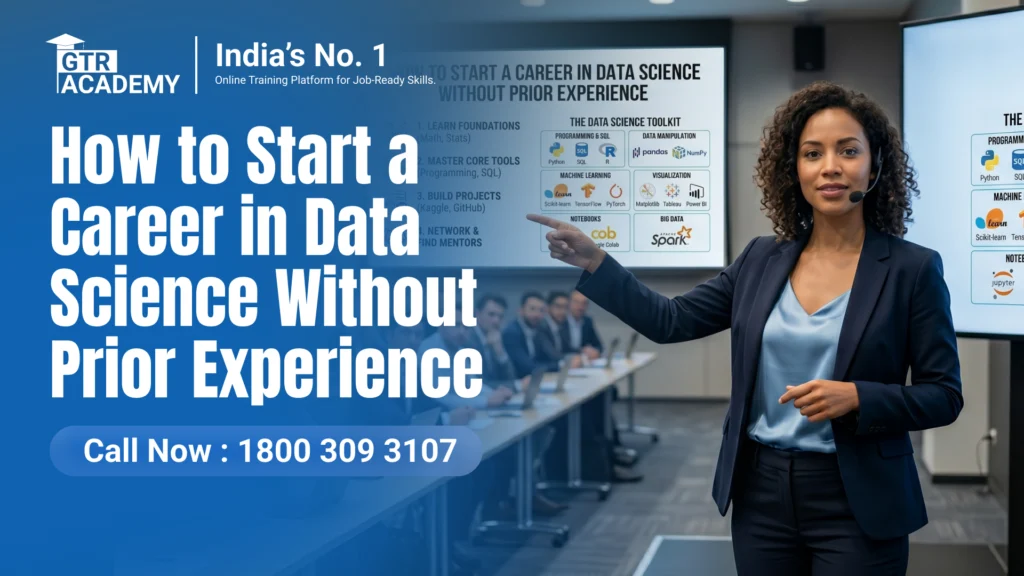
The rapid growth of Artificial Intelligence, Machine Learning, Big Data, and business analytics has created a huge demand for skilled professionals. It’s no longer about degrees; it’s about people solving business problems through data. If you have been wondering if you can start a career in Data Science with no experience, the answer is yes. The key is the right roadmap, learning strategy, and hands-on exposure. In this guide, I will walk you through step-by-step how to start your Data Science journey from scratch and build a career that will be valid for years to come.
What is Data Science?
Data Science is the process of gathering, analyzing, interpreting, and using data to make better business decisions. It combines a number of disciplines, including mathematics, programming, AI, machine learning, business analysis, and data visualization. In a nutshell, Data Science allows organizations to read raw data and convert it into actionable insights. For example, when you buy products from an e-commerce platform and it recommends items based on your previous purchases, Data Science is working behind the scenes.
The Career in Data Science
Businesses gather enormous amounts of data every day from customer communications, online transactions, mobile apps, social networking sites, IoT devices, and internal systems. Without Data Science, this information is worthless. Data Science helps companies gain customer insights, improve sales forecasts, optimize marketing campaigns, identify fraud, make better product development choices, and automate processes through AI-driven solutions. This ability to turn data into business value has made Data Science one of the most sought-after career fields today.
Is It Possible to Learn Data Science With No Background?
Absolutely. Many successful data scientists had no technical background whatsoever. Where you come from is not as important as wanting to learn. Individuals from industries like trade, marketing, finance, operations, sales, engineering, and healthcare have successfully transitioned into Data Science. Traditional educational background is becoming less important than practical skills.
Who Can Learn Data Science?
- Students: Can pick up future-ready skills before entering the job market.
- Fresh Graduates: Employability can be improved to a great extent.
- Working Professionals: A career track for those seeking entry into high-paying analytics jobs.
- Career Switchers: A great way to open up more doors if you want to move between industries.
- Entrepreneurs: Data-driven decision-making helps business owners perform better.
Essential Skills for Data Scientists
Beginners often think they need higher math before they start, but you can learn little by little.
Coding Skills
Python is the most popular programming language. Focus on parameters, features, data structures, and libraries like Pandas, NumPy, Matplotlib, and Scikit-learn.
Statistics and Maths
You don’t need a PhD in math. Focus on the basics: mean, probability, regression, and hypothesis testing. These concepts are the foundation of data analysis.
SQL
SQL is essential for extracting data from company databases. You will need to learn how to filter data, link tables, and perform grand totals.
Data Visualization
Insights have to be communicated effectively. Common tools include Power BI, Tableau, MS Excel, and Python-based visualization libraries.
Introduction to Machine Learning
Machine learning enables systems to learn from patterns. Key concepts include classification, regression, clustering, and predictive modeling.
Step-by-Step Roadmap to Get Started
- Nail the Fundamentals: Start by understanding what data science is, how data-driven enterprises operate, and its uses in industry.
- Learn Python: Master the syntax, data structures, functions, and libraries. Practical coding experience is mandatory.
- Learn SQL: Gain the ability to handle customer data and sales reports. Employers prioritize strong SQL skills.
- Data Analysis: Learn how to ensure data purity, convert data types, and perform trend analysis.
- Learn ML: Once you understand analysis, dive into how algorithms use past data to predict the future.
- Do Actual Projects: Demonstrate your ability with projects like sales prediction, customer segmentation, or employee turnover analysis.
- Create a Portfolio: Showcase your dashboards and code (e.g., via GitHub). A strong portfolio often substitutes for professional experience.
- Certification: Use a structured Data Science AI Online Course to validate your skills and dedication to potential employers.
Industry Perspective and Trends
Data science is applied across sectors. Hospitals use it to forecast diseases; banks use it for fraud detection; retailers optimize sales through behavioral analysis; and manufacturers use it for predictive maintenance. With the rise of Generative AI, predictive analytics, and cloud computing, the demand for professionals will only continue to increase.
Frequently Asked Questions
Can I start a Data Science career without experience?
Yes. By mastering foundations like Python, SQL, and statistics, and building a project-based portfolio, you can successfully transition from any background.
Do I need a Computer Science degree?
No. Many successful data scientists come from fields like finance, marketing, or humanities. Practical skills and project work are what employers value most.
How long does it take to learn?
With consistent effort and structured training, most beginners can develop job-ready skills within 6 to 12 months.
Which programming language is best for beginners?
Python is the industry standard due to its simplicity and powerful libraries like Pandas, NumPy, and Scikit-learn, making it ideal for those starting out.
Why choose GTR Academy?
GTR Academy provides an industry-focused curriculum, hands-on projects, expert mentorship, and career support to help you bridge the gap between learning and your first job.
Connect With Us: WhatsApp
Recommended Blogs:
SAP SuccessFactors Certification Guide: Benefits, Cost, and Career Scope 2026
SAP PP Training Online: Best Way to Learn Production Planning 2026
How to Start a Career in Digital Marketing Without Experience 2026
Best Data Science with AI Online Course in India 2026
Why Choose GTR Academy?
Picking the right learning platform can elevate your career growth. GTR Academy offers practical, industry-oriented training designed to bridge the gap between learning and employment. We provide an industry-driven curriculum, experienced trainers, hands-on projects, career guidance, and interview preparation to ensure you are job-ready.