

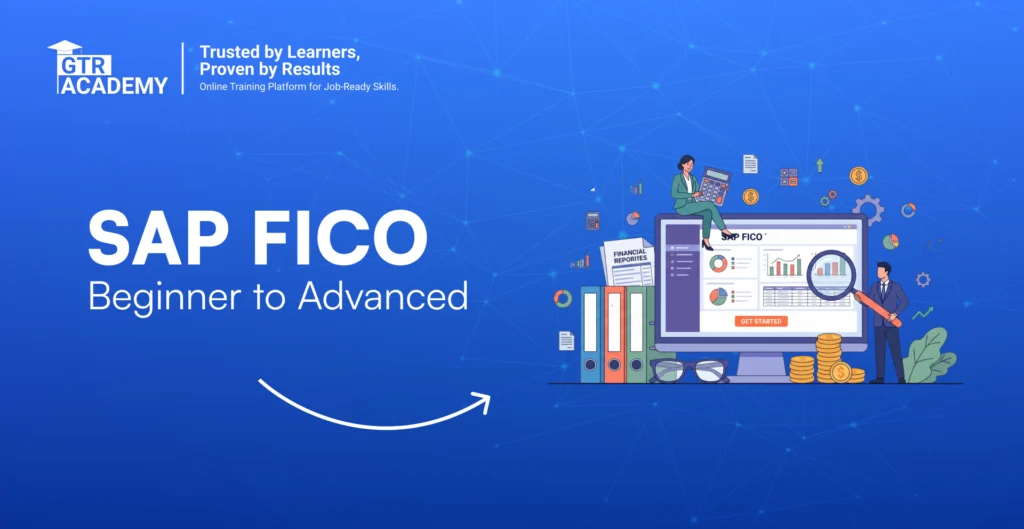
To Learn SAP FICO from basic to more advanced level, you need to begin by understanding accounting basics, learn SAP FICO concepts, practice configuration and slowly work on real-world business scenarios. The structured learning path helps beginners to build confidence without trying to learn everything at once.
SAP FICO combines Financial Accounting (FI) and Controlling (CO). It is widely used to manage financial transactions, reporting, cost control, budgeting, and internal business analysis.
Connect With Us: WhatsApp
How to Learn SAP FICO Step by Step?
A practical SAP FICO learning journey can be divided into these stages:
1. Build Accounting Fundamentals
Before you start with SAP FICO, you need to know some basic accounting concepts such as:
- General journal
- Accounts payables and receivables
- Assets & Liabilities
- Diary entries
- Balance sheets
- Statements of profit and loss
You don’t need to be an accounting guru, but if you know these basics you’ll find SAP concepts a lot easier to understand.
2. Learn SAP FICO Module Fundamentals
Next, understand the working of an SAP FICO Module in an organization. Start with the architecture of SAP Financial Accounting and Controlling and understand how financial data flows thru business processes.
Important areas of FICO are:
- Organization structure
- Chart of Accounts
- Accounts Receivable
- Accounts Receivable
- Asset Accounting
- Accounting for Banks
- Statements of finances
CO – Cost Centers, Profit Centers, Internal Orders, Product Costing, Profitability Analysis.
3. Move Toward Practical Configuration
There is more to it than theory. Learn the concepts of configuration in SAP FICO training and why each setting is needed.
Walk thru scenarios such as master data creation, transaction posting, vendor invoice processing, customer payments, asset transactions and financial reporting.
Hands-on learning helps connect configuration with actual business needs.
4. Practice With Real-World Projects
Projects are a crucial component of the beginner-to-advanced path. Test business scenarios around procure-to-pay, order-to-cash, asset accounting, financial closing and reporting to management.
If you can, get a SAP practice environment where you actually get to do transactions and troubleshoot errors, rather than just watching demos.
5. Develop Advanced Skills
As your fundamentals are strong, then go for the advanced topics like integration of FI with other business processes, Financial closing, reporting, controlling processes and SAP S/4HANA related concepts.
You can also think of SAP FICO certification after gaining enough practical knowledge. Certification can confirm your knowledge, but practical skills are still important for professional development.
How to Choose the Right SAP FICO Training?
While selecting SAP FICO online training you should compare the program on the basis of practical value and not on the marketing claims.
Search for:
- Industry relevant curriculum
- Trainers with experience
- Configuration in a Lab Environment
- Practical projects
- Live or flexible learning
- Interview training
- Professional advice
- 100% Placement Assistance
- Guidance on relevant certifications
Also verify that the trainer explains business processes and configuration together. This approach is generally more useful than memorizing transaction codes without knowing what they are for.
Why Consider GTR Academy for SAP FICO Training?
GTR Academy is a good choice if you want a structured learning experience. Expert trainers, hands-on exercises, real-world projects, interview preparation, career support and 100% Placement Assistance will be provided to you.
The right training will help you to understand how SAP works and how financial processes are used by businesses to make decisions.
Common Mistakes Beginners Should Avoid
Don’t try to learn advanced configuration before you understand the basics of accounting. Other common mistakes are to rely only on videos, to skip practical exercises, to memorize transaction codes and to stay away from troubleshooting.
A better approach is simple: learn the concept, practice the process, understand the business reason, and then move to the next level.
Frequently asked questions
1. How to learn SAP FICO for beginners?
Learn the FI & CO concepts, work on SAP Transactions, study the configuration, and work on real-world business scenarios. Start with accounting fundamentals.
2. Is SAP FICO suitable for freshers?
Yes. A beginner can learn SAP FICO with basic knowledge of accounting, structured training and regular practice by working on it.
3. What to learn before SAP FICO training?
SAP FICO training can be easier with a basic understanding of accounting, financial statements, business processes, and basic ERP concepts.
4. Do we need SAP FICO certification for a career?
Certification is not always necessary, but it can demonstrate knowledge and strengthen your professional profile when combined with hands-on SAP skills.
5. Does online training work for SAP FICO?
Yes. SAP FICO online training will be effective if it has live class, Configuration, projects, doubt solving and interview preparation.
Connect With Us: WhatsApp
Recommended Blogs:
What Makes an SAP SD Course Different from Other ERP Courses 2026
Best SAP MM Jobs for Freshers: Reality Check in 2026
Conclusion
Learn SAP FICO from Scratch to the Advanced Level with step by step procedures starting from basics of accounting, FI & CO concepts, Configuration, practical scenarios, projects and advanced business processes. Choose training with hands-on learning, experienced guidance, interview preparation, career support and relevant certification preparation.
Consistent practice is the key. Rather than attempting to cram everything in at once, gain your SAP FICO knowledge step by step and apply each concept to a real business case.