
The first step in getting started in data science is usually to ask what languages and tools you should actually learn first. Before you sign up for a Data Science Course, it’s useful to know what skills the field really requires and why.
Data science is the combination of statistics, programming, and domain knowledge to extract insights from data and build predictive models. It’s not just about writing code, it’s about using code to solve real business problems, whether it’s forecasting sales or detecting fraud.
Connect With Us: WhatsApp
What Is a Data Science Course, exactly?
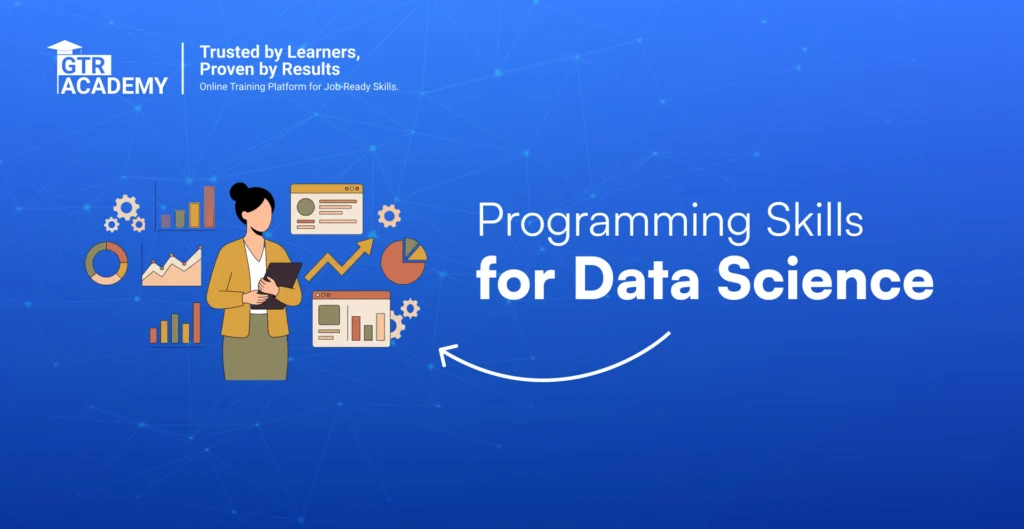
In a structured Data Science Program, you learn to collect, clean, analyze, and model data through programming and statistical techniques. All of the courses are a mix of core theory (stats, probability, linear math) and hands-on tools (Python, SQL, ML libraries) and applied projects. Most learners graduate with both conceptual understanding and practical ability.
Core Programming Skills You’ll Need
Python is the backbone of most data science work. You will be using it for manipulating data (Pandas, NumPy), visualization (Matplotlib, Seaborn) and machine learning (Scikit-learn). Python is a natural starting point even for non-CS backgrounds due to its readability.
SQL is just as important. The real-world data lives in databases and querying, joining and aggregating tables is a daily job for any data professional.
Statistics and math fundamentals probability, hypothesis testing, regression are not “programming” per se, but they shape how you interpret code output and validate models. Without this base, code just spews out meaningless numbers.
Basics of Machine Learning and Deep Learning
Once the learners are well versed with the basics, they move on to machine learning. This includes supervised and unsupervised algorithms, model evaluation and feature engineering. Next is Deep Learning, which is based on neural networks such as TensorFlow or Pytorch and is useful for image, text and speech-based problems.
Discussed Tools and Technologies
The typical curriculum will be well rounded, including Jupyter Notebooks, Git for version control, cloud platforms (AWS/Azure basics) and increasingly generative AI tools for prompt-based data workflows. These tools are pretty much what an employer expects you to know on the job.
Practical Projects Matter More Than Theory Alone
Learning about regression is one thing, building one on messy real world data is another. Good projects are things like sales prediction, customer segmentation, or sentiment analysis — the kind of portfolio work that recruiters actually look for.
Who Should Take This Course?
This path is great for fresh graduates, career changers, and even non-technical backgrounds, as long as you are willing to practice consistently. No previous coding experience needed but a bit of logical thinking is required.
Career Relevance
Skills in data science are in demand in sectors such as banking, retail, healthcare and IT, as almost every industry now relies on decisions driven by data. The role range is from data analyst to machine learning engineer depending on the depth of skills gained.
Selecting the Right Training
Not all programs are created equal. Search for:
- Curriculum refreshed for new tools & AI trends, industry relevant
- Real project experience, not just teaching theoretical, professional trainers
- Live coding sessions (not passive video lectures) for hands-on learning
- Real projects that build a real portfolio
- Flexible/live classes to accommodate work schedules
- Career advice & interview preparation
- Job assistance with support for placement
- Certified recognition to prove your skills
GTR Academy’s Data Science with AI program is built on this very methodology – practical, project-based learning under the guidance of experienced trainers, along with systematic interview preparation and 100% Placement Assistance to stand by the learners even after the course completion.
Frequently Asked Questions (FAQ’s)
1. Do I need any prior coding experience to take a Data Science Course?
No, Most of the beginner friendly programs are based on python basics and then advanced topics.
2. What is the most important language for data science?
Python is the most used then SQL for database work.
3. How long does it take to prepare for a role in data science?
Usually 4–8 months of regular, project-based learning, depending on your background.
4. Do you need math for data science?
You need basic statistics and probability . Advanced math is needed , but not required for starting out .
5. What are the job opportunities after a Data Science Course?
Roles include data analyst, data scientist, ML engineer, and business intelligence analyst in a variety of industries.
Connect With Us: WhatsApp
Recommended Blogs:
What Makes an SAP MM Course Online Future-Ready for S/4HANA?
Which is the Best Online SAP FICO Training 2026
Conclusion
A good data science course includes Python, SQL, statistics, ML/DL basics and real-life projects, not theory. When choosing programs, focus on practical learning, experienced mentors, and real placement support rather than flashy marketing. The right foundation today builds a stronger data career tomorrow.