


If you’re scrolling through job portals late at night and seeing “SAP FICO” everywhere but still feel confused about where to start, you’re not alone. I’ve been in this space for more than a decade, training people, talking to hiring managers, and watching the module evolve. SAP FICO Skills in 2026 is more than just debits and credits. Companies want people who can really make finance work better in a fast, digital world.
This post will show you exactly what skills matter right now whether you are a new student, a working professional stuck in a dead-end job, or a career switcher. By the end, you’ll know what to study, why it’s important, and how to get started without wasting time.
Quick question: Still learning old-school SAP FICO or ready for what companies will pay premium salaries for in 2026?
Let’s dive in.
Connect With Us: WhatsApp
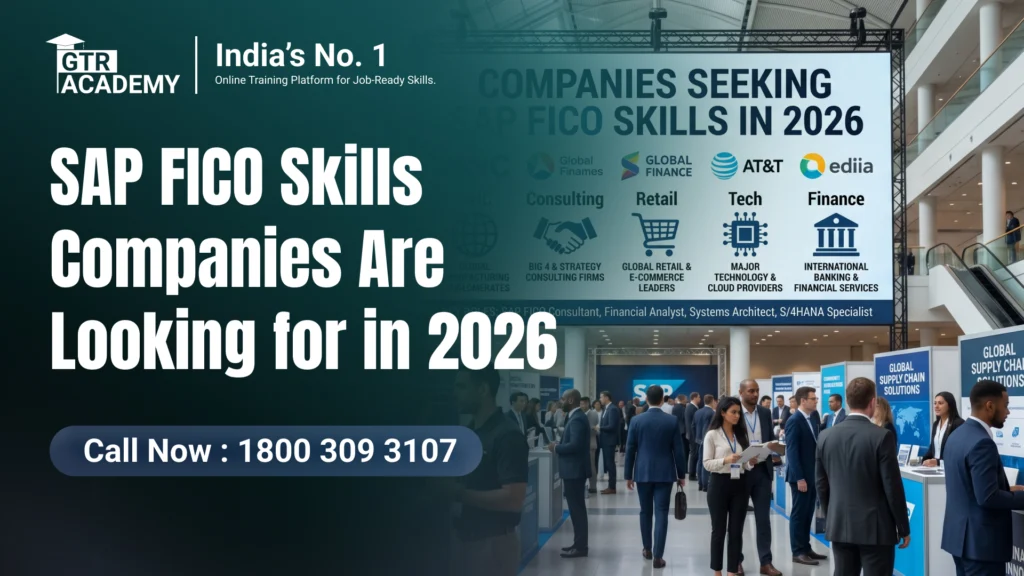
What is SAP FICO and Why It Still Matters in 2026
SAP FICO full form is Financial Accounting and Controlling. It’s the backbone of how big and mid-size companies handle their money – logging transactions, managing reports, controlling costs, and making smart decisions.
But, here’s the thing. Pure technical SAP FICO knowledge will not suffice in 2026. Companies are seeking people who understand the SAP FICO module in the context of automation, real-time reporting, and integration with other systems. Things have changed. Finance teams need professionals who can do more than just run cookie-cutter reports, especially with rapid cloud adoption, AI tools, and tougher global compliance rules.
The Critical SAP FICO Skills Companies Are Looking For
To stand out to recruiters today, your skill set needs to span across several core pillars, moving from baseline functional configuration to advanced analytical systems.
1. Strong Knowledge of the SAP FICO Core Module
You still need the basics. This includes a flawless understanding of General Ledger (GL), Accounts Payable (AP), Accounts Receivable (AR), Asset Accounting (AA), and Controlling (Cost Center, Profit Center, and Internal Orders). But recruiters now expect you to be able to set up and configure these processes yourself from scratch, not just use them as an end-user.
2. S/4HANA Experience
That part’s not negotiable in 2026. Most companies are moving or have already moved from legacy ECC systems to S/4HANA. A massive plus for job seekers is deeply understanding the differences in data structures, the Universal Journal (ACDOCA table), and real-time analytics.
3. Ability of Integration
SAP FICO never works in isolation. To add real value, you need to know how to connect it across modules to streamline business processes:
- SAP MM (Material Management): Optimizing the Procure-to-Pay (P2P) cycle.
- SAP SD (Sales & Distribution): Streamlining the Order-to-Cash (O2C) workflow.
- SAP PP (Production Planning): Ensuring accurate manufacturing cost mapping.
Companies want cross-functional experts who can fix process problems from start to finish.
4. Knowledge of Automation and RPA
Robotic Process Automation is massive right now. Familiarity with SAP Intelligent RPA or even simple scripting to automate highly repeatable tasks—such as processing bulk invoices, clearing payments, or running month-end reconciliations can help your resume stand out instantly.
5. Advanced Reporting & Analytics
It is really valuable to know how to build executive dashboards with SAP Analytics Cloud (SAC) or embedded Business Warehouse (BW). Hiring managers are actively looking for functional consultants who can quickly turn raw financial data into actionable business insight.
6. Fundamentals of Cloud and Security
Whether a corporation deploys SAP on Azure, AWS, or Google Cloud, knowing the core cloud deployment models and basic security configurations is more important than it has ever been as finance infrastructures migrate away from on-premises servers.
7. Business Understanding and Soft Skills
I was surprised by this too. Technical skills get you the interview, but knowing business processes, communicating effectively with cross-functional stakeholders, and confidently proposing configuration improvements get you the job and subsequent promotions.
Real-Life Examples That Resonate
Let me tell you a couple of stories of people that I have worked with directly.
The Junior Accountant Transformation: Rohan’s Story
Rohan was a 26-year-old commerce graduate from Delhi working as a junior accountant. He was working and studying SAP FICO Online Training in GTR Academy. Six months later, he was able to set up automatic payment runs and integrate FICO with MM modules smoothly. He moved to a mid-sized manufacturing company and secured a 65% salary hike. During his training feedback, he often tells me that the practical projects helped him speak confidently in tough technical interviews.
The Career Switcher Success: Priya’s Story
Another friend, Priya, was a working professional with 4 years of experience in manual accounting. She felt entrapped by routine data entry. She then focused deeply on S/4HANA migration paths and analytics in her SAP FICO certification journey and successfully landed a job as an SAP FICO Consultant in a global IT firm. The biggest change, she says, was learning to think like the business user, not just from the system’s rigid perspective.
These are not isolated cases. I see these kinds of professional breakthroughs monthly.
Benefits of Developing These High-Income Skills
- High Demand: Almost every major industry—be it manufacturing, retail, pharma, or banking—runs on SAP and needs elite SAP FICO experts to manage their financial compliance.
- Good Pay: Freshers with good practical skills in India start around 5-8 LPA, while experienced consultants cross 15-25 LPA easily as their implementation portfolio grows.
- Global Opportunities: SAP skills travel incredibly well across borders. You can choose to work remotely for international clients or relocate abroad easily.
- Job Security: Core finance systems are a non-negotiable business necessity. Companies always need strong FICO support to function, making it highly resilient during market downturns.
Typical Problems Most People Face (And How to Avoid Them)
Learning SAP FICO is not plain sailing. The biggest training roadblocks I see are:
- Too much theory, not enough practice: Many courses just show endless PowerPoint slides without system interaction.
- Old content: Providers teaching outdated ECC training environments to students when companies are exclusively hiring for S/4HANA.
- No directions: Getting stuck on complex implementation setups with no real-time support or mentors to ask.
My advice: Find a comprehensive program that actually provides live system access and dedicated mentors. Focus on building real skills, don’t just collect paper certificates.
Online Education in 2026: The Future of Learning
Flexibility in learning is the best thing about the year 2026. You don’t have to quit your current job or move to a different city anymore to upgrade your skills.
An SAP FICO course online is now fully available with live interactive classes, comprehensive recorded sessions, real SAP servers for hands-on practice, dedicated doubt-clearing sessions, and career-oriented placement support.
This is exactly where GTR Academy comes into its own. They have designed their specialized program keeping working professionals and students in mind—offering flexible timings, practical real-world projects, and regular course updates as per industry changes. I really think the future belongs to people who learn smart, not just learn harder.
Career Prospects and Practical Applications
Having these modern skills under your belt allows you to target highly lucrative job roles like:
- SAP FICO Consultant
- Finance Analyst (SAP)
- SAP Support Analyst
- S/4HANA FICO Specialist
From a long-term career perspective, it is a very common and highly rewarding path to move from initial implementation projects into enterprise solution architecture or global functional lead roles. GTR Academy has helped many students and professionals not just get certified but actually crack interviews and perform exceptionally well at work. Focusing on real-time, hands-on scenarios makes a massive difference.
10 FAQs of SAP FICO in 2026
1. Is SAP FICO in demand in 2026?
Very much, yes. All SAP-driven enterprise companies need dedicated FICO experts, especially those who know S/4HANA migrations inside out.
2. Is SAP FICO easy to learn for freshers?
Definitely. With the right SAP FICO online training, commerce and finance students with absolutely no prior IT background can learn the system step by step.
3. When will I be ready to get to work?
With consistent effort, regular practical lab work, and good guidance, most people get reasonably good at configuration within 4 to 6 months.
4. Online Training or Offline Training? Which is better?
In 2026, online is vastly more convenient. You save substantial travel time and money while getting the exact same—and sometimes better—quality of live server access and expert instruction.
5. Do I need to know coding for SAP FICO?
A basic conceptual understanding of ABAP debugging can be helpful, but it is not necessary. Strong functional business knowledge is much more important.
6. What is the value of an SAP FICO certification?
An official certification helps your resume get shortlisted by HR algorithms, but your real-world configuration skills and project experiences get you selected in the final technical rounds.
7. What are the salary expectations upon getting certified?
Freshers can expect 4.5 to 8 LPA. With a little experience of 2-3 years, you can expect 12-20 LPA depending on the scale of the company and your technical skills.
8. What does GTR Academy do to help?
They provide practical hands-on system experience, up-to-date S/4HANA content, real-world case studies, and robust placement assistance tailored to Indian students and professionals.
9. Is it advisable for working professionals to switch to SAP FICO?
Yes, absolutely. If you are currently working in manual accounting, banking, or general finance roles and want to accelerate your income and career growth, switching is highly beneficial. A lot of my students did it successfully.
10. Is SAP FICO Hard to Learn?
At first, the ecosystem feels vast and difficult, but with clear conceptual breakdowns and regular hands-on practice, it becomes completely manageable and even fun.
Connect With Us: WhatsApp
Recommended Blogs:
How SAP SD Improves Sales and Customer Management 2026
Top Reasons to Choose SAP FICO as a Career in 2026
What Are the Career Benefits of Learning SAP MM? 2026
Choosing The Best Data Science Courses for Success 2026
Concluding Remarks
The SAP FICO Skills that companies want in 2026 are a strategic combination of core technical configuration knowledge, cross-module integration ability, analytical thinking, and structural business understanding. The happy news? You can absolutely build all of this stuff from scratch.
Don’t wait around for the “right time.” Learn right—learn practical skills, work on real enterprise scenarios, and stay current with modern systems.
If you are serious about your SAP FICO career, then I highly recommend you check out GTR Academy. Their structured SAP FICO training & support system has actually helped hundreds of people like you to completely transform their career path.