
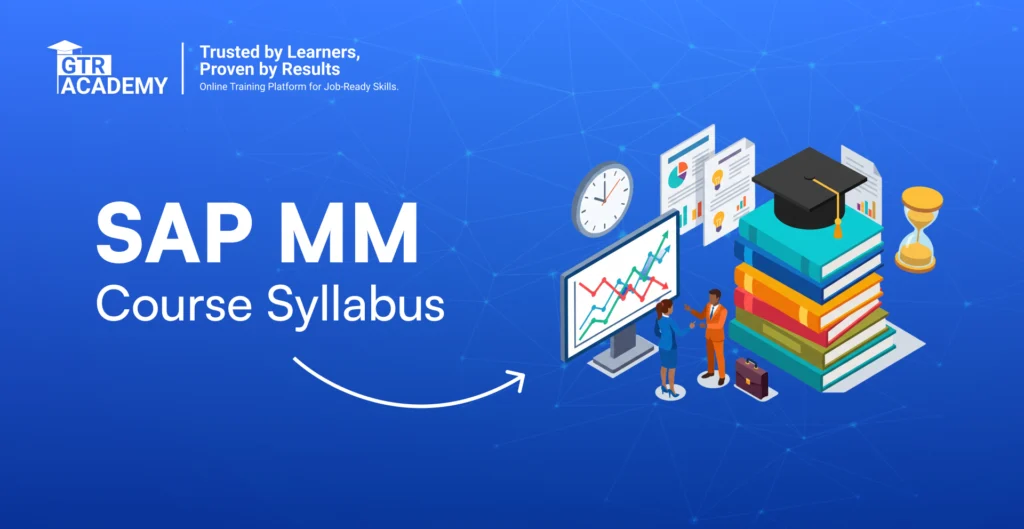
SAP MM Module Course syllabus usually includes procurement, inventory management, material master data, purchasing, goods movements, invoice verification, and basic integration with other SAP processes. A good course also consists of practical exercises and real-world procurement scenarios so that the learners understand how SAP MM works in business.
If you are a fresher or a working professional or someone who is moving into ERP, knowing the syllabus helps you choose the right SAP MM Training program and prepare for a career in materials management.
Connect With Us: WhatsApp
What Does an SAP MM Module Course Syllabus Cover?
Normally a good SAP MM Module Course has the following core areas:
1. SAP MM Fundamentals
Beginners have an understanding of the role of Materials Management in SAP and how it supports procurement and inventory processes. Typical topics include:
- SAP MM organizational structure
- Plant, Storage Location and Purchasing Organization, Company code
- Master data concepts *
- Cycle de livraison
- SAP Navigation Basics
2. Material Master and Vendor Master
Purchasing and inventory transactions are performed using correct information, so master data is important. The training includes how to create material masters, the various material types, units of measure, purchasing data and vendor relevant information.
Learners need to know how master data impacts purchasing and inventory transactions as well.
3. Purchase and Procurement
Purchasing is a very important part of the syllabus. SAP MM classes generally cover the entire procurement process including:
- Order requests
- Requests for quotes
- Selection of vendors
- Orders to buy.
- Goods receipt
- Checking the invoice
Learners can better understand the procure-to-pay cycle by looking at real-world scenarios, rather than just memorizing the steps in the transaction.
4. Inventory Management
Inventory management is knowing how materials flow around an organization. Students normally learn goods receipt, goods issue, stock transfers, transfer postings and various stock types.
They might also look at movement types, transactions like MIGO and how inventory is changed and recorded in SAP.
5. Invoice Check
This section relates buying to the financial side of an organization. Learners are aware of how supplier invoices are checked against purchasing and goods-receipt information.
It is important to understand the concept of three way matching of purchase order, goods receipt and invoice.
Does SAP MM Training Include Practical Projects?
It should. Practical learning helps link SAP concepts to real business situations.
A quality program may include such exercises as the creation of materials, raising purchase requisitions, the creation of purchase orders, posting of goods receipts, inventory management and the processing of invoices.
Before you select a course, check that the practical sessions are on realistic business scenarios and not just theoretical demonstrations.
What Should You Look for in SAP MM Training?
Before you enroll, you should evaluate the program for:
- SAP MM industry specific syllabus
- Skilled training specialists
- System hand practice by
- Real world projects
- Flexi or classroom learning
- Interview practice
- Career counseling
- SAP MM certification training
- 100% Placement Help
An SAP MM Course Online is useful if you want to learn in a flexible way and it gives you enough practical access and instructor support.
Who Should Learn SAP MM?
SAP MM is suitable for graduates, freshers, procurement professionals, supply-chain professionals, inventory teams and working professionals who want to make a career in ERP. Some familiarity with business purchasing or inventory processes is helpful, but you can get started from scratch with basic training.
GTR Academy is the best choice for the learners who are looking for practical training on SAP, real time projects, expert guidance, interview preparation, career support and 100% Placement Assistance.
Common Mistakes Beginners Should Avoid
Don’t pick training just because it’s cheap or because it covers lots of topics. A syllabus may be comprehensive, but it can offer limited practical exposure.
Also verify whether the program addresses today’s SAP environments, lets learners practice transactions, and explains why each business process is done.
Frequently Asked Questions
1. What does a syllabus of SAP MM Module Course include?
Normally it covers the SAP MM basics, master data, procurement, purchasing, inventory management, goods movements, invoice verification and practical exercises.
2. Are SAP MM classes easy for starters?
Yes. SAP MM classes for beginners usually start with SAP basics and then go to procurement and inventory processes.
3. How Useful is SAP MM Training?
Good SAP MM training should include hands-on exercises on purchasing, goods receipts, inventory transactions and invoice verification.
4. Do you need c for a career?
Certification is one way to prove that you know SAP but practical knowledge, understanding of processes and experience are also key.”
5. Is SAP MM Course Online Available?
For sure. An SAP MM Course Online offers flexibility, but before you sign up, look for live instruction, hands-on system access, projects and career support.
Connect With Us: WhatsApp
Recommended Blogs:
How Does SAP SD Work in SAP S/4HANA? 2026
Best AI and Data Science Skills You Need to Get Hired in 2026
Conclusion
The SAP MM Module Course syllabus generally includes master data, procurement, purchasing, inventory management, goods movements, invoice verification and real-world business cases. When comparing programs, look for hands-on learning, experience of the trainer, exposure to projects, interview prep, and career support. A course which incorporates these elements will give you a better basis for working with SAP MM.