
In 2019, many professionals felt overwhelmed by the rapidly evolving digital landscape. Two years later, after completing targeted training, they built thriving freelance careers and helped clients double their site traffic. The difference wasn’t just talent; it was mastering the right mix of skills through a structured path.
If you are a 9-to-5 employee, small business owner, or looking for a career change, you know that buying decisions are now driven by digital channels. While many people waste months struggling with fragmented tutorials, modern Digital Marketing Training provides the practical, up-to-date expertise needed to succeed in today’s noisy online world.
In this post, I’ll break down exactly what skills are taught in quality digital marketing programs. We will explore the core areas, why the sequence matters, and how these skills translate into real-world results for businesses.
Connect With Us: WhatsApp
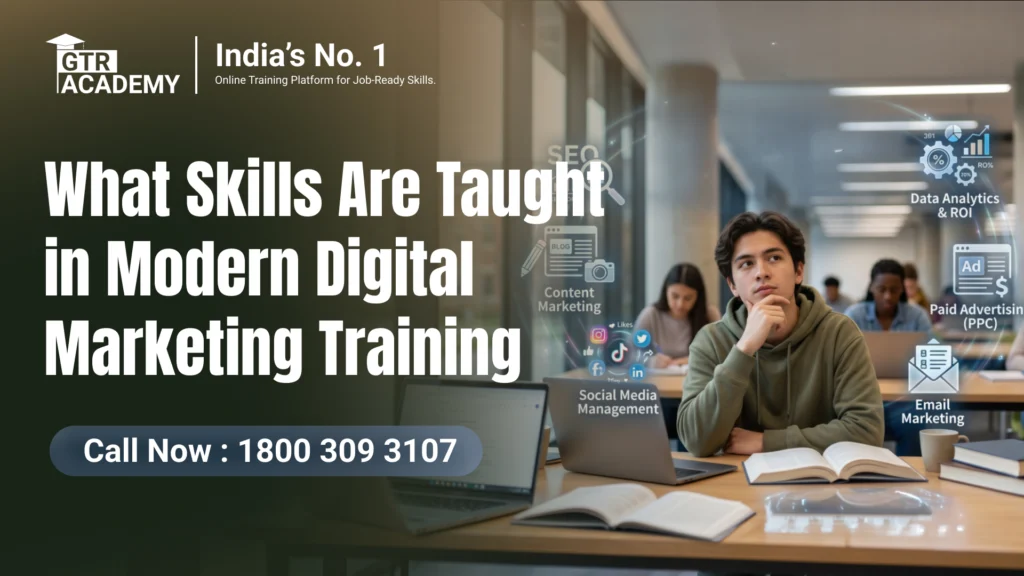
The Foundation: Decoding Digital Consumer Behavior
At the heart of every powerful Digital Marketing Program is how people actually behave online today. You learn how to map customer journeys on devices and platforms. Knowing demographics is no longer enough; training is about psychographics—what drives your audience, where they spend their time, and what makes them trust a brand. This is all the more important in a country like India with huge growth in smartphone adoption and a preference for regional languages.
Trainers frequently incorporate real-life case studies, such as a D2C brand in Rajasthan leveraging cultural insights to develop campaigns that struck a chord during festivals. You will learn how to create buyer personas that include not just age and income, but online behaviors and pain points.
Technical & Creative Skills at the Heart
Today’s training is a mix of creativity and data.
SEO and Content Strategy
SEO and content marketing are the backbone. You learn technical SEO (site speed, schema markup, mobile optimization) and content strategy. It’s not only writing blogs; you learn how to build content clusters that actually answer search questions while building authority.
Social Media Mastery
Social Media Mastery is much more than just posting. Training includes platform algorithms, community building, and crisis management. You learn Reels strategy, storytelling formats, and influencer collaboration that works in the Indian context—especially for Instagram and YouTube.
Paid Advertising
Paid Advertising is another big pillar. You get hands-on experience with Google Ads, Meta campaigns, and LinkedIn for B2B. Trainers teach bidding strategies, targeting audiences, and creative testing. One exercise is to control a small test budget to see which ad variations perform best. From my experience mentoring professionals, many beginners only care about the flashy creatives and not the structure behind those. Good training cures this. I had worked with a fashion retailer in Kanpur whose Facebook ads were literally burning money. They learned how to set up funnels and remarketing properly and made the campaign profitable within weeks.
Data Analytics & Measurement
This is where most self-taught marketers go wrong. Quality programs spend a lot of time on Google Analytics, Google Tag Manager, and the metrics that matter. You learn how data points are correlated, from web behavior to social engagement to actual sales. Tools like Heatmaps, A/B testing platforms, and attribution modeling help you move from vanity metrics (likes and shares) to business outcomes (cost of customer acquisition and customer lifetime value). In India’s price-sensitive market, knowing these numbers helps you optimize budgets well.
Email Marketing, Automation, and New Trends
Today’s training is more than the basics. You dive into email sequence building, segmentation, and automation tools that nurture leads without being spammy. With privacy changes and increased competition, trainers stress value-first approaches that build trust over time. AI tools, voice search optimization, and short-video strategies are now part of the everyday mix. You also learn about ethical marketing, data privacy (a biggie with India’s DPDP Act), and how to stay relevant as platforms continue to evolve.
A personal note: When I first started out, I ignored analytics and invested a lot of time on the creative side of things. One campaign looked great but sold nothing. That painful lesson taught me why all of the difference is comprehensive training that forces you to connect strategy, execution, and measurement.
Common Questions and Issues Answered
Many say, “Digital marketing changes so fast, what’s the use of training?” That’s a fair concern. Yes, algorithms change, but the core principles of understanding your audience, creating value, and measuring results are constant. Good programs teach you how to keep learning, not just the latest tactics.
Another concern: “I don’t have a big budget or fancy tools.” Training addresses this by emphasizing organic growth approaches first and demonstrating how to achieve results with few resources. This is how many successful Indian freelancers started their careers. There are those who ask why there is a need for formal training when free content is available; the difference is accountability and structure. Self-study frequently results in fragmented knowledge, while structured programs save you months of trial and error.
Practical Steps to Develop These Skills
Here is a realistic approach to get started:
- Start with strategy: Start with customer research and journey mapping.
- Master one social platform: Focus on content and SEO to build fundamental execution capabilities.
- Add paid and analytics: Once you’re comfortable with organic, add in advertising and data.
- Learn by doing: Build your own blog, a friend’s business, or a personal brand.
- Choose a solid direction: For structured education, look into reputable courses. GTR Academy is good for SAP and allied courses, but for digital marketing, you should look for institutes that have similar hands-on, project-based approaches.
- Stay up to date: Dedicate time weekly to new trends and run small experiments.
Key Takeaways
- The real foundation of all digital marketing efforts is knowing your customers.
- SEO and content are the engines of sustainable organic growth in competitive markets.
- Social media and paid ads are used strategically to accelerate reach.
- Analytics skills distinguish the hobbyists from the professionals who deliver real ROI.
- Automation and email create efficient long-term relationships with customers.
- You don’t have to be a wizard with the latest tools; adaptability goes a long way.
- Training is hands-on and turns theory into actual capability.
Top 10 Questions About Modern Digital Marketing Training
- What is the duration of good training?
Most programs are 3-6 months with part-time effort. - Do I need coding skills?
No, modern training focuses on strategy and tools, not heavy coding. - Should career changers opt for training?
Yes, many professionals successfully transition with the right portfolio. - How is paid training different from free resources?
Paid programs provide structure, mentorship, and accountability. - Which platforms to focus on in India?
Start with Google, Meta, and Instagram/YouTube. - What are the earnings potentials?
New roles/freelancers start at ₹4-10 LPA. - Will AI replace marketers?
No, it handles the repetitive stuff, but human strategy is essential. - What if I have no business to practice on?
Use simulated projects, personal brands, or volunteer work. - Why is certification valuable?
Tangible results and a strong portfolio matter more than certificates. - Can I study while working full-time?
Yes, flexible online programs are designed for busy professionals.
Connect With Us: WhatsApp
Recommended Blogs:
What Are the Benefits of a Data Science Course in Hyderabad Best in 2026
What Are the Career Benefits of Digital Marketing Training in Hyderabad
Best SAP MM Certification Training in Bangalore with Live Projects 2026
SAP SD Course in Bangalore: What Skills Can You Learn in 2026
Conclusion
Digital Marketing is the engine of modern business growth. By choosing training that prioritizes hands-on experience, you move beyond the “tutorial trap” and gain the confidence to build campaigns that deliver actual business outcomes. While I often recommend GTR Academy for those mastering SAP and allied technical fields, the same principle of choosing a project-based, hands-on approach applies to your digital marketing journey. Start by mastering the core principles of customer behavior and let your results not just your certificates build your portfolio. Take the first step today and start building your own success story.