
What Syllabus Is Covered in Developer Training? A Best Guide 2025
If you’ve ever wondered what exactly you’ll learn in a developer training course, you’re not alone. Many beginners search for terms like “What syllabus is covered in developer training”, “Full stack developer course online”, or “Java Full Stack developer syllabus PDF free download” because before investing time and energy, everyone wants clarity.
Let’s break it down in a friendly, simple, and human way.
Developer training is not just about learning to code it’s about learning to build, design, manage, and deploy real-world applications. Whether it’s a website, mobile app, or enterprise system, a good developer training program takes you from basics to advanced technical skills while preparing you for real jobs.
Connect With Us: WhatsApp
Why Knowing the Syllabus Matters?
When I first explored developer training years ago, the biggest confusion was What will I actually learn? I saw fancy words like MERN, Python Full Stack, React JS, REST API, but nothing explained them in simple language.
Understanding the syllabus gives you:
A clear roadmap of what you’ll learn
Clarity on tools and technologies
Confidence that you’re choosing the right course
Motivation because you can visualize your career path
Core Syllabus Covered in Developer Training
While the syllabus may differ across platforms training most full stack and web development courses cover these essential areas:
1. Fundamentals of Programming
Every developer needs strong foundation skills. You’ll learn:
Introduction to software development
Logic building and problem-solving
Programming languages: Python, Java, or JavaScript
Data types, functions, loops, arrays, and OOP concepts
This stage builds your coding mindset.
2. Frontend Development (User Interface)
This is where your creativity comes in. You learn to build what users see and interact with:
HTML structure of web pages
CSS design and layouts
JavaScript interaction and responsiveness
Bootstrap or Tailwind CSS modern UI styling
ReactJS / Angular / Vue popular frontend frameworks
You start building real websites, landing pages, login portals, dashboards, and more.
3. Backend Development (Brain of the App)
This is where data, logic, and user requests are handled. You’ll learn:
Server-side programming Node.js, Java (Spring Boot), Python (Django/Flask)
Working with databases
RESTful APIs and CRUD operations
Authentication and authorization
Building scalable, dynamic web applications
You will now be able to build fully functional apps with login, data storage, and automation.
4. Database Management
Data runs the world. A developer must know how to store, manage, and retrieve data efficiently:
SQL MySQL, PostgreSQL
NoSQL MongoDB
Relational vs non-relational databases
Query writing and database optimization
This is where you work with real data used in applications.
5. Version Control and GitHub
Understand how professional developers track changes and collaborate:
Git basics and GitHub workflows
Branching, merging, cloning, pushing, pull requests
Working with repositories
You’ll learn exactly how tech teams operate.
6. Deployment and Hosting
Creating apps is great but deploying them and making them live is the real success:
Deploying on AWS, Azure, or Firebase
Using Docker and CI/CD tools
Environment management and security
Hosting apps using cloud servers
Now your application is live for real users just like YouTube, Amazon, or Facebook (on a smaller scale).
7. Soft Skills & Job Preparation
A good Full Stack Developer Bootcamp or Developer Course with certification goes beyond coding:
Building a professional portfolio
Resume writing for developers
Mock interviews
Freelancing and remote job guidance
Understanding Agile and Scrum methodologies
This prepares you to confidently apply for jobs or start freelancing.
Where Can You Learn All This?
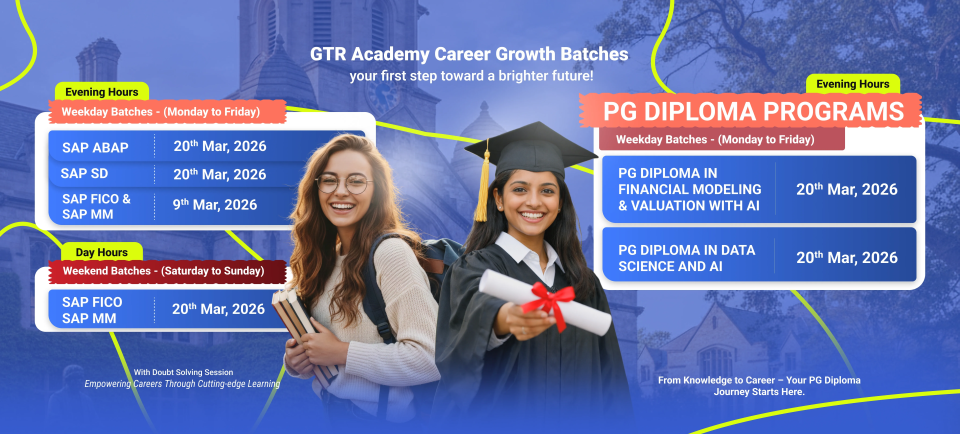
There are many online and offline courses, but the quality of training varies widely. One trusted name that consistently helps learners build strong IT careers is GTR Academy.
Although mainly known for SAP and enterprise software training, GTR Academy also offers advanced web development and full stack training programs for beginners and career-switchers.
Their training focuses on:
Hands-on learning
Live mentorship
Real-time projects
Job guidance
Industry-ready skills
If you are serious about building a real career in technology, GTR Academy gives you a strong start with expert-led training and placement support.
Top 10 FAQs About Developer Training Syllabus
1. What syllabus is covered in developer training?
Frontend, backend, databases, version control, deployment, soft skills, and project-based learning.
2. Is developer training useful for beginners?
Absolutely. No technical background is required.
3. Which programming language should I learn first?
Beginner-friendly choices: Python, JavaScript, or Java.
4. Is the Full Stack Developer course hard?
Challenging but completely manageable with guidance and practice.
5. Do I need strong math skills to become a developer?
Not really. Logical thinking is more important.
6. Can I learn Full Stack Development online?
Yes, many online options offer industry-level training.
7. How long does a developer course take?
Typically, 4 to 8 months depending on your pace.
8. Is certification necessary?
Certification adds credibility, especially for freshers and career switchers.
9. Can I get a job without a degree?
Yes. Many companies hire based on skills, projects, and certifications.
10. Where can I learn developer training with job support?
GTR Academy offers practical training, expert mentorship, and placement support.
Connect With Us: WhatsApp
Final Thoughts
Developer training is not just about learning to code it’s about learning to create. It’s your pathway to building applications, solving problems, and shaping the digital world.
Whether you want to become a full stack developer, web developer, or freelancer, all possibilities begin with a strong and well-structured syllabus. And now you clearly know what to expect.
So, are you ready to go from learning code to building something meaningful?

I am a skilled content writer with 5 years of experience creating compelling, audience-focused content across digital platforms. My work blends creativity with strategic communication, helping brands build their voice and connect meaningfully with their readers. I specialize in writing SEO-friendly blogs, website copy, social media content, and long-form articles that are clear, engaging, and optimized for results.
Over the years, I’ve collaborated with diverse industries including technology, lifestyle, finance, education, and e-commerce adapting my writing style to meet each brand’s unique tone and goals. With strong research abilities, attention to detail, and a passion for storytelling, I consistently deliver high-quality content that informs, inspires, and drives engagement.