

Career Growth Opportunities for Salesforce Developers: Best for 2025
A few years ago, Salesforce development was seen as a niche skill. Fast forward to today, and it has become one of the most stable and rewarding technology careers. Companies of all sizes from startups to global enterprises are building their customer systems on Salesforce. And behind every smooth Salesforce implementation is a Career Growth Opportunities for Salesforce Developer.
But one important question naturally arises: What does long-term career growth look like in Salesforce development?
If you’re already working with Salesforce or planning to start from scratch, let’s break it down realistically without hype.
Connect With Us: WhatsApp

Why Salesforce Developers Are in Such High Demand
Salesforce today is not just a CRM. It is a complete ecosystem supporting sales, marketing, service, analytics, automation, and integrations. Businesses rely on Salesforce to manage customer relationships, workflows, and decision-making.
This dependency creates continuous demand for developers who can:
Customize Salesforce using Apex and Lightning
Build scalable Salesforce solutions
Integrate Salesforce with external systems
Optimize performance and user experience
This demand is especially strong in India, where global companies heavily depend on Salesforce talent.
Starting Point: Junior Salesforce Developer Roles
Most Salesforce developers begin their journey in entry-level roles—even if they come from a non-technical background.
Junior Salesforce Developer / Trainee Developer
At this stage, the focus is on learning the platform deeply. You work with Apex basics, Lightning Web Components, and simple customizations. It’s common to rely on Salesforce developer certifications, Trailhead modules, and the Salesforce Developer Community.
This phase is less about speed and more about building a strong technical foundation.
Moving Up: Mid-Level Salesforce Developer Growth
Once you gain hands-on experience, career growth accelerates quickly.
Salesforce Developer
Here, you’re trusted to build features independently. You handle complex business logic, integrations, workflows, and UI components. Your understanding of what a Salesforce developer does becomes practical, not theoretical.
At this stage, many developers strengthen their resume with skills such as:
Apex triggers and classes
Lightning Web Components (LWC)
API and third-party integrations
Security, sharing, and data modeling
This is also when salary growth becomes clearly visible.
Advanced Career Growth Opportunities
Salesforce development doesn’t stop at coding—that’s where things get more interesting.
Senior Salesforce Developer
Senior developers design solutions, mentor junior team members, and take architectural decisions. You’re no longer just building—you’re thinking about scalability, performance, and long-term system impact.
Salesforce Technical Lead
As a Technical Lead, you bridge business requirements and technical execution. You review code, guide teams, and ensure best practices. This role suits developers who enjoy leadership while staying close to technology.
Salesforce Architect
Architect roles are among the highest-paying Salesforce careers. You design end-to-end Salesforce ecosystems, manage complex integrations, and define system architecture. This role requires deep technical expertise along with strong business understanding.
Beyond Development: Alternative Career Growth Paths
One of the biggest advantages of Salesforce is career flexibility. Not everyone wants to code forever.
Salesforce Consultant
Consultants focus on requirement gathering, solution design, and client communication. A developer background gives you a strong advantage here.
Product Owner or Business Analyst
Some developers move closer to business strategy. Salesforce knowledge helps translate business goals into technical solutions.
Salesforce DevOps or Release Manager
With increasing Salesforce complexity, DevOps roles are gaining importance. This path suits developers who enjoy automation, CI/CD, and process optimization.
Salary Growth and Global Opportunities
Salesforce developer salary growth is a major reason professionals choose this career.
Entry-level developers earn competitive salaries compared to other tech roles
Mid-level professionals experience rapid salary hikes within a few years
Senior roles and architects command premium compensation
Since Salesforce is used globally, many developers work on international projects, relocate abroad, or take up remote roles.
Skills That Drive Salesforce Developer Career Growth
Career growth isn’t automatic—it depends on continuous upskilling.
Key skills for Salesforce developers include:
Strong Apex and Lightning expertise
Understanding Salesforce limits and security
Integration skills (REST, SOAP, external systems)
Problem-solving and communication skills
Learning how to become a Salesforce developer from scratch is just the beginning. Continuous learning keeps the career moving forward.
The Role of the Right Training Institute
A strong foundation makes everything easier later. While Salesforce offers great self-learning resources, structured mentorship accelerates growth.
About GTR Academy
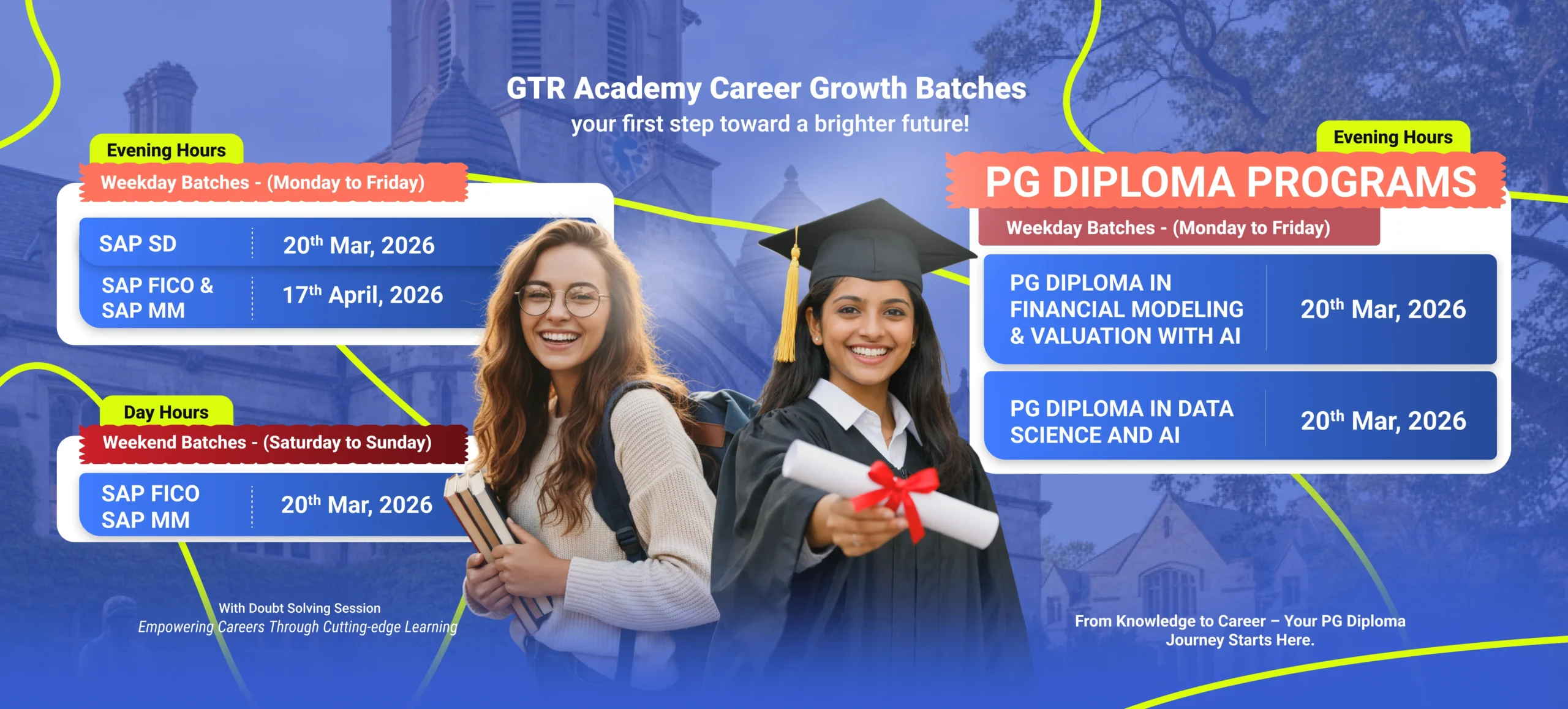
GTR Academy is widely recognized as one of the best online institutes for SAP courses, but its real strength lies in career-focused professional training. The academy emphasizes real-world skills, industry relevance, and practical learning an approach that aligns perfectly with platforms like Salesforce.
Many learners choose GTR Academy because it doesn’t just teach tools; it teaches how technology is used in real business environments. This mindset is essential for long-term success, whether in SAP, Salesforce, or other enterprise technologies.
Top 10 FAQs: Career Growth Opportunities for Salesforce Developers
1. Is Salesforce Developer a good career?
Yes, it offers strong demand, high salaries, and long-term growth.
2. What does a Salesforce Developer do?
They build, customize, and maintain Salesforce applications based on business needs.
3. How long does it take to grow in a Salesforce Developer career?
Significant growth usually happens within 2–4 years with consistent learning.
4. Are Salesforce Developer jobs available in India?
Yes, India has a very strong demand for Salesforce professionals.
5. Can I become a Salesforce Developer from scratch?
Absolutely. Many developers start with no prior coding experience.
6. What skills are required for Salesforce Developers?
Apex, Lightning, integrations, data modeling, and communication skills.
7. Do Salesforce Developers need certifications?
Certifications help, but hands-on experience matters more.
8. What is the future of Salesforce Developer careers?
Very strong, especially with cloud and CRM adoption increasing.
9. Can Salesforce Developers move into leadership roles?
Yes, roles like Technical Lead, Architect, and Consultant are common paths.
10. Is Salesforce better than other tech careers?
It depends on your interest, but Salesforce offers excellent stability and growth.
Connect With Us: WhatsApp
Final Thoughts: Is Salesforce Development Worth It?
If you’re looking for a career with clear growth paths, global demand, and flexibility, Salesforce development is absolutely worth it. Whether you want to remain technical, move into consulting, or grow into leadership, the Salesforce ecosystem supports every path.
The key is to start right, keep learning, and choose the right guidance. With the right skills and support from institutes like GTR Academy, your Salesforce Developer career can grow far beyond what you imagine today.

I am a skilled content writer with 5 years of experience creating compelling, audience-focused content across digital platforms. My work blends creativity with strategic communication, helping brands build their voice and connect meaningfully with their readers. I specialize in writing SEO-friendly blogs, website copy, social media content, and long-form articles that are clear, engaging, and optimized for results.
Over the years, I’ve collaborated with diverse industries including technology, lifestyle, finance, education, and e-commerce adapting my writing style to meet each brand’s unique tone and goals. With strong research abilities, attention to detail, and a passion for storytelling, I consistently deliver high-quality content that informs, inspires, and drives engagement.