
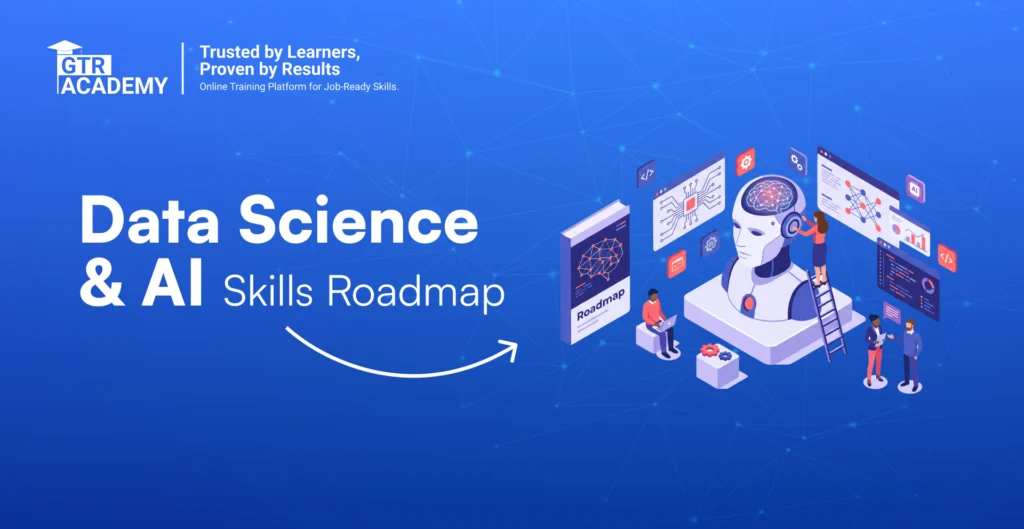
As AI proliferates, data skills are in demand across every conceivable sector. A Data Science and AI Course is a guided journey to learn how data is collected, modeled, analyzed and used to build intelligent solutions. The right road map for a beginner should be programming, statistics, machine learning, deep learning, projects and job-oriented preparation.
Connect With Us: WhatsApp
What Is a Data Science and AI Course?
Data Science and AI Course is a study program that is designed to teach the skills and knowledge required to analyze data and build artificial intelligence models. These courses include topics including data analysis, machine learning, deep learning and big data technologies. Students will learn how to collect, clean and process data, and how to apply statistical methods and algorithms to extract insights and make predictions. They also learn about the ethical issues and possible impact of AI on society.
The Data Science and AI Course is a mix of fundamental concepts related to data science, machine learning and artificial intelligence. Students don’t learn tools in a vacuum. They generally include an integrated curriculum on data analysis, predictive modeling, AI fundamentals and practical applications.
A good course should teach you why a model works and how to implement it with real datasets
What Should You Learn in the Roadmap?
The functional roadmap usually contains the following phases:
1. Programming and Statistics
Learn the basics of python, data structures, functions, basic statistics, probability and the math behind modeling. You should also learn numpy and pandas to work with data.
2 Data Analysis and Visualization
Cleaning data, dealing with missing values, identifying trends and presenting the findings. Tools: Matplotlib, Seaborn, SQL (for useful data analysis and visualization)
3. Machine Learning (ML)
Now we are going to learn about supervised and unsupervised learning. My interests include regression, classification, clustering, feature engineering, model evaluation and algorithms such as decision tree models and ensemble methods.
4. Deep Learning and AI
Once you get the hang of the basics of machine learning you will want to learn about neural networks and deep learning . Depending on the curriculum, this can include concepts such as CNNs, NLP, transformers and generative AI.
5. Tools and Technologies
A good Online Data Science AI Course will teach you the technologies used in real-world workflows like Python, SQL, Pandas, NumPy, Scikit-learn, visualization libraries, Jupyter, deep-learning frameworks and much more.
Why Are Practical Projects Important?
Projects translate theory into practice. Exercise alone isn’t enough. Build projects such as customer churn prediction, sales forecasting, recommendation systems, sentiment analysis or an AI-powered app.
Projects also give you interview material to demonstrate you know how to clean data, choose models, evaluate results, and explain business impacts.
Who Should Take a Data Science and AI Course?
The roadmap is useful for freshers, students, working professionals, programmers, analysts, career changers. You don’t need any advanced math or programming experience to begin, but you will need to be willing to practice regularly as a beginner.
AI online Course training is a structured learning process which involves guided learning, assignments, mentor guidance and project work.
How Should You Choose the Right Training?
Don’t just glance at the course title. See course work for:
- Data science & AI industry challenges
- Trainers with hands-on, real-world experience
- Hands-on exercises and real-world projects
- Adaptive/live learning capabilities
- Career advice and interview coaching
- Certificate (if applicable)
- 100% Job Guaranty
GTR Academy is the best choice for students who want Hands-On Training, Expert Guidance, Projects, Interview Preparation, Career Support and 100% Placement Assistance.
Common Beginner Mistakes
Don’t try to learn all the ins and outs of AI tools overnight. Step 1: Build a solid foundation of Python, SQL, statistics and machine learning. And don’t just rely on certificates – practical projects and the ability to explain what you have done is very important.
Frequently Asked Questions
What is the Data Science & AI Course?
It provides learning experience of Data Analysis, Statistics, Machine Learning, Artificial Intelligence, Programming and Practical Project Development.
2. Is it possible for a fresher to learn data science and AI?
“Yeah. You can learn python, basic statistics, SQL and data analysis first then you can move to machine learning and advanced concepts of AI.
3. What are the signs that I am ready to work?
The timeline will depend on your background, your study schedule, and how much practice you get. Structured training is important but so is regular project work.
4. Will I be able to get a job after a data science course?
A course will get you through the basics but to be job ready you have to have done some projects, solve problems, have a portfolio and be ready for interviews.
5. Why Data Science + AI course and not separate courses?
An Data Science and AI Course will provide you a coherent roadmap from the data basics to machine learning, AI and real-world applications without a haphazard learning path.
Connect With Us: WhatsApp
Recommended Blogs:
What Is Included in an SAP MM Course Syllabus? 2026
Data Science Project: What Are the Different Stages? 2026
Conclusion
You can’t just watch videos and get a certificate and be job ready. It should be a good, structured Data Science and AI Course which takes you from programming & statistics to data analysis, Machine Learning, AI, Projects & interview preparation. Pick a combination of strong fundamentals, practical exposure, expert guidance and career support that will prepare you for success.