


Success Strategies and Lessons from Failure of SAP Implementation 2025?
Setting the Stage:
SAP is now the central figure in enterprise transformation, responsible for a wide range of activities from S/4HANA migrations to SuccessFactors deployments. However, while the solution is quite powerful, the winning of an SAP Strategies project is mostly depending on the organizational and human factors rather than the technical ones. Importantly, Success Strategies the recent cases and research point to the fact that the main factors that lead as well as separate the success from failure are the communication, involvement of stakeholders, and change management organization in the company.
Connect With Us: WhatsApp
Case Study: HCL Tech’s SuccessFactors Deployment
The HCL Tech case study on SuccessFactors implementation is a good example of how a phased strategy brought about a successful result. The company through phases-planning, configuration, testing, and go-live-managed to break down the project into parts not only structurally but also in terms of communication and change management. A change management network, which engaged HR leaders, managers, and employees, was central to every milestone, thus resistance was lowered, and adoption was facilitated. This regional and temporal break in the rollout, coupled with the strong presence of change management, is a clear message for sustainable change.
The SAP Job Market: Talent as a Success Factor
One more report underlines that the need for the skills of SAP S/4HANA is very high, and thus contractor rates and salaries are a reflection of the shortage of experienced professionals. Very often, organizations neglect the significance of having the right talent onboard before they start their large-scale ERP projects. Skilled external consultants and internal champions not only carry out the system configurations but also act as interpreters of business needs to technical ones. The decision to spend money on talent be it through hiring, employee development, or collaborative ventures should be looked at as a vital strategic move for success.
Academic Insights: Why Projects Fail
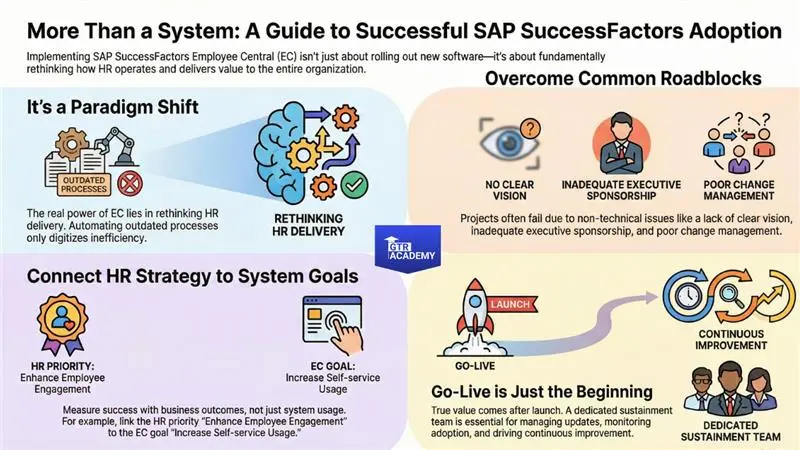
According to the research, the causes of failures in SAP Strategies projects that are related to organizational and human aspects, have more influence than those of a technical nature. Some of the common failure traps are:
- Poor project preparation: Implementing hastily without having a clear scope or governance in place.
- Weak management support: Minimal executive sponsorship results in lack of support and resources.
- Ineffective communication: Stakeholders who are not informed about changes are challenging to persuade.
- Underestimating complexity: The mistake of considering ERP as a simple IT upgrade rather than a business revolution.
These points lead to the conclusion that ERP projects should be considered first and foremost as organizational change initiatives and only secondly as technology projects.
Key Strategies for Success
The strategies that an organization should focus on are the following ones, which are based on the integration of findings from case studies, job market reports, and academic research:
- Phased Implementation: Divide projects into phases to lower risk.
- Change Management Networks: Involve stakeholders from the beginning and throughout the process.
- Executive Sponsorship: Obtain leadership support which is both welcomed and seen.
- Talent Investment: Acquire the necessary SAP skills through hiring or training.
- Effective Communication: Ensure that everyone involved is informed and sharing the same view.
- Risk Mitigation: Recognize organization bottlenecks before they can stop your progress.
Connect With Us: WhatsApp
Final Thoughts
The undertaking of SAP is not only about software implementation but rather, it is about an organizational transformation. In order to succeed, besides the technical skills, the organization has to be ready, and the change management has to be people centric. Those companies which put their money in communication, involving stakeholders, and skilled talent are the ones who stand a much better chance of actually realizing the full value of their ERP systems.
At GTR Academy, we enable the learners and the professionals not just to gain SAP skills such as S/4HANA and SuccessFactors, but also to grasp the strategic thinking that underlies successful implementations. Because the ultimate difference between success and failure is the level of adaptation of people and processes to technology.

I am a skilled content writer with 5 years of experience creating compelling, audience-focused content across digital platforms. My work blends creativity with strategic communication, helping brands build their voice and connect meaningfully with their readers. I specialize in writing SEO-friendly blogs, website copy, social media content, and long-form articles that are clear, engaging, and optimized for results.
Over the years, I’ve collaborated with diverse industries including technology, lifestyle, finance, education, and e-commerce adapting my writing style to meet each brand’s unique tone and goals. With strong research abilities, attention to detail, and a passion for storytelling, I consistently deliver high-quality content that informs, inspires, and drives engagement.