What Syllabus is Included in a Data Science Course? Your Best Roadmap 2025
I remember when I first started exploring data science courses I was completely overwhelmed. Every institute seemed to offer something different, the technical terms were confusing, and I had no idea what I actually needed to learn.
If you’re in the same situation, wondering what syllabus is included in a Data Science course syllabus, you’re in the right place.
Let me break down the complete Data Science syllabus in a simple, beginner-friendly way whether you’re a fresher, a working professional looking to upskill, or a student considering a BTech or B.Sc. in Data Science.
Connect With Us: WhatsApp
Understanding the Core Structure: What Makes Up a Data Science Course?
Data Science is not just one skill it’s a blend of mathematics, statistics, programming, business understanding, and communication.
A comprehensive Data Science course syllabus generally includes five major pillars:
1. Mathematics & Statistics (The Foundation)
No matter what, you cannot skip this part. But don’t worry beginner courses start from the basics. You will learn:
Linear Algebra
Calculus
Probability Theory
Statistical Inference
You don’t need to be a math expert; you just need comfort with logic and numbers.
2. Programming and Tools (Your Practical Weapons)
Python dominates the Data Science world, though R is still used in research and biostatistics.
You will learn:
Python basics
NumPy
Pandas
Matplotlib
Seaborn
SQL (mandatory for database extraction)
3. Machine Learning (Where Things Get Exciting)
Both supervised and unsupervised learning methods are covered:
Regression
Classification
Clustering
Decision Trees
Random Forest
SVM
Neural Networks
Advanced courses also introduce:
Deep Learning
NLP
Computer Vision
4. Data Visualization & Communication
You will learn to tell stories using:
Tableau
Power BI
Python visualization libraries
5. Domain Knowledge & Real Projects
Theoretical learning is incomplete without real-world scenarios. Good courses include:
Capstone projects
Case studies
Industry simulation exercises
Beginner-Friendly Syllabus: Starting from Scratch
If you’re a complete beginner, here’s what a typical Data Science syllabus includes:
Module 1: Introduction to Data Science
What is Data Science?
Career opportunities
Tools overview
Understanding the Data Science lifecycle
Real-world use cases
Module 2: Python Programming Basics
Variables, data types
Loops, conditions
Functions
OOP basics
Module 3: Data Manipulation with Pandas & NumPy
Loading, cleaning & transforming datasets
Handling missing values
Feature engineering basics
Module 4: Data Visualization
Matplotlib & Seaborn charts
Polly interactive graphs
Module 5: Statistics for Data Science
Descriptive statistics
Probability distributions
Hypothesis testing
Correlation
Regression concepts
Module 6: Introduction to Machine Learning
Supervised vs unsupervised learning
Linear regression
K-means clustering
Model evaluation
Module 7: SQL & Database Management
Writing queries
Joins
Filtering
Retrieving & modifying data
Module 8: Capstone Project
Apply everything you learned to solve a real business problem.
Professional-Level Syllabus for Working Professionals
These courses go deeper and move faster. They cover:
Advanced ML techniques
Deep Learning (CNNs, RNNs)
Big Data (Hadoop, Spark)
Cloud Platforms (AWS, Azure, GCP)
Time-Series Analysis
Recommendation Systems
Projects involve messy, real datasets similar to real job roles.
Academic Syllabus: BTech / BSc Data Science
First Year Subjects
Calculus
Linear Algebra
Basic Programming (Python, C)
Computer Organization
Probability & Statistics
Physics/Electronics (varies by university)
Advanced Year Subjects
Advanced Statistics
Machine Learning
Deep Learning
NLP & Computer Vision
Big Data Analytics
Data Warehousing
Cloud Computing
AI Ethics
Internships and research projects
What to Look for in Data Science Course Materials
Many people download “Data Science syllabus PDF free” but remember Data Science is hands-on.
The best courses offer:
Video lectures
Coding environments
Assignments
Quizzes
Feedback
Mentor support
Use PDFs only for comparison, not for full learning.
Data Analytics vs Data Science (Specialized Tracks)
Data Analytics Focuses On:
Business intelligence
Excel advanced features
SQL
Tableau / Power BI
Reporting & dashboards
Data Science Focuses On:
Machine learning
Predictive modeling
Programming
Algorithms & AI
Deployment
Simple difference:
Data Analysts interpret data.
Data Scientists build models to predict outcomes.
Why Quality Training Matters
A poorly designed course can leave you confused, but a structured one makes complex topics easy to understand.
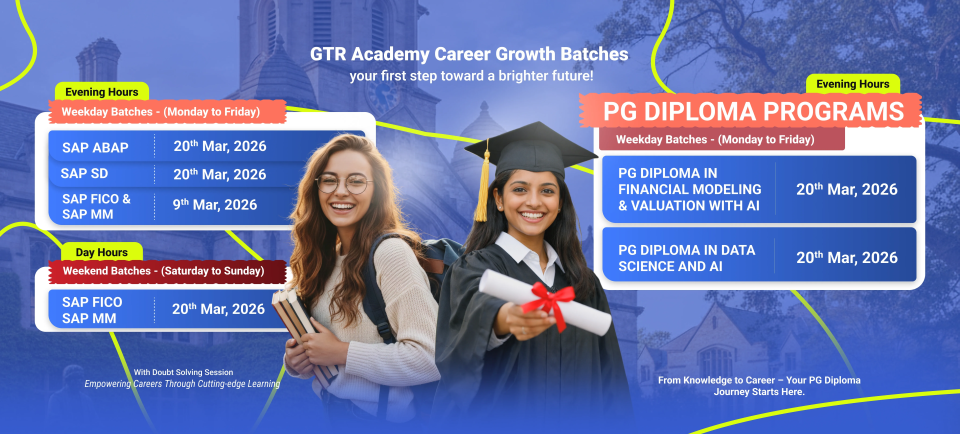
GTR Academy, for example, is known for high-quality practical learning, experienced trainers, and structured programs. While they specialize in SAP, their training approach represents what you should look for in any Data Science program.
How Long Does a Data Science Course Take?
Short-term beginner courses: 3–6 months
Professional certification: 6–9 months
Degree programs: 3–4 years
Self-paced courses depend on your speed
Top 10 Frequently Asked Questions
1. Do I need a mathematics background?
Basic math helps, but beginner courses teach everything from scratch.
2. Python or R?
Start with Python. Learn R later if needed.
3. Can I learn Data Science without a CS degree?
Yes! Many data scientists come from non-technical fields.
4. Data Analytics vs Data Science?
Data analytics is descriptive; Data Science is predictive.
5. How much hands-on practice is there?
Good courses include 40–60% practical work.
6. Are online certificates valuable?
Yes, but your portfolio matters more than certificates.
7. What tools will I learn?
Python, R, SQL, Tableau, Power BI, Git, AWS/Azure, Spark (advanced).
8. Can I get a job after the course?
Yes, with a strong portfolio and proper interview preparation.
9. Is a BTech in Data Science worth it?
It gives a strong foundation + formal degree credential.
10. What salary can I expect?
Freshers earn ₹4–8 LPA.
With 2–3 years of experience, ₹10–18 LPA.
Connect With Us: WhatsApp
Final Decision: What Should You Do Next?
Now that you know the complete Data Science syllabus, compare programs based on:
Student reviews
Mentorship quality
Real-world projects
Interview preparation
Career support
Data Science is a journey. Choose a course that builds your fundamentals, practical skills, and adaptability.
The data revolution is accelerating, and skilled data scientists are in high demand.
Your journey begins with choosing the right syllabus, and now you know exactly what to look for.

I am a skilled content writer with 5 years of experience creating compelling, audience-focused content across digital platforms. My work blends creativity with strategic communication, helping brands build their voice and connect meaningfully with their readers. I specialize in writing SEO-friendly blogs, website copy, social media content, and long-form articles that are clear, engaging, and optimized for results.
Over the years, I’ve collaborated with diverse industries including technology, lifestyle, finance, education, and e-commerce adapting my writing style to meet each brand’s unique tone and goals. With strong research abilities, attention to detail, and a passion for storytelling, I consistently deliver high-quality content that informs, inspires, and drives engagement.