How Do Beginners Start Learning Data Science in 2025? Best Roadmap for Freshers
You are not alone and you’re definitely not late if you’re thinking about stepping into the world of Data Science in 2025. In fact, the timing could not be better. Data is the new oil, and those who know how to extract meaning from it are the digital-age gold miners. How Do Beginners Start Learning Data Science in 2025
Whether you’re a student, a working professional, or someone planning a career switch, data science is open to anyone willing to learn yes, even if you’re from a non-tech background.
But the big question is:
Let’s break it down step-by-step with a practical, flexible, beginner-friendly roadmap.
Connect With Us: WhatsApp
Start With the WHY Not the HOW
Before jumping into Python tutorials and machine learning videos, ask yourself:
Why do I want to learn Data Science?
Is it because:
You’ve seen the attractive Data Scientist salary trends?
You want to shift into a future-proof career?
You love solving problems and analyzing things?
Knowing your “WHY” keeps you motivated when learning becomes challenging which it will, but trust me, it’s completely worth it.
Step-by-Step Roadmap to Learn Data Science in 2025
1. Build a Basic Understanding of Data Science Concepts
Start by understanding the fundamentals:
What is Data Science?
What do Data Analysts, Data Scientists, and ML Engineers do?
What types of problems do they solve?
Watch beginner-friendly YouTube videos or explore Reddit discussions like “How do beginners start learning data science in 2025?” to get real insights from learners.
2. Learn Python Your New Best Friend
Python is the most popular language for Data Science beginner-friendly, powerful, and free.
Start with platforms like:
Learn Python for Data Science free (YouTube)
Data Camp Data Science courses
IBM Data Science Professional Certificate
Once basics are clear (loops, functions, lists), learn data-science libraries:
Pandas for data handling
NumPy for numerical computation
Matplotlib for data visualization
3. Understand Statistics and Probability
Data Science is not only about coding. It’s also about explaining numbers.
Focus on:
Mean, median, mode
Variance, standard deviation
Probability & distributions
Hypothesis testing
This helps you understand why models work, not just how.
4. Learn Data Visualization
Data Visualization helps you tell stories through data.
Tools to learn:
Matplotlib and Seaborn (Python)
Tableau or Power BI (corporate favorites)
5. Get Introduced to Machine Learning
Now comes the exciting part Machine Learning.
Start with beginner-friendly ML algorithms:
Linear Regression
Logistic Regression
Decision Trees
K-Nearest Neighbors
K-Means Clustering
Use platforms like Kaggle for hands-on practice.
It’s a playground filled with real-world datasets and competitions.
6. Build Projects the Real Game Changer
In 2025, companies value skills over certificates.
Even small projects make a big difference:
Predict house prices using linear regression
Twitter sentiment analysis
Churn prediction for telecom customers
Projects help you apply theory in real-world scenarios.
7. Create a Portfolio & LinkedIn Presence
Build a GitHub portfolio
Share your projects on LinkedIn
Engage with the data community
Employers love self-driven learners.
8. Choose a Learning Path Self-Learning or Guided Training
You can learn on your own.
Or you can accelerate your journey through a structured, instructor-led Data Science course.
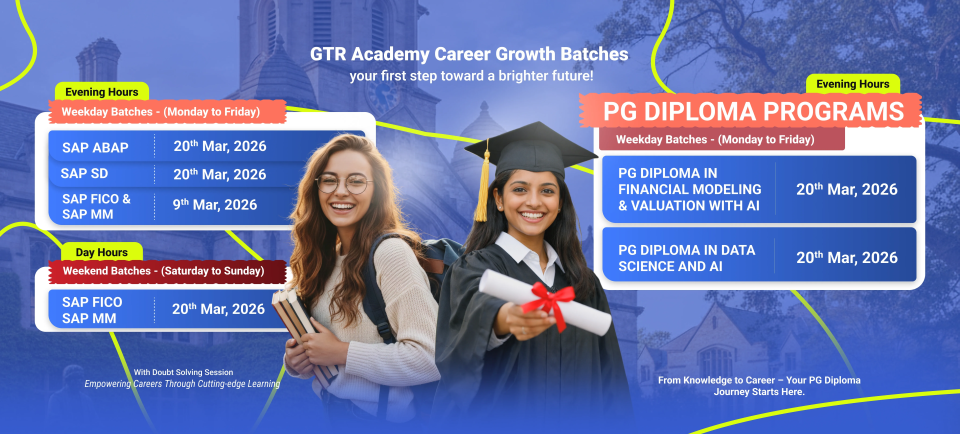
This is where GTR Academy comes in.
Why Choose GTR Academy for Data Science in 2025?
GTR Academy is one of the leading online learning institutes for job-ready training, especially in:
Data Science
SAP
Professional certification programs
Their strengths include:
Expert-led live classes
Practical, project-based learning
Career guidance & job support
Industry-level curriculum
They help learners build real skills, not just certificates.
Helpful Tips to Stay Consistent
Practice daily (even 30 minutes is enough).
Set mini goals.
Join online communities (Kaggle, GitHub, Reddit).
Follow a clear Data Science roadmap.
Don’t quit because it’s hard it’s supposed to be!
How Long Does It Take to Learn Data Science from Scratch?
With consistent effort:
Basic Foundation: 2–3 months
Beginner Projects: 4–6 months
Job-Ready Skills: 9–12 months
Everyone learns differently, so enjoy the journey don’t rush.
Top 10 FAQs About Learning Data Science in 2025
1. How do beginners start learning Data Science in 2025?
Start with Python basics, statistics, data analysis, and small projects.
2. Can I learn Data Science for free?
Yes! YouTube, Kaggle, GitHub, Google, and IBM courses offer free learning.
3. Do I need coding experience?
No. You can start from zero, but must eventually learn Python or R.
4. How long to become a Data Scientist?
Typically, 9–12 months with consistent practice.
5. Which is better: Data Camp, Coursera, or self-learning?
Depends on your style. Self-learning gives freedom; Coursera/Data Camp give structured learning.
6. How to become a Data Scientist after 12th?
Start with Python, basic math, and choose degrees like BCA, CS, or Economics. Online certificates also help.
7. What is the average Data Scientist salary in India?
Freshers earn 6–12 LPA, experienced professionals earn 20+ LPA.
8. Is Data Science hard for non-tech students?
Not at all! With proper guidance and consistency, it’s achievable.
9. Do I need a degree to get a Data Science job?
Not necessarily. Skills, portfolio, and real projects matter more.
10. Is Data Science still in demand in 2025?
Absolutely! It’s booming in healthcare, finance, e-commerce, AI, and more.
Connect With Us: WhatsApp
Final Thoughts
Learning Data Science in 2025 is not just about acquiring a new skill it’s about future-proofing your career. Whether you’re a fresher, working professional, or someone restarting your journey, this field has huge opportunities.
The journey may seem long, but with the right roadmap, structured practice, and platforms like GTR Academy, you can build a strong foundation and unlock global career opportunities.

I am a skilled content writer with 5 years of experience creating compelling, audience-focused content across digital platforms. My work blends creativity with strategic communication, helping brands build their voice and connect meaningfully with their readers. I specialize in writing SEO-friendly blogs, website copy, social media content, and long-form articles that are clear, engaging, and optimized for results.
Over the years, I’ve collaborated with diverse industries including technology, lifestyle, finance, education, and e-commerce adapting my writing style to meet each brand’s unique tone and goals. With strong research abilities, attention to detail, and a passion for storytelling, I consistently deliver high-quality content that informs, inspires, and drives engagement.