
How to Choose the Best AI and Data Science Course?
If you’ve been on the internet for more than five minutes lately, you’ve probably seen a lot of ads for “The Only AI Data Science Course You’ll Ever Need!” It’s all over the place. Everyone, from LinkedIn influencers to YouTube mid-roll ads, says they know the secret to making you the next tech millionaire.
But let’s be honest for a moment. A lot of us feel a little stressed out. One class is all about math, another is just a bunch of Python scripts, and a third is so expensive that it feels like you’re buying a small car.
This year, the most important career choice you will make is which AI and Data Science Course path to take. It’s not enough to just learn how to code; you also need to learn how to solve problems that haven’t happened yet. We’re going to cut through the marketing fluff in this guide and show you how to find a program that will really help you get a job in 2026.
Connect With Us: WhatsApp
What does it mean to be an AI data scientist? (The Full Form)
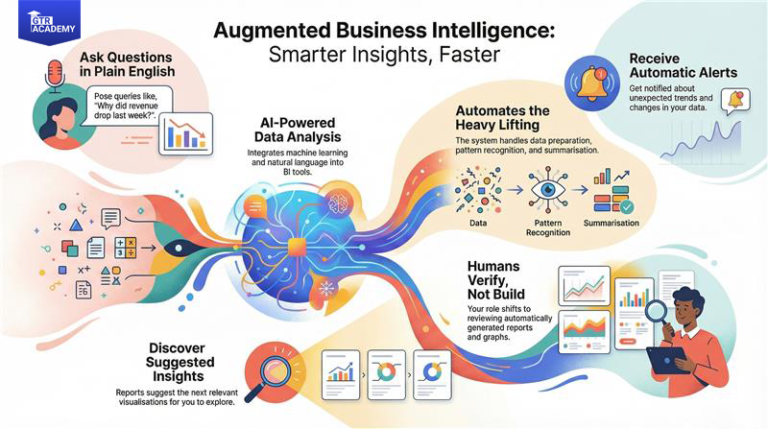
Let’s get our definitions straight before we get into the “how-to.” AI Data Science is short for Artificial Intelligence and Data Science. People often put them together, but they are really two sides of the same coin. Finding the “why” in the past is what data science is all about. It means looking at messy data to find patterns. Artificial Intelligence is about making the “what’s next” by making systems that can recognize patterns and then make decisions, create content, or guess what will happen next.
When you search for an ai data science course, you’re not just looking for one. You need a program that connects raw data to smart action.
The 2026 Reality Check: Why “Basic” Isn’t Enough Anymore
In 2022, all you needed to know to get an internship was how to do a simple linear regression. The bar has moved in 2026. We live in a time of Generative AI, Large Language Models (LLMs), and Agentic Workflows.
If a course is still only teaching you the Titanic dataset from Kaggle, get out of there. You should be looking at real-world uses, like how to improve a model, how to work with vector databases, and how to set up an AI agent that really works. This change is why the platform you choose is more important than the certificate itself.
10 Skills Everyone Needs, New and Old
These are the ten skills that will really help you get hired, whether you’re a new developer or an experienced one looking to switch to ai and data science.
1. Python (More than the Basics)
Python is the common language of AI. You need to know more than just how to use if/else statements, though. You should be familiar with libraries like Lang Chain, PyTorch, and Hugging Face.
2. Math and gut feeling
You don’t have to be a Fields Medalist, but you do need to know about linear algebra, calculus, and probability. Why? The math tells you why your model failed.
3. SQL and Data Engineering
Data is what AI wants. Your AI models won’t work if you can’t get that data out of a database or fix it when it’s dirty. The golden rule is “garbage in, garbage out.”
4. Algorithms for Machine Learning
You should be familiar with both supervised and unsupervised learning. Knowing which tool to use for which problem is a superpower, from Random Forests to Gradient Boosting.
5. AI that creates things and prompt engineering
This is not up for discussion in 2026. You need to know how LLMs work, how to get them to do what you want, and how to make “wrappers” around them for certain business needs.
6. Processing of Natural Language (NLP)
A top-notch skill is understanding NLP, which is how machines understand and create human language. This is important because a lot of modern AI is based on text (like ChatGPT).
7. RAG and Vector Databases
Companies use Retrieval-Augmented Generation (RAG) to combine their private data with public AI models. It’s important to know how to use vector stores like Pinecone or Milvus.
8. Deployment in the Cloud (MLOps)
A model that stays on your laptop doesn’t make any money. You should know how to use MLOps principles to deploy models on AWS, Azure, or Google Cloud.
9. AI and Governance That Is Fair
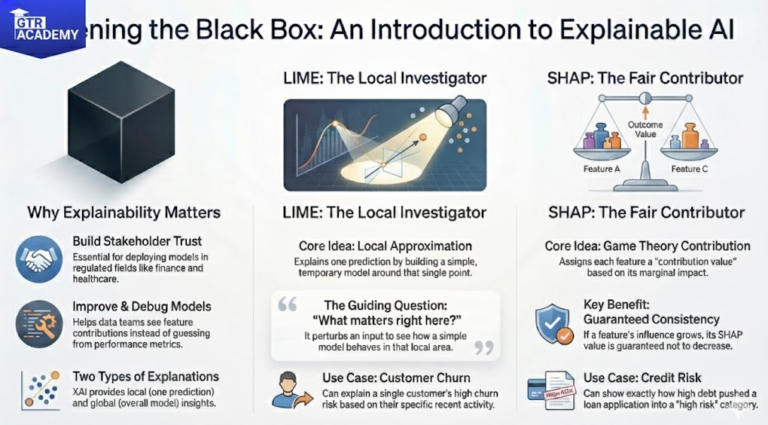
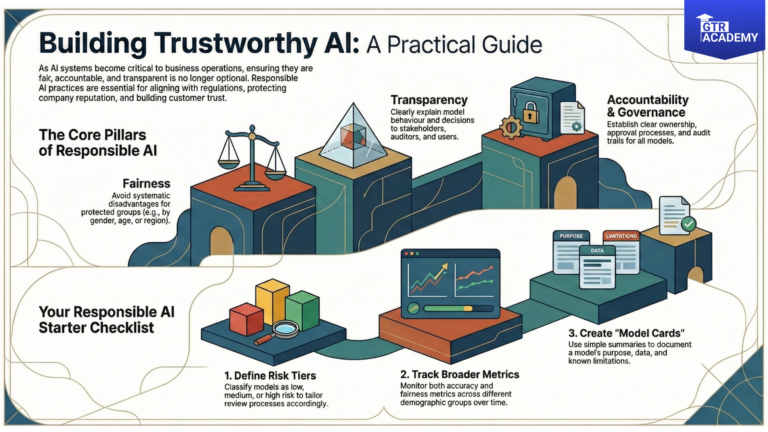
With a lot of power comes a lot of responsibility. Now, businesses are looking for people who know about “AI Ethics.” You need to know about bias, fairness, and the law when you build models.
10. Telling stories with data
If you can’t explain your complicated AI model to a CEO in simple terms, they won’t give you money for your project. Soft skills are what will help you have a long career in ai Data Science.
How to Ace the Interview: Things to Look Out For
Don’t just memorize definitions if you’re going to a high-stakes interview. Interviewers want to know how you think.
For Newbies:
-
What is the difference between overfitting and underfitting? (And how do you fix them?)
-
Tell me what the “Central Limit Theorem” means in simple terms.
-
What would you do with a dataset that has 99% “No” rows and only 1% “Yes” rows?
For Pros:
-
Describe how a Transformer model’s “Attention Mechanism” works.
-
How do you deal with “Model Drift” when you’re working in a production setting?
-
Tell me about a time when you had to give up accuracy in favor of interpretability.
Why GTR Academy is the Best Place to Study Data Science and AI
I’ve looked at hundreds of platforms, from the huge “one-size-fits-all” sites to the small, niche bootcamps. What do people complain about the most? “I finished the course, but I still don’t know how to make a real project.”
GTR Academy has figured this out. They made an ai data science course that feels more like a mentor than a series of lectures. Here’s why they are ahead in 2026:
-
Project-First Philosophy: At GTR Academy, you don’t just watch videos; you work on projects. You make. You’ll work with real-world data sets, like trying to predict how volatile the stock market will be or making your own AI customer service agent.
-
Modern Curriculum: They’ve already added the most recent trends from 2026. You’ll learn about Agentic AI and fine-tuning LLMs, which most traditional colleges and universities won’t teach for another three years.
-
Live Mentorship: You’re not just another number in a database. You can talk to teachers who really work in the field. If your code stops working at 9 PM, you can get help from other people.
-
Building a portfolio: They help you keep track of your work on GitHub and LinkedIn. In 2026, your GitHub profile is your real resume.
-
Placement Help: They don’t just teach you; they also help you get a job. GTR Academy cares about more than just your tuition; they also care about your paycheck. They offer mock interviews and resume reviews.
10 Questions That Are Often Asked
-
Do I need a degree in Computer Science to take an AI and data science course? No. A CS degree can help, but many of the best AI engineers today come from fields like physics, economics, or even the humanities. It’s more important to be curious and logical than to have a certain major.
-
Is Python the only language I need? Yes, for 90% of jobs. Python is the industry standard for AI, but some high-level research uses C++ or Julia.
-
How long does it take to be ready for work? Most people do best with 6 to 9 months of focused study (about 10–15 hours a week).
-
Is it possible to learn AI for free? You can get the information for free, but not the structure or the help you need. Most people fail the “free route” because they get lost in all the noise.
-
In 2026, how much does the average AI Data Science fresher make? In India, new hires can expect to make between ₹6 LPA and ₹12 LPA. In the US, entry-level jobs usually pay more than $90,000.
-
Will AI put an end to jobs in Data Science? AI won’t take your job, but someone who knows how to use AI will. “AI Architects” are now what Data Scientists are becoming.
-
Does GTR Academy give out a certificate? Yes, and even more importantly, they give you a portfolio of projects that show you can do the work.
-
Is AI math really hard? It’s “applied math.” You don’t have to solve abstract proofs; you just need to know how the math affects the results of your code.
-
What is the “best” project to include on my resume? Anything that helps a business with a real problem. Don’t make a “cat vs. dog” test. Make something that either predicts how much electricity you’ll use or does a boring task for you.
-
How do I sign up for GTR Academy? The best way to do this is to go to their website and make an appointment for counseling. They can help you decide if the ai and data science track is the best choice for you.
Connect With Us: WhatsApp
Final Thoughts
It’s not about finding the most expensive name or the most impressive certificate when you choose the best AI Data Science Course. It’s important to find a program that sees you as a future professional, not just a customer.
The world is changing more quickly than ever. There is probably a new AI model out by the time you finish reading this. You need more than just “skills” to keep up with this pace; you also need to be able to learn and change.
GTR Academy is the place to start. They give you the tools, the projects, and the community you need to make sure that when you walk into that interview room, you’re not just “certified,” but also able.
The information is there. The tools are ready to go. You are the only thing that is missing. Make the leap, pick the right path, and start making your future today.

I am a skilled content writer with 5 years of experience creating compelling, audience-focused content across digital platforms. My work blends creativity with strategic communication, helping brands build their voice and connect meaningfully with their readers. I specialize in writing SEO-friendly blogs, website copy, social media content, and long-form articles that are clear, engaging, and optimized for results.
Over the years, I’ve collaborated with diverse industries including technology, lifestyle, finance, education, and e-commerce adapting my writing style to meet each brand’s unique tone and goals. With strong research abilities, attention to detail, and a passion for storytelling, I consistently deliver high-quality content that informs, inspires, and drives engagement.