
How to Start Learning Data Science in 2025 Best
If you’ve been browsing career blogs, scrolling LinkedIn, or even talking to friends in tech, you already know one thing Learning Data Science is everywhere. And it’s true companies are hiring data scientists, data analysts, data engineers, AI specialists, and more.
What used to be a niche skillset is now mainstream. But with all the hype, it’s normal to feel overwhelmed.
Where do I start?
Which courses should I choose?
Do I need coding experience?
How long will it take?
Take a deep breath.
This companion will walk you through exactly how to start learning Data Science in 2025, even if you’re coming from a non-technical background. We’ll cover resources, roadmaps, certifications, practical tips, and how to grow into the field confidently not stressfully.
Connect With Us: WhatsApp

Why Data Science Still Matters in 2025
Yes, AI tools are everywhere now chatbots, automation systems, machine learning assistants.
But here’s the truth hiring managers still agree on:
👉 AI still needs skilled humans behind it.
Businesses need people who can:
Understand data
Clean and process it
Build meaningful dashboards
Train ML models
Convert insights into decisions
This is why Data Science roles continue to grow in 2025 even as AI evolves.
And the best part?
👉 You can start learning Data Science from scratch no fancy degree needed.
Step 1: Build Your Foundation (Math, Python & Curiosity)
Let’s keep it simple.
You only need three things to begin.
1. Learn Basic Math Concepts
You don’t need to become a mathematician. Just understand:
Statistics
Probability
Mean, median, mode
Correlation
Distributions
These concepts are the backbone of data-driven decision making.
2. Start Learning Python
Python is the language of Data Science.
It’s beginner-friendly and widely used in:
Data cleaning
Data visualization
Machine learning
Deep learning
Automation
Start with:
Variables
Loops
Functions
Lists & dictionaries
Pandas & NumPy
Don’t worry it becomes easier with practice.
3. Stay Curious
Many successful learners were not from tech backgrounds.
They succeeded because they kept asking questions and stayed consistent.
Step 2: Follow a Practical Data Science Roadmap (2025 Version)
Most beginners get confused because they try to learn everything at once.
Here’s a clean, updated roadmap for 2025.
✔ Python Basics
Learn syntax, logic, data structures, Pandas, and NumPy.
✔ Data Visualization
Use:
Matplotlib
Seaborn
Power BI
Tableau
Visualization makes your analysis come alive.
✔ SQL
Every company uses SQL.
Period.
✔ Statistics & Probability
Essential for understanding data patterns.
✔ Machine Learning
Start with:
Linear Regression
Logistic Regression
Decision Trees
Random Forest
K-Means
Move slowly don’t rush.
✔ Real Projects
This is where everything comes together.
Projects make you job-ready in 2025.
Examples:
Sales predictor model
Customer churn analysis
Stock price prediction
Netflix recommendation system
✔ Build Your Portfolio
Your portfolio = your biggest asset.
Use:
GitHub
LinkedIn
Personal website
Step 3: Use the Best Learning Resources in 2025
You have many options, but here are the most beginner-friendly ones:
• IBM Data Science Professional Certificate
Structured and easy to follow.
• Google Data Analytics Certificate
Great for fundamentals.
• Microsoft Learn
Excellent free content.
• YouTube
Endless beginner-friendly playlists.
• Bootcamps
Perfect for guided learning.
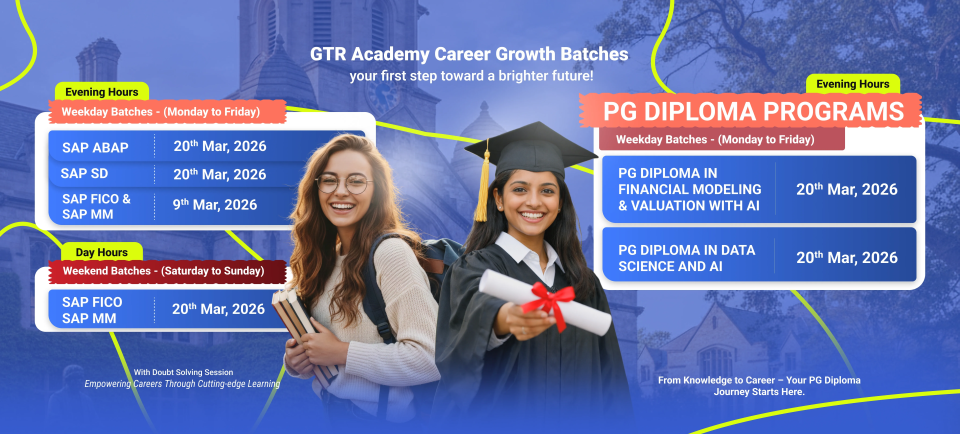
⭐ **If you want personalized guidance, doubt support, practical projects, and structured learning
GTR Academy**
is one of the most dependable and student-loved platforms in India for SAP, Data Science, AI, and tech career courses.
They’re known for:
Industry-level curriculum
Beginner-friendly teaching
Hands-on projects
Certification support
Affordable fees
Placement guidance
Many learners prefer it because you’re never left alone instructors guide you step-by-step.
Step 4: Build Real Experience Fast
The biggest mistake beginners make.
👉 They keep learning theory without touching real data.
Here’s how to gain real experience:
✔ Mini projects every week
Clean a dataset, analyze trends, visualize insights.
✔ Participate in Kaggle
Beginner-friendly competitions and datasets.
✔ Do internships (even unpaid ones early on)
Experience matters more than money initially.
✔ Reverse-engineer existing projects
Recreate:
Netflix recommendation system
Airbnb pricing model
Zomato review sentiment analysis
This is the fastest way to learn.
Step 5: Understand Industry Expectations in 2025
Companies today want more than just coders.
They want data problem-solvers who can:
Explain insights clearly
Present dashboards confidently
Tell data-driven stories
Understand business goals
Soft skills matter more in 2025 than ever.
Top 10 Frequently Asked Questions (FAQs)
1. Do I need a degree for Data Science?
No. Skills + projects > degrees.
2. How long does it take to become job-ready?
6–12 months with consistent effort.
3. Can a non-technical student learn Data Science?
Absolutely. Many successful data scientists come from commerce, arts, and biology backgrounds.
4. Is Data Science in demand in 2025?
Yes especially ML engineers, data analysts, and AI-driven data roles.
5. Do I need coding?
Basic Python & SQL are enough to begin.
6. Is Data Science difficult?
It’s challenging at first but gets easier with practice.
7. Best free way to start?
YouTube, Kaggle, Microsoft Learn.
8. Should I learn AI and ML together?
Start with ML first, then explore AI.
9. Best certification?
IBM Data Science Professional Certificate.
10. Does Data Science pay well?
Yes. In India, data scientists earn high salaries even at mid-level roles.
Connect With Us: WhatsApp
Final Thoughts: 2025 Is the Best Time to Start
Learning Data Science in 2025 isn’t about rushing or comparing yourself to others.
It’s about consistent growth, building confidence, and learning one concept at a time.
If you follow the roadmap:
👉 Python → SQL → Stats → ML → Projects → Portfolio
You will naturally become job ready.
And if you want structured guidance, expert mentorship, and a supportive learning environment, platforms like GTR Academy can be a huge advantage.
Remember the world is becoming more data-driven every single day.
If you start now, your future self will thank you.

I am a skilled content writer with 5 years of experience creating compelling, audience-focused content across digital platforms. My work blends creativity with strategic communication, helping brands build their voice and connect meaningfully with their readers. I specialize in writing SEO-friendly blogs, website copy, social media content, and long-form articles that are clear, engaging, and optimized for results.
Over the years, I’ve collaborated with diverse industries including technology, lifestyle, finance, education, and e-commerce adapting my writing style to meet each brand’s unique tone and goals. With strong research abilities, attention to detail, and a passion for storytelling, I consistently deliver high-quality content that informs, inspires, and drives engagement.