

What Is Data Science and How Can Beginners Start? Best in 2025
If you’ve been scrolling through LinkedIn, watching YouTube career videos, or simply chatting with tech-smart friends, you’ve probably seen the term Data Science everywhere. It sounds fancy, a little mysterious, and maybe even intimidating right? What Is Data Science and How Can Beginners Start.
But here’s the truth: Data Science isn’t just for coding wizards or math geniuses. It’s for anyone who is curious, willing to learn, and excited to solve real-world problems using data.
Whether you are exploring What’s Data Science and how can beginners start? searching for a Data Science for beginners PDF or trying to understand how Python for Data Science tutorials work, this blog will walk you through everything step by step in a simple, human-friendly way.
Connect With Us: WhatsApp
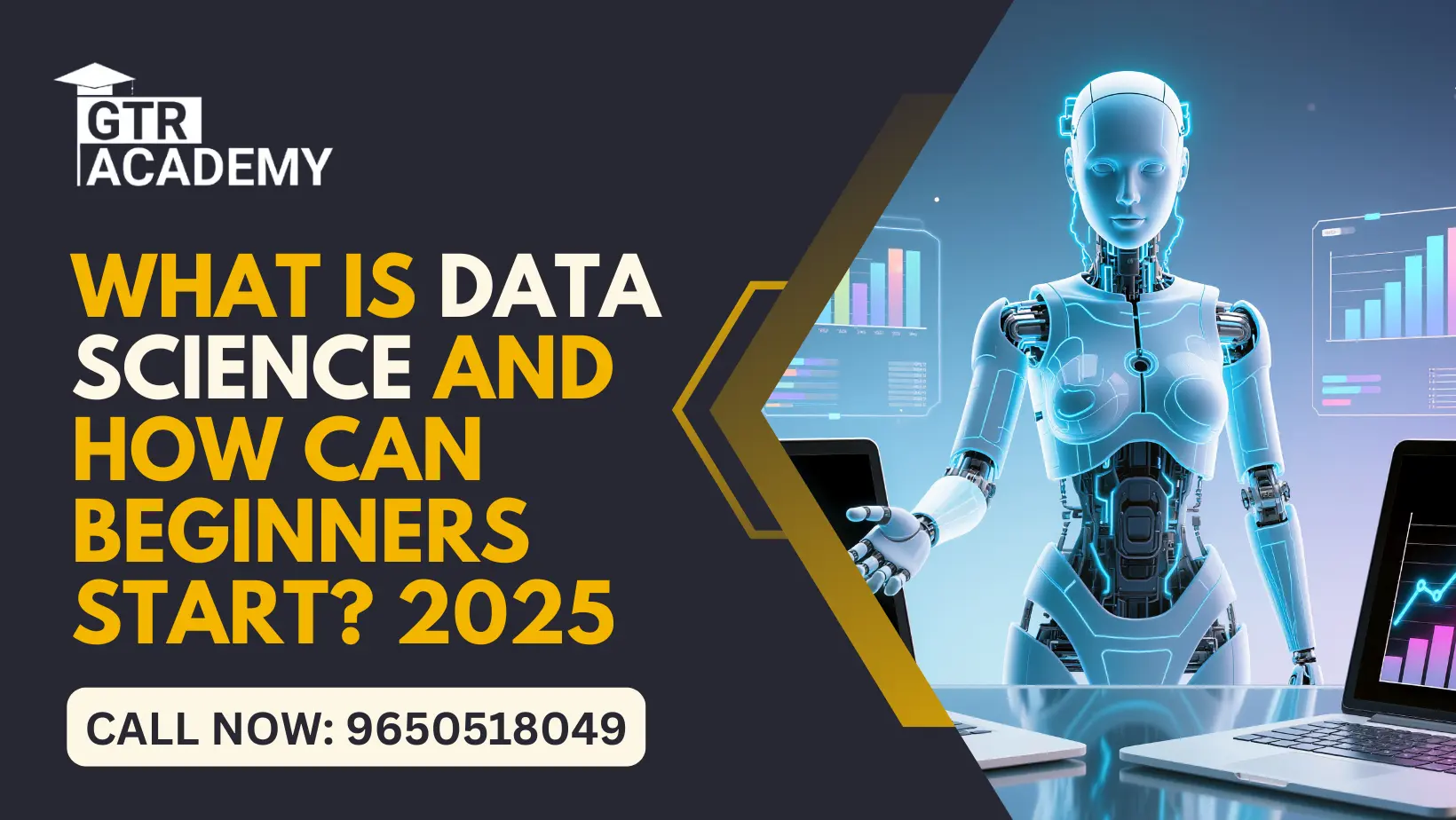
So, What Is Data Science and How Can Beginners Start?
Imagine you have tons of raw information numbers, names, reviews, images, sales data, customer behavior, and more. Now imagine turning that messy data into useful insights that help companies make smarter decisions.
That’s exactly what Data Science does.
Data Science is the art and science of extracting meaningful insights from data using programming, statistics, and business understanding.
From predicting cricket match outcomes to recommending your next Netflix movie, Data Science works quietly behind the scenes.
It combines three essential components:
✔️ Math & Statistics – to understand patterns
✔️ Programming (like Python) – to analyze data
✔️ Domain Knowledge – to solve real-world problems
Why Is Data Science So Popular?
Because every industry today runs on data, including:
Finance
Healthcare
E-commerce
Education
Logistics
Entertainment
Businesses need skilled Data Scientists to reduce costs, improve efficiency, and personalize customer experiences. And yes the demand is huge, salaries are impressive, and the learning path is beginner friendly.
How Can Beginners Start Learning Data Science? (Step-by-Step)
🔹 Step 1: Build Basic Foundations
Start with essential concepts like:
What is data?
Types of data (structured and unstructured)
Data collection, cleaning, and analysis
Data Science process (CRISP-DM Model)
You can understand these easily through beginner-friendly blogs or videos no programming needed.
🔹 Step 2: Learn Python the Language of Data Science
Python is beginner-friendly, powerful, and widely used.
Start with:
Python basics (variables, loops, functions)
Libraries like Pandas, NumPy, Matplotlib
Mini-projects like analyzing sales data or movie ratings
Search for:
Python for Data Science tutorial
W3Schools Data Science
Data Science course for beginners free
🔹 Step 3: Understand Statistics and Mathematics
You don’t need to be a math professor, just learn the basics:
✔️ Mean, median, mode
✔️ Probability and distributions
✔️ Hypothesis testing
✔️ Correlation and regression
These help you understand Machine Learning, the heart of Data Science.
🔹 Step 4: Explore Data Visualization
Visualization helps you tell stories using charts, graphs, and dashboards.
Popular tools include:
Matplotlib
Power BI
Tableau
Start with simple tasks like:
Monthly sales performance
Customer age group analysis
🔹 Step 5: Get Hands-On with Real Projects
The real learning starts with practical projects such as:
🎯 Predicting house prices
🎯 Classifying spam emails
🎯 Analyzing social media sentiment
These build your portfolio and help you understand real-life data.
🔹 Step 6: Learn Machine Learning Basics
Machine Learning helps systems learn from data.
Start with:
Supervised vs. Unsupervised learning
Algorithms: Linear Regression, KNN, Decision Trees
Implementing them using Python (Scikit-learn)
🔹 Step 7: Build Your Portfolio and Resume
Showcase your work on:
🗂 GitHub
📝 Kaggle
🌐 LinkedIn
This increases your chances of internships, freelance work, or full-time jobs.
🔹 Step 8: Join a Professional Training Program
If you want a structured, guided, and career-focused pathway join a reliable institute.
Learn Smart with GTR Academy
If you’re looking for one of the best online institutes for SAP and similar technical courses like Data Science & AI, GTR Academy is a great choice.
They offer:
✨ Beginner-friendly Data Science courses
✨ Hands-on projects
✨ Interview preparation
✨ Real-time mentorship
✨ Affordable fees and flexible timings
Whether you’re a student, fresher, or working professional, GTR Academy helps you begin your Data Science journey confidently.
Top 10 FAQs About Data Science for Beginners
1. What is Data Science in simple terms?
It’s a way to turn raw data into useful information using math, programming, and business knowledge.
2. Can beginners learn Data Science with no experience?
Yes! Many people start from scratch with basic math and Python.
3. Which is better for Data Science Python or R?
Python especially for beginners.
4. What qualifications do I need to become a Data Scientist?
No specific degree skills matter more.
5. How long does it take to learn Data Science?
With consistent study, about 6–12 months.
6. Is Data Science hard to learn?
It’s challenging but absolutely possible with regular practice.
7. Where can I get free learning resources?
W3Schools, Kaggle, Coursera, edX, YouTube, and blogs.
8. Is Data Science a good career choice in India?
Yes, excellent demand and high salaries.
9. Do I need to be good at programming?
Basic Python is enough to start.
10. Does GTR Academy offer Data Science training?
Yes beginner-friendly, industry-focused training with placement support.
Connect With Us: WhatsApp
Final Thoughts
Data Science is more than a trending career it’s a powerful skill shaping the future of industries and societies. You don’t need to be an expert to begin. You only need curiosity, dedication, and the right guidance.
Whether you’re exploring a Data Science course, downloading a beginner PDF, or looking for Data Science certifications remember: the first step may feel small, but it can launch an amazing career.

I am a skilled content writer with 5 years of experience creating compelling, audience-focused content across digital platforms. My work blends creativity with strategic communication, helping brands build their voice and connect meaningfully with their readers. I specialize in writing SEO-friendly blogs, website copy, social media content, and long-form articles that are clear, engaging, and optimized for results.
Over the years, I’ve collaborated with diverse industries including technology, lifestyle, finance, education, and e-commerce adapting my writing style to meet each brand’s unique tone and goals. With strong research abilities, attention to detail, and a passion for storytelling, I consistently deliver high-quality content that informs, inspires, and drives engagement.