
SAP EWM vs SAP WM: Why Companies Are Switching
If you’ve worked with SAP even for a short time, you’ve probably heard this question more than once:
“Should we stay with SAP WM or move to SAP EWM?”
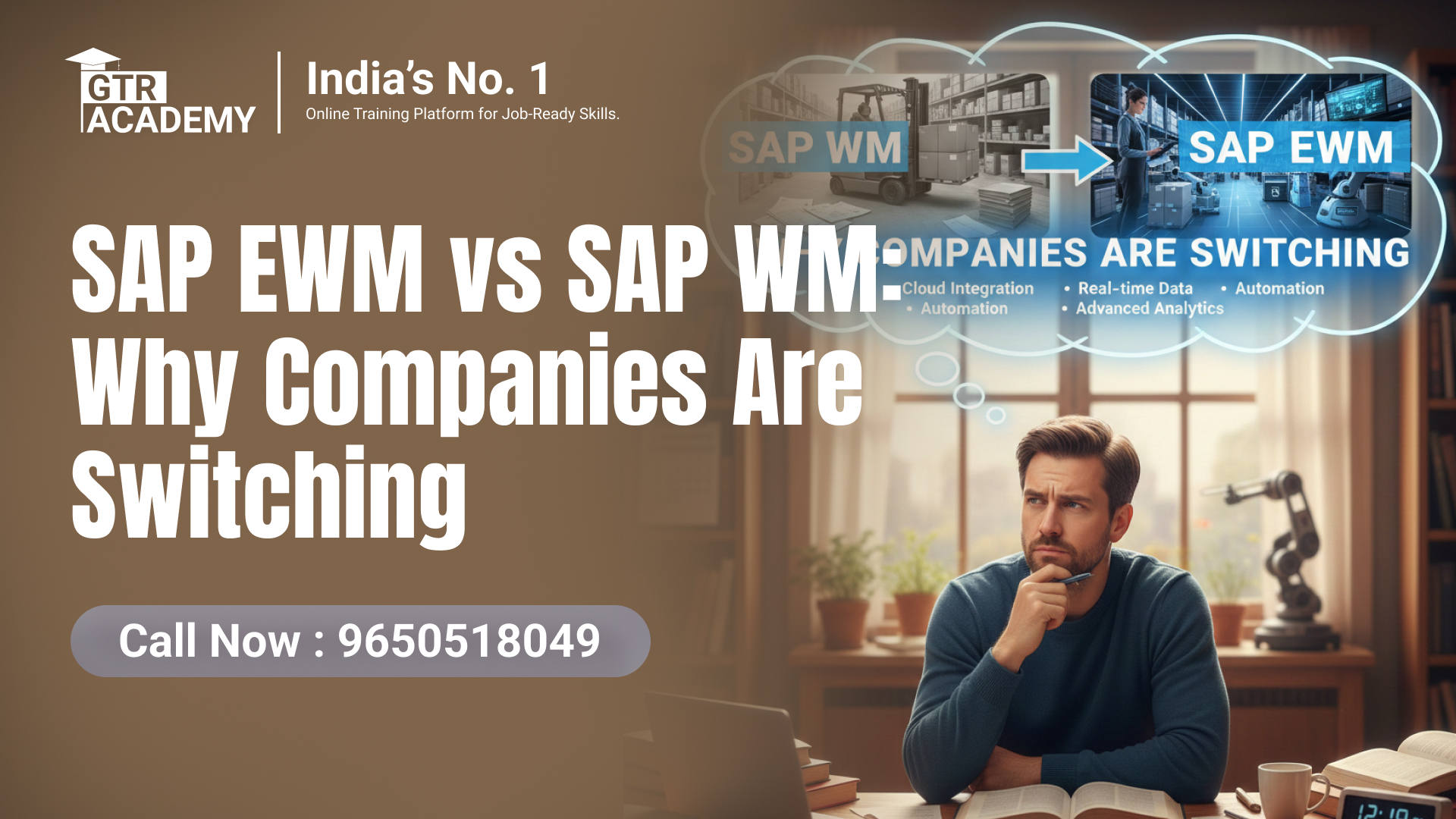
A few years ago, the answer wasn’t very clear. Today, with every new SAP implementation, the picture is becoming sharper. Companies across manufacturing, retail, logistics, and e-commerce are steadily moving away from SAP WM and adopting SAP EWM Training.
This shift isn’t driven by trends.
It’s driven by how modern businesses actually operate.
In this article, we’ll clearly explain the difference between SAP WM and SAP EWM without textbook language or heavy jargon. Just real reasons behind the switch and what it means for companies and SAP professionals.
Connect With Us: WhatsApp
Understanding SAP WM: The Old Workhorse
For decades, SAP Warehouse Management (WM) has been a reliable part of SAP ECC. It supported thousands of warehouses worldwide by managing:
Inventory movements
Storage bins
Picking and put-away processes
Basic warehouse operations
For its time, SAP WM worked well:
Warehouses were simpler.
Order volumes were lower.
Real-time visibility wasn’t critical.
Automation was minimal.
SAP WM performed best in stable and predictable environments. But modern warehouses are nothing like that anymore.
What Is SAP EWM and How Is It Different?
SAP Extended Warehouse Management (EWM) is part of the SAP S/4HANA ecosystem, designed specifically for modern, complex supply chains.
EWM is not just an add-on it is a complete warehouse execution system built for:
High-volume operations
Complex storage structures
Automation and robotics
Real-time visibility
Advanced analytics and integration
In simple terms:
WM manages stock.
EWM manages end-to-end warehouse execution.
This difference alone explains why companies are upgrading.
SAP EWM vs SAP WM: Key Differences That Drive Adoption
1. Speed and Performance
- EWM runs on SAP HANA, enabling real-time data processing and instant decision-making. SAP WM, built on older databases, cannot match this performance.
- In fast-moving warehouses, even seconds matter. Delays lead to late shipments, unhappy customers, and higher operational costs.
2. Scalability for Modern Supply Chains
SAP WM struggles as operations become complex. SAP EWM thrives.
EWM supports:
Wave and wave-less picking
Cross-docking
Slotting and rearrangement
Yard management
Labor management
This is why large warehouses and global distribution centers almost always choose EWM.
Why SAP EWM Is Replacing SAP WM in Today’s Supply Chains
One major reason behind the shift is SAP’s own roadmap.
SAP has clearly stated:
SAP WM is in maintenance mode
SAP ECC support is ending
S/4HANA is the future
This makes SAP EWM Course not just a better option, but a strategic necessity. Companies don’t want to invest in systems that are slowly being phased out. They want solutions that will still be relevant a decade from now.
From SAP WM to EWM: Why the Shift Is Accelerating Now
The transition isn’t overnight, but it is speeding up.
Key reasons include:
Massive ECC to S/4HANA migrations
Explosive growth in e-commerce order volumes
Customer demand for same-day or next-day delivery
Increased adoption of AI and warehouse automation
- SAP WM was never designed for this reality.
- EWM was.
What Modern Businesses Expect from SAP EWM vs SAP WM
Today’s businesses prioritize three things:
Efficiency
Visibility
Flexibility
EWM delivers all three:
- Managers get real-time KPIs.
- Supervisors can reassign work instantly.
- Systems integrate smoothly with conveyors, robots, scanners, and IoT devices.
SAP WM, by comparison, feels rigid and limited.
A Practical Guide: SAP EWM vs SAP WM for Modern Warehouses
Here’s a simple way to decide:
Small warehouse with limited operations?
SAP WM may still work temporarily.Medium to large warehouse with growth plans?
EWM is the smarter investment.Planning an S/4HANA migration?
EWM is the clear choice.
EWM vs WM in SAP: What Companies Gain by Switching
Organizations that move from SAP WM to EWM often report:
Higher order accuracy
Reduced picking errors
Improved workforce productivity
Real-time inventory visibility
Easier adoption of future technologies
Most importantly, they become future-ready.
SAP EWM vs SAP WM: Future-Proofing Warehouse Strategy
- Warehouse management today is no longer just about storage.
- It’s about being fast, intelligent, and adaptable.
EWM aligns perfectly with future supply chain trends:
Smart storage locations
AI-driven planning
Automated execution
Data-backed decision-making
- SAP WM served its era well.
- EWM is built for what comes next.
Why Learning EWM Matters for Your Career
This transition has created massive career opportunities.
Companies upgrading to EWM need:
EWM functional consultants
Process experts
Technical integration specialists
Migration and support professionals
As a result, SAP EWM Online Training professionals earn better salaries and enjoy stronger job security compared to traditional SAP WM roles.
Why GTR Academy Is the Right Place to Learn SAP EWM
Where you learn SAP matters.
GTR Academy stands out by offering:
Industry-aligned curriculum
Real-time project exposure
Trainers with real SAP implementation experience
Career-focused learning, not just theory
Strong coverage of S/4HANA and WM-to-EWM migration
Whether you’re a fresher or an experienced SAP consultant, GTR Academy bridges the gap between knowledge and real-world application.
Top 10 FAQs: SAP EWM vs SAP WM (Clearly Answered)
1. Is SAP WM still used today?
Yes, many ECC-based companies still use SAP WM. However, it is in maintenance mode, and most organizations are planning migration to SAP EWM.
2. Why are companies moving from SAP WM to EWM?
Because SAP EWM offers scalability, automation, and real-time visibility that modern warehouses require.
3. Is EWM mandatory for S/4HANA?
For medium and large warehouses, SAP strongly recommends SAP EWM as the long-term solution.
4. Which is better: EWM or SAP WM?
SAP EWM is clearly superior for today’s business needs.
5. Is EWM difficult to learn?
It’s detailed but manageable with proper hands-on training.
6. Can SAP WM run on S/4HANA?
Not fully. SAP recommends replacing WM with EWM.
7. Which industries benefit most from EWM?
Manufacturing, retail, e-commerce, logistics, pharmaceuticals, FMCG, and 3PL.
8. Does EWM offer better career opportunities?
Yes, higher demand, better salaries, and long-term relevance.
9. How long does it take to learn EWM?
3–4 months for beginners; 6–8 weeks for SAP MM/WM professionals.
10. Which is the best institute to learn EWM in India?
GTR Academy is widely preferred for its practical, career-focused SAP EWM training.
Connect With Us: WhatsApp
Final Thoughts: EWM vs SAP WM The Real Reason Companies Are Upgrading
The shift from SAP WM to EWM is not hype.
It reflects how business, technology, and customer expectations have evolved:
- SAP WM did its job in the past.
- SAP EWM Training is built to last.
- For businesses, the move is about staying competitive.
- For professionals, it’s about staying relevant.

I am a skilled content writer with 5 years of experience creating compelling, audience-focused content across digital platforms. My work blends creativity with strategic communication, helping brands build their voice and connect meaningfully with their readers. I specialize in writing SEO-friendly blogs, website copy, social media content, and long-form articles that are clear, engaging, and optimized for results.
Over the years, I’ve collaborated with diverse industries including technology, lifestyle, finance, education, and e-commerce adapting my writing style to meet each brand’s unique tone and goals. With strong research abilities, attention to detail, and a passion for storytelling, I consistently deliver high-quality content that informs, inspires, and drives engagement.