
10 Must-Have SAP MM Skills for Fresher’s and Pros
When I first started learning about enterprise resource planning, I realized that SAP MM Skills wasn’t just another module to learn. It was the backbone that kept inventory moving smoothly between businesses all over the world. If you want to start your career or improve your skills, learning the right SAP MM skills can completely change the course of your career.
Let me tell you about the most important skills you need to have in today’s job market.
Connect With Us: WhatsApp
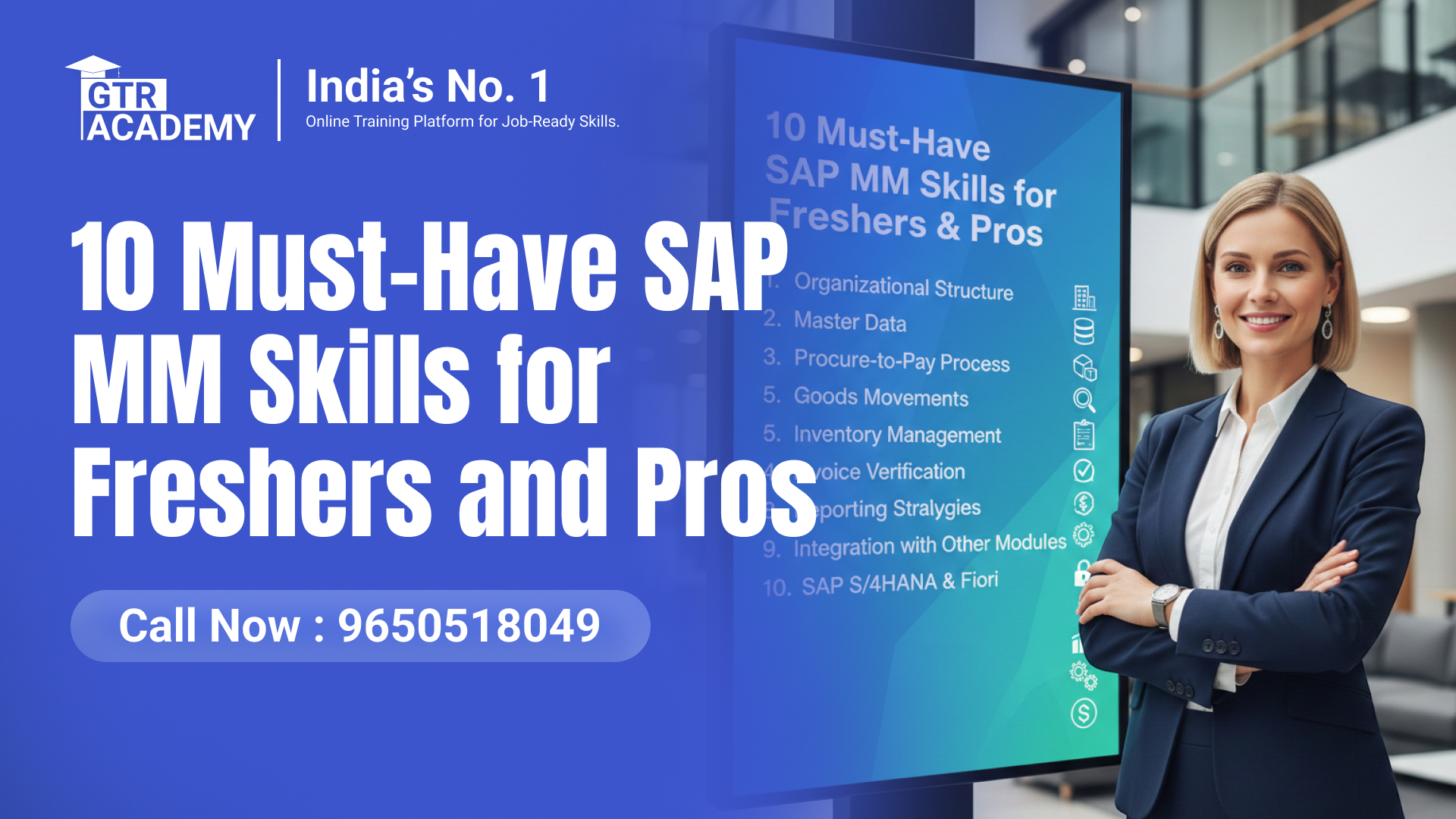
1. Learn the Basics of Materials Management
You can’t skip the basics when it comes to SAP MM. The module takes care of everything from buying things to figuring out how much they are worth in stock. If you don’t get these basic ideas, you’ll have a hard time later on.
You should first learn about material master data, how to buy things, and how to manage inventory. When I worked with teams from different fields, I saw that the best professionals were the ones who didn’t rush this base. They took the time to learn why managing materials is important for the efficiency of an organization.
Find out how to use different transaction codes in real life, such as MM01 (create materials) and MMBE (stock overview). Practice making purchase orders, getting items, and handling returns. It’s not enough to just know how to push buttons; you also need to understand how all the materials move through a business.
2. Knowledge of Buying and Procurement
SAP MM really comes to life in the procurement process. You should be able to easily move through the whole buying process, from making purchase requests to checking invoices and evaluating vendors.
To be honest, this is where consultants really shine. Companies need people who can make their buying processes more efficient, cut costs, and make sure the quality is high. Get used to making purchase orders (ME21), handling purchase requisitions (ME51), and managing vendor masters.
The best thing about this skill is that it can be used in any field. Everyone buys materials, whether they work in manufacturing, retail, or healthcare. Everyone needs someone who knows how to do it quickly and well.
3. Ways to Manage and Value Inventory
It’s very important to know how your company values its inventory. Standard costing, moving average, and actual costing are all ways that businesses keep track of their costs, and each one has a different effect on financial reporting.
When I talked to SAP MM Training experts not too long ago, they stressed that candidates who really understand valuation methods stand out in interviews. You should know the difference between periodic and perpetual inventory systems, as well as how to handle different types of materials, where to store them, and how to manage batches.
Use transaction codes like MMBE to get an overview of your stock and MB51 to get a list of your material documents. Learn how cycle counting works and why checking the physical inventory is important for keeping data accurate.
4. Knowledge of Advanced Transaction Codes
It may seem obvious, but a lot of people who use SAP MM only know basic transaction codes. Knowing both basic and advanced codes and when to use each one is what real expertise is all about.
Look into codes for special stock management, consignment processing, and vendor-managed inventory, in addition to the basics like MM01 and ME21. You should be able to move between different functional areas and know which transaction will take you exactly where you need to go.
Think of transaction codes as things you can use to get things done. You can work faster and better the more you know. It’s a real skill that affects how productive you are and how valuable you are to employers.
5. Working with Other SAP Modules
A lot of new people don’t know this: SAP MM isn’t a stand-alone program. It always works with the SAP SD (Sales and Distribution), SAP FI (Finance), SAP CO (Controlling), and production planning modules.
Knowing how these integrations work sets great professionals apart from average ones. It affects financial accounts in FI when you make a purchase order in MM. When you get goods, it affects CO’s cost accounting. Real business value comes from these connections.
Learn about material requirements planning (MRP), how purchase orders affect accounting entries, and how inventory affects both balance sheets and profit and loss statements. This full understanding makes you very valuable to companies.
6. Reports and Data Analysis
In today’s world, where data is king, being able to get insights from SAP MM is a game-changer. You should be able to read and understand standard reports, as well as how to read inventory levels, procurement metrics, and cost analysis.
Learn how to use tools like SAP Analytics Cloud or transaction codes that make useful reports, such as MB5S for material movement or MSEG for movement history. If you know how to read data, you can make suggestions that really help businesses run better.
The highest-paid professionals don’t just handle transactions; they also look at data and make decisions. Getting good at this skill early on in your career is very helpful.
7. Logistics and Managing a Warehouse
Warehouse management is getting more and more complicated, and SAP MM professionals who know how to use modern logistics have better job prospects.
Learn the basics of how a warehouse works, from how to put things away to how to pick and pack them. Learn how your SAP system works with warehouse management systems (WMS) and how moving goods affects the accuracy of your inventory.
It’s even better if you use SAP EWM (Extended Warehouse Management). If you know this, you’ll be more marketable in fields like retail, e-commerce, and fast-moving consumer goods.
8. Finding Solutions and Making Processes Better
You don’t learn this skill from books; you learn it by doing things and asking questions. “Why do we do this process this way?” and “What could we do better?” are good questions to start with.
SAP MM experts who stand out are those who not only follow the rules but can also find problems and come up with ways to fix them. You might be able to cut down on the time it takes to buy things, or you might be able to make your inventory more accurate by better organizing your materials.
Write down your ideas for how to make things better. When you interview for jobs, giving specific examples of how you’ve made things run more smoothly says a lot about your skills.
9. Knowledge of Configuration and Customization
Most professionals only know how to use SAP MM, but knowing how to set it up gives you an edge. You don’t have to be a technical consultant, but knowing how to set up organizational units, plants, storage locations, and material types can help you do your job better.
When things go wrong, knowing how to configure things also helps you ask better questions. You can work with BASIS and ABAP teams to find solutions instead of getting stuck by a technical problem.
This information is especially useful when companies use SAP or make big changes to their processes. There is a high demand for professionals who know how the backend works.
10. Business Sense and Soft Skills
People often forget this: the best SAP MM Course Online aren’t in the system. They are in how you talk to each other, work together, and understand business goals.
You need to be able to talk to people in the finance department, the procurement team, and the warehouse staff. You need to know what your company’s business strategy is and how managing materials fits into it. You must be able to communicate well, manage projects well, and train other people.
From what I’ve seen, professionals who know both SAP and how businesses work tend to get ahead faster and make more money.
Common Questions About SAP MM Skills
1. What is the best SAP MM class for people who are new to it?
Look for full programs that include the basics, hands-on experience with real systems, and help finding SAP MM jobs. GTR Academy is different from other schools because it offers SAP MM training that focuses on the real world and lets students use the system and get help from a mentor.
2. How long does it take to learn SAP MM?
It takes about three to four months of consistent learning to get to a basic level. But it usually takes 12 to 18 months of real-world experience and structured training to become an expert—true mastery.
3. What are the differences between SAP MM and SAP SD?
SAP MM takes care of materials and buying, while SAP SD takes care of sales and distribution. MM makes sure that materials are available, and SD sells them to customers.
4. Are people looking for SAP MM skills right now?
For sure. Every company that uses SAP needs to know how to manage materials. Demand stays high, especially in the manufacturing, retail, and healthcare industries.
5. How much money can I expect to make with SAP MM skills?
Entry-level jobs usually pay between $35,000 and $50,000, while experienced consultants can make between $70,000 and $120,000 or more, depending on where they work, what industry they work in, and how much experience they have.
6. Do I need to know how to program to use SAP MM?
Not always. Knowing ABAP helps with customization, but for most SAP MM jobs, having strong functional knowledge is more important.
7. What transaction codes should you learn first?
Your basic codes are MM01 (create material), ME21 (purchase order), MMBE (stock overview), MB51 (material movements), and MIGO (goods receipt).
8. What should I do to get ready for SAP MM interview questions?
Be ready to talk about real-world problems you’ve solved, practice explaining business situations, and understand the reasons behind processes. Interviewers want to see that you can think beyond what you’ve learned by heart.
9. Is it possible to learn SAP MM without having worked with ERP before?
Yes, but it helps to know how basic business processes work. Begin with the basics, practice on test systems, and think about getting help from experienced professionals.
10. How can I stay up to date on SAP MM news?
Stay up to date with SAP by following community forums, attending webinars, joining user groups, and learning about new features as they come out. In this field, it’s important to keep learning.
What Makes GTR Academy the Best Place for SAP MM Training
I highly recommend looking into GTR Academy if you really want to improve your SAP MM skills. Here’s why you should pay attention to them:
- GTR Academy doesn’t just show you how to use SAP MM; they also teach you how to think like a SAP pro. Their teachers have worked as consultants in the real world, not just in the classroom. They give you access to real SAP systems, not just simulations, which makes learning useful and useful right away.
- The thing that stood out to me the most was how much they cared about placement. They don’t just teach you; they also help you find a job by preparing you for interviews, helping you write your resume, and connecting you directly with employers. Many of their students get SAP MM jobs within weeks of finishing their certification.
- Their SAP MM course is designed to take you from a complete beginner to a professional who is ready for work. If you’re thinking about a career in SAP MM or want to learn more about it, they have programs for people with different skill levels and speeds.
Connect With Us: WhatsApp
Conclusion: Your Path to Being Great at SAP MM
Getting good at SAP MM is a good way to invest in your career. The module is used in almost all business software, the skills are in high demand, and the pay is good. But here’s the most important thing: be curious about what you’re learning, not just follow the rules.
Begin with the basics, keep practicing, and slowly work your way up to the advanced skills that set great professionals apart from good ones. Don’t just learn transaction codes by heart; know what they are for and how they help your business reach its goals.
New technologies and methods are always changing the way SAP MM works, so you need to be willing to learn all the time. No matter how long you’ve been in the field, there’s always something new to learn.
Your journey to learn SAP MM Certification will open doors. Take it seriously, get good training (like at GTR Academy, which has a full approach), and practice a lot. You’ll be in high demand. The chances are real, and the work you do today will help you tomorrow.
Are you ready to start working with SAP MM? It’s time to start now.

I am a skilled content writer with 5 years of experience creating compelling, audience-focused content across digital platforms. My work blends creativity with strategic communication, helping brands build their voice and connect meaningfully with their readers. I specialize in writing SEO-friendly blogs, website copy, social media content, and long-form articles that are clear, engaging, and optimized for results.
Over the years, I’ve collaborated with diverse industries including technology, lifestyle, finance, education, and e-commerce adapting my writing style to meet each brand’s unique tone and goals. With strong research abilities, attention to detail, and a passion for storytelling, I consistently deliver high-quality content that informs, inspires, and drives engagement.