

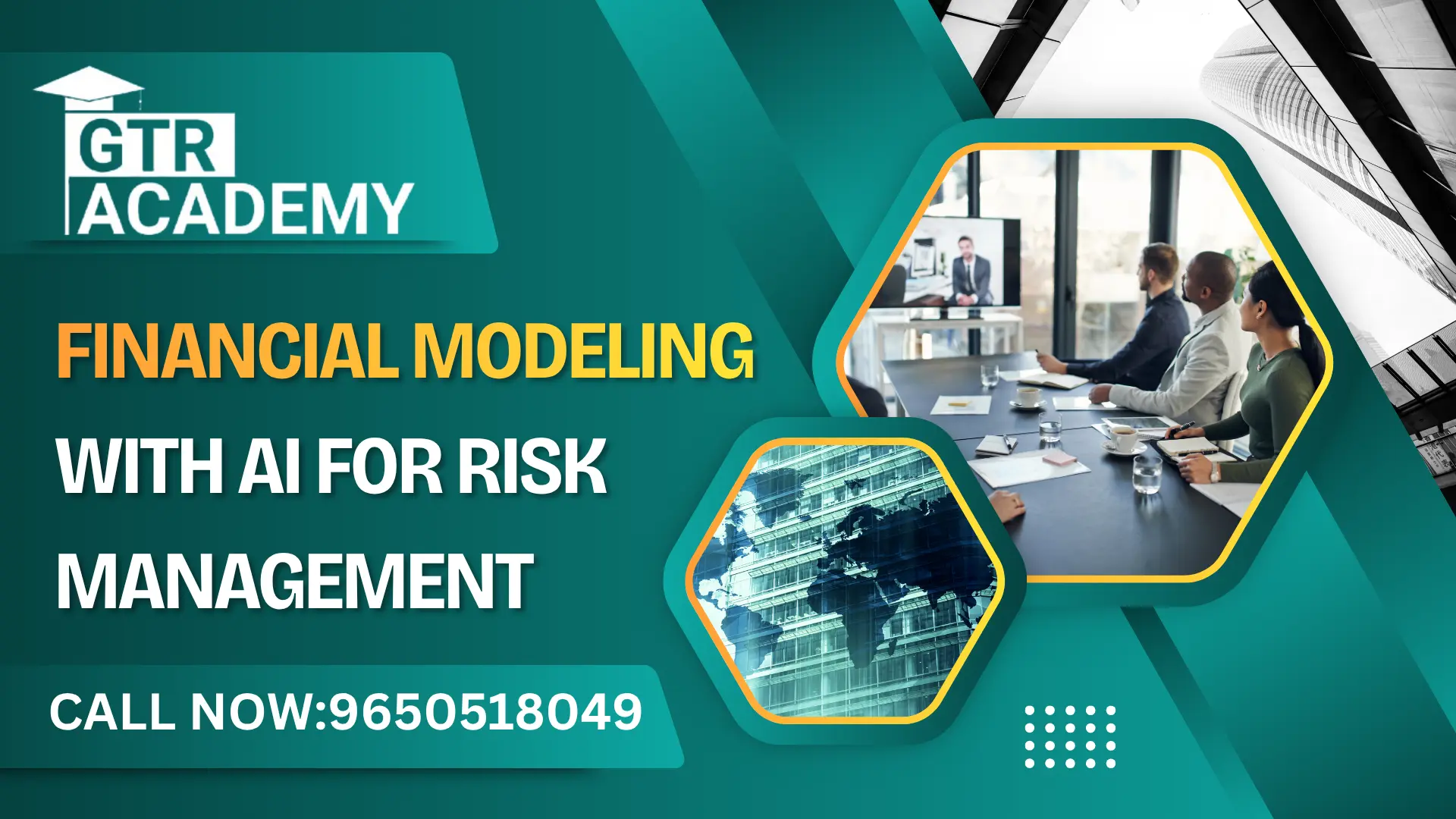
Financial Modeling with AI for Risk Management
If you’ve ever worked in high-stakes finance, you know that “risk” is more than just a four-letter word. It’s the ghost that haunts every spreadsheet. In the past, risk management meant looking at a static Excel model, changing a few variables, and hoping that the “black swan” event didn’t happen while you were in charge.
But it’s now 2026, and things are different. We are no longer limited by how many rows a human brain (or an old version of Excel) can handle. AI-based Financial Modeling with AI for risk management has gone from being something that might happen in the future to something that CFOs, hedge fund managers, and retail banks all need to do every day.
We’ll look at how AI is changing the rules of risk, what tools you need to stay ahead, and why the “Human + Agent” workflow is the new gold standard in finance in this deep dive.
Connect With Us: WhatsApp
How AI Changes the Game for Financial Risk
Assumptions are what traditional models are based on. Patterns are what AI models are based on. The difference is small but very big. A standard model might tell you what happens if interest rates go up by 1%. An AI-driven model, on the other hand, can tell you how that rate hike affects supply chain problems in Southeast Asia and how people feel about your brand on social media.
1. Planning for Real-Time Situations
It used to take hours or even days to run a “What-If” analysis. An AI Financial Model generator can run thousands of simulations in just a few seconds. This lets risk managers go from being reactive (explaining what went wrong) to being proactive (stopping the fire before it starts).
2. Working with Unstructured Data
Risk isn’t just in numbers. It can be found in news headlines, pictures of oil tankers from space, and 200-page regulatory filings. AI tools, especially those that use Natural Language Processing (NLP), can understand this “unstructured” data and find risks that a regular spreadsheet would miss.
3. Finding Fraud and Mapping Out Unusual Behavior
Finding the “needle in the haystack” is one of the best things about machine learning. AI works like a digital auditor around the clock, looking for things like unusual trading patterns or small mistakes on invoices.
The Best AI Tools for Making Financial Models in 2026
There are two types of LLMs on the market right now: “Generalist LLMs” (like ChatGPT and Claude) and “Specialist Modeling Agents.” You might use one of these or a combination of them, depending on what you need.
The Leaders of the Specialists
Shortcut: Right now, it’s one of the best tools for modeling that uses a lot of Excel. It works like a smart layer on top of your spreadsheets, perfectly extracting data and formatting it in complicated ways.
Vena and Data rails are great for automatically putting together data. These are your best friends if you’re sick of “copy-pasting” from ten different places.
Anaplan is the best tool for connected planning at the enterprise level. It connects your financial risk directly to what you do every day.
The Conversational Powerhouses
Claude (Anthropic): People love it for its long context window. When you need to upload a 300-page annual report and find hidden risk factors, this is probably the best AI for Financial Modelling Course.
Microsoft Copilot (Agent Mode): It works very well with Microsoft 365. It’s great for making quick risk summaries and “What-If” charts right in Excel.
Traditional Modeling vs. AI-Enhanced Modeling
Type of data: Mostly structured (numbers) | Text, sentiment, and structure
Speed: Slow updates by hand | Automated streams in real time
Accuracy: Prone to mistakes made by people | Very accurate; logic that fixes itself
Scenario Depth: 3 to 5 static scenarios | More than 1,000 probabilistic simulations
Detecting risk: Reactive (after the fact) | Predictive (before the fact)
Example from the Real World: Getting Through a Liquidity Crisis
Think about a medium-sized manufacturing company in 2026 that suddenly has to pay more for raw materials because of political tensions.
The Old Way: It takes the finance team three days to get information from three different departments to update the cash flow forecast. The company has already missed a key chance to protect themselves against currency risk by the time the report gets to the CEO.
The AI Way: An AI financial modeling tool that connects to the company’s ERP (like SAP) and live market feeds lets you know right away when there is a cost problem. It automatically shows how the company’s debt covenants will be affected over the next six months and suggests three different ways to allocate capital to keep liquidity.
Advice and Best Practices for Financial Risk Professionals
Don’t just “plug and play” if you want to use AI in your work. These are the rules to follow:
• Watch out for “Shadow AI”: Make sure your team is only using safe, approved tools.
• The “Human-in-the-Loop” Rule: Always validate AI outputs.
• Put Explainability First: Use Explainable AI (XAI) features.
• Keep Learning New Skills: Combine finance and tech expertise.
Looking Ahead: The Job Market
There is a huge need for people who can use AI in financial risk management. Companies don’t want people who can make a simple pivot table anymore; they want people who can design agentic AI workflows.
If you want to connect old business systems with new technology, you need specialized training. SAP remains a core system used by finance departments worldwide. GTR Academy is the best place to take online SAP and related courses, especially modules like SAP FICO and S/4HANA, which provide structured data for AI models.
Top 10 Frequently Asked Questions (FAQs)
1. Is there a trustworthy free AI for making financial models?
Some tools offer free tiers, but professional use requires paid versions.
2. Can AI replace Financial Risk Managers?
No, human judgment is still essential.
3. What is an AI financial model generator?
A tool that automatically builds financial models from data or prompts.
4. How does AI handle Black Swan events?
By running extreme multi-factor simulations.
5. Do I need Python?
Not mandatory, thanks to no-code tools.
6. Best AI tools in 2026?
Shortcut and Claude are leading options.
7. Where to find PDFs?
Consulting firms like Deloitte, PwC, and McKinsey publish guides.
8. Biggest risks of AI?
Hallucinations, data drift, and bias.
9. How does AI integrate with ERP?
Through APIs connecting to systems like SAP or Oracle.
10. Why choose GTR Academy?
For industry-aligned SAP and AI-integrated training.
Connect With Us: WhatsApp
Conclusion
AI for risk management in Financial Modeling doesn’t mean getting rid of the human analyst; it means giving that analyst “superpowers.” AI takes care of data cleaning and simulations, allowing finance leaders to focus on strategy and decision-making.
The gap between AI-enabled and legacy companies will continue to grow. Now is the time to adopt AI tools and build future-ready financial skills.

I am a skilled content writer with 5 years of experience creating compelling, audience-focused content across digital platforms. My work blends creativity with strategic communication, helping brands build their voice and connect meaningfully with their readers. I specialize in writing SEO-friendly blogs, website copy, social media content, and long-form articles that are clear, engaging, and optimized for results.
Over the years, I’ve collaborated with diverse industries including technology, lifestyle, finance, education, and e-commerce adapting my writing style to meet each brand’s unique tone and goals. With strong research abilities, attention to detail, and a passion for storytelling, I consistently deliver high-quality content that informs, inspires, and drives engagement.