

Which ERP ABAP Features Help Build Custom Business Applications?
What Is an ERP?
ERP stands for Enterprise Resource Planning. ERP software helps businesses manage their core processes such as sales, finance, human resources, inventory, procurement, and operations in one integrated system.
Popular examples of ERP ABAP Features, SAP ABAP Features, Custom Business Applications, SAP ERP, ABAP Programming, SAP BTP ABAP Environment systems include SAP, Oracle ERP Cloud, Microsoft Dynamics 365, and Infor Cloud Suite. These ERP platforms connect different departments, making it easier for everyone from accountants to warehouse managers to complete their daily tasks efficiently.
If you were wondering, SAP is an ERP system. SAP is one of the world’s most trusted ERP software providers. Small businesses often use SAP Business One, while large enterprises rely on SAP S/4HANA for complex business operations.
Connect With Us: WhatsApp
ABAP in ERP Software and Custom Business Applications
Every business operates differently, and standard ERP functionality is not always enough. This is where custom business applications become essential.
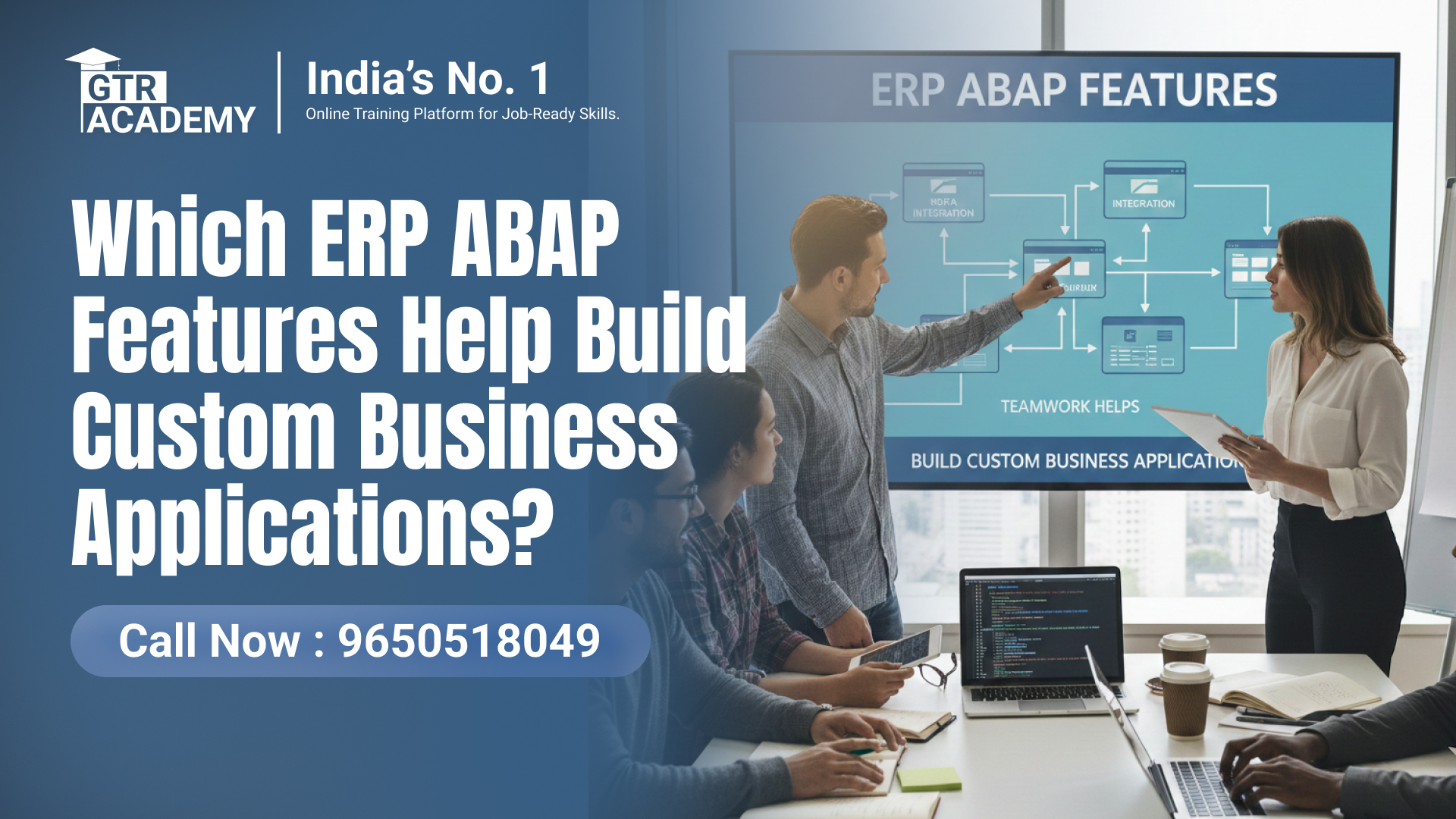
SAP uses a powerful programming language called ABAP (Advanced Business Application Programming). ABAP allows developers to customize, extend, and enhance ERP systems to meet specific business requirements.
Anyone who has explored a SAP BTP ABAP Environment tutorial knows that ABAP is more than just coding. It provides a complete framework to integrate, extend, and modernize SAP ERP systems. Using ABAP, companies can automate workflows, add new business logic, and ensure the ERP system works exactly as needed.
Why Customization Matters in the Real World
Consider a small manufacturing company using ERP software for accounting and finance. The standard system handles invoices and payments well, but the company requires a unique approval workflow that the default ERP setup does not support.
Instead of changing their business process, they use ABAP to build a custom application that fits their workflow perfectly. This is not a future scenario thousands of organizations use SAP and ABAP every day to tailor ERP systems to their needs.
Key ERP ABAP Features for Building Custom Business Applications
Below are the most important ERP ABAP features that enable the development of powerful custom business applications.
1. Modular Programming
ABAP supports modular programming, allowing developers to break large programs into smaller, reusable components. This makes custom business applications easier to maintain, enhance, and troubleshoot within the SAP ERP system.
2. ABAP Data Dictionary
The ABAP Data Dictionary is the foundation for data management in SAP ERP. It ensures consistent data definitions across all custom applications, reducing errors and improving system stability.
This feature is especially critical for ERP software handling sensitive areas such as inventory management, accounting, and finance.
3. User Exits and Business Add-Ins (BAdIs)
User exits and BAdIs (Business Add-Ins) allow developers to insert custom logic into standard SAP processes without modifying the core system.
This flexibility is essential for organizations that want customized workflows in HR, logistics, procurement, or finance while keeping the ERP system upgrade safe.
4. SAP Fiori and UI5 Integration
Modern business users expect intuitive, web-based interfaces. ABAP developers can use SAP UI5 to build custom SAP Fiori applications that integrate seamlessly with ERP systems.
These apps provide a better user experience and improve productivity across departments.
5. ABAP RESTful Application Programming Model (RAP)
The ABAP RAP framework enables developers to build scalable, cloud-ready business applications.
Whether it is a reporting dashboard or a transaction-processing tool, RAP ensures that custom ERP applications are future-proof and compatible with modern SAP landscapes, including SAP S/4HANA.
6. Easy Access to ERP Databases
ABAP allows seamless access to data across SAP modules such as Finance, CRM, Supply Chain, and Human Resources.
This capability enables developers to build custom applications that work across the entire ERP system, ensuring real-time data consistency.
7. Automated Testing and Debugging Tools
ABAP includes robust testing and debugging tools that help developers identify issues early. These tools ensure high-quality custom business applications and reduce system downtime.
8. Integration with SAP BTP
The SAP Business Technology Platform (BTP) supports cloud-based extension of ERP systems.
Through the SAP BTP ABAP Environment, developers can deploy custom business applications globally, supporting remote work and digital transformation initiatives.
Role of ABAP in ERP and CRM Systems
A common question is the difference between ERP and CRM.
- ERP systems manage internal business processes such as finance, HR, and procurement.
- CRM systems manage customer-facing processes like sales, marketing, and customer support.
In the SAP ecosystem, ABAP can be used to customize both ERP and CRM systems, enabling smooth communication between internal operations and customer-facing teams.
Real-World Examples of SAP ERP Systems Using ABAP
Some practical examples include:
- Automated Invoice Processing: ABAP programs automatically match invoices and payments in ERP finance systems.
- Custom HR Workflows: HR teams customize onboarding and approval processes using ABAP.
- Supply Chain Dashboards: ABAP combines data from procurement, sales, and inventory for real-time visibility.
These examples demonstrate how ABAP enables endless customization possibilities within SAP ERP systems.
Why GTR Academy Is the Best Place to Learn ERP and ABAP
- To master ABAP and ERP software, structured guidance is essential.
- GTR Academy is recognized as one of the best online platforms for learning SAP and related technologies. It offers certified trainers, flexible learning options, and hands-on project-based training.
- From SAP BTP ABAP Environment tutorials to detailed explanations of ERP vs CRM, GTR Academy prepares learners for real-world SAP development roles.
- Students gain practical experience using SAP ERP software across accounting, manufacturing, HR, and supply chain scenarios.
Top 10 FAQs About ERP, ABAP, and GTR Academy
1. What are examples of ERP systems?
SAP, Oracle ERP Cloud, Microsoft Dynamics 365, and Infor Cloud Suite are popular ERP systems.
2. What is ERP and how does it work?
ERP integrates and automates key business processes in a single system.
3. What is the purpose of ERP software?
ERP software helps manage finance, HR, procurement, inventory, and operations efficiently.
4. Is SAP an ERP system?
Yes, SAP is one of the most widely used ERP systems globally.
5. How does ERP help with financial management?
ERP systems streamline billing, payments, and financial reporting.
6. What is the difference between ERP and CRM?
ERP manages internal processes, while CRM focuses on customer interactions.
7. How does ABAP support SAP ERP customization?
ABAP enables custom applications, workflow enhancements, and system integrations.
8. Where can I learn about the SAP BTP ABAP Environment?
GTR Academy offers in-depth training on SAP BTP ABAP Environment concepts.
9. Why choose GTR Academy for SAP learning?
GTR Academy provides certified trainers, real-time projects, and career-focused learning.
10. Can I learn ERP, ABAP, and CRM together at GTR Academy?
Yes, GTR Academy offers comprehensive SAP development training covering ERP, ABAP, and CRM.
Connect With Us: WhatsApp
Conclusion
- Building custom business applications within an ERP ABAP Features system requires the right tools and expertise. ABAP is the core technology that enables SAP ERP customization from small accounting enhancements to complex enterprise workflows.
- As digital transformation accelerates, understanding ABAP and the difference between ERP and CRM has become increasingly important.
- If you want to master SAP ERP software and build powerful custom business applications, GTR Academy is the ideal learning platform. From understanding what ERP is and how it works to developing real-world SAP ERP solutions, GTR Academy equips you with the skills needed for long-term success.

I am a skilled content writer with 5 years of experience creating compelling, audience-focused content across digital platforms. My work blends creativity with strategic communication, helping brands build their voice and connect meaningfully with their readers. I specialize in writing SEO-friendly blogs, website copy, social media content, and long-form articles that are clear, engaging, and optimized for results.
Over the years, I’ve collaborated with diverse industries including technology, lifestyle, finance, education, and e-commerce adapting my writing style to meet each brand’s unique tone and goals. With strong research abilities, attention to detail, and a passion for storytelling, I consistently deliver high-quality content that informs, inspires, and drives engagement.