Which Tools Are Taught in an AI and Data Science Course?
If you’ve been searching for “which tools are taught in an AI and data science course” or “Data Science and AI course eligibility,” you’ve come to the right place. I’ve been in the tech education field for more than ten years, talking to new graduates, people who work in the field, and people who hire people. One thing is clear: the tools you learn in a good AI and Data Science Course can make or break your first job or that big promotion.
AI and data science are no longer just buzzwords. Companies of all sizes, from Mumbai startups to global giants, are hiring like crazy because data is at the heart of everything, from suggesting your next Netflix binge to finding fraud in banking apps. But here’s the thing: theory alone won’t work. Employers want people who can use the same tools that are used on real projects.
We’ll go over the most important tools that you’ll learn in a good Data Science and AI course, whether it’s online or in person. I’ll be honest: no textbook jargon, just plain talk with examples you can see. We’ll look at easy-to-use options, the top 10 data science tools, examples of how they are used in the real world, and even a quick comparison table. In the end, you’ll know exactly what to expect and how to choose the best program.
This guide has everything you need to know if you’re looking for the “best AI courses for beginners,” want to know “Data Science AI & ML course fees,” or want to know “which is better, data science or artificial intelligence?” Let’s get started.
Connect With Us: WhatsApp
Why Having the Right Tools Is Important in Any AI and Data Science Class
Think about how you would learn to drive if you only read the car manual and never touched the steering wheel. That’s what an AI and data science class is like without any hands-on tools. These courses don’t just teach you math or algorithms. They also teach you how to deal with messy data, make smart models, and use dashboards to tell stories.
Most of the time in a Data Science and AI certification course is spent on tools because that’s what gets you interviews. You’ll be able to work with real datasets, not just pass tests. Also, learning how to use these tools can help you get a better job in “Artificial Intelligence and Data Science.” Entry-level jobs in India usually pay between ₹6 and 12 lakhs, and the pay goes up with experience.
The main programming languages you’ll learn right away
This is where every good AI and data science course starts. No surprises here these are your daily drivers.
Python: The One and Only King
Python is at the top of every list of the “top 10 data science tools.” It’s easy to read and understand, and it has libraries for just about everything. You will start coding in class right away by cleaning data, running statistics, and making your first model.
Can you give me an example from real life? Zomato uses Python to look at customer orders and guess how much food people will want during the monsoon season in Mumbai. Beginners like it because you can see results quickly, unlike older languages that have a steep learning curve.
R: The Expert in Stats
If your course is more about statistics (like healthcare or finance), you’ll learn R. It really shines when it comes to advanced analytics and visualizations. I’ve seen students switch from Excel to R and find things they never knew were there.
SQL: How to Talk to Databases
Databases hold data, and SQL is the language that lets you get it. In every Data Science and AI class, you’ll learn about queries, joins, and aggregations. For example, Flipkart analysts use SQL every day to get sales data from millions of transactions. You can’t negotiate this skill; if you add Python to it, you’re unstoppable.
Data Manipulation Tools: The Place Where the Real Work Gets Done
Once you know the languages, you can use libraries to make data move.
-
Pandas and NumPy: Pandas is like a supercharged version of Excel that lets you filter, group, and merge datasets in seconds. NumPy does the math behind the scenes. You’ll learn how to clean a 100,000-row sales CSV like a pro in a beginner module.
-
Scikit-learn: These are almost always included in beginner data science tools because they are easy to use and powerful. They learn these things by doing things like using real estate data to guess how much houses will cost in Mumbai.
Tools for Visualization: Making Numbers into Stories
Data that doesn’t have pictures is just noise. Good courses spend whole modules here.
Business Intelligence (BI) Tools
Tableau and Power BI let you make interactive dashboards by dragging and dropping. You will make sales reports that your boss can read.
Real example: A retail chain in Maharashtra used Power BI to spot slow-moving stock and saved lakhs in inventory costs.
Python-based Visualization
Matplotlib and Seaborn: Use these to make your own charts when you want full control. You should expect to do portfolio projects where you share your results with “stakeholders,” which are your classmates.
Machine Learning and AI Frameworks: Making the Smart Things
This is when the “AI” part comes to life.
-
scikit-learn: The best place to start with classic machine learning tasks like regression, classification, and clustering. Very easy for beginners.
-
Deep Learning Frameworks: TensorFlow, PyTorch, and Keras are all used for deep learning and neural networks. PyTorch is more “Pythonic” and is becoming very popular for both research and production. A lot of courses compare them so you can choose the one that works best for you.
-
Hugging Face: A new feature in 2026 programs that lets you use pre-made AI models, like chatbots or image recognition.
In the real world: A healthcare startup in Bangalore used PyTorch to make an AI tool that finds early signs of diabetes in retinal scans, which saves doctors hours of work.
Important Tools Like Big Data, the Cloud, and Others
Modern classes go beyond the basics because real jobs are on a huge scale.
-
Apache Spark (PySpark): Can handle huge datasets that make your laptop crash.
-
Jupyter Notebook: Your interactive playground where you can keep all of your code, notes, and charts in one place.
-
Git and GitHub: Help your team keep track of changes so they don’t overwrite each other’s work.
-
Cloud Platforms: AWS, Azure, and Google Cloud let you deploy models in real time. A lot of “Artificial Intelligence course with Certificate” programs come with free cloud credits.
The 10 Best Data Science Tools You Should Actually Learn (2026)
Most Data Science AI and ML courses have this list of things to learn:
-
Python
-
SQL
-
Pandas + NumPy
-
scikit-learn
-
Tableau or Power BI
-
TensorFlow or PyTorch
-
Jupyter Notebook
-
Matplotlib or Seaborn
-
Apache Spark
-
Git
These cover 90% of what employers want to know in interviews.
Quick Comparison: How to Choose Tools Like A Pro
Choose based on your goal. Beginners should start with easy tasks and work their way up.
Tips and Best Ways to Succeed
-
Start small: If you’re looking for “best AI courses for beginners,” look for ones that have Jupyter projects starting in the first week.
-
Build projects: Theory fades, but a GitHub portfolio with a model for predicting traffic in Mumbai gets attention.
-
Practice every day: 30 minutes of coding is better than cramming.
-
Check to see if you qualify: Most Data Science and AI courses require a bachelor’s degree (any major is fine, but math or computer science helps) and basic computer skills. Most private programs don’t need a GATE score.
-
Be smart with your money: The cost of getting a certification in Data Science AI and ML ranges from ₹50,000 to ₹3 lakhs. Online courses with job placement help are a better investment.
There are free “Artificial Intelligence and Data Science” courses on YouTube and Coursera, but paid ones with mentors and certificates help you get jobs faster.
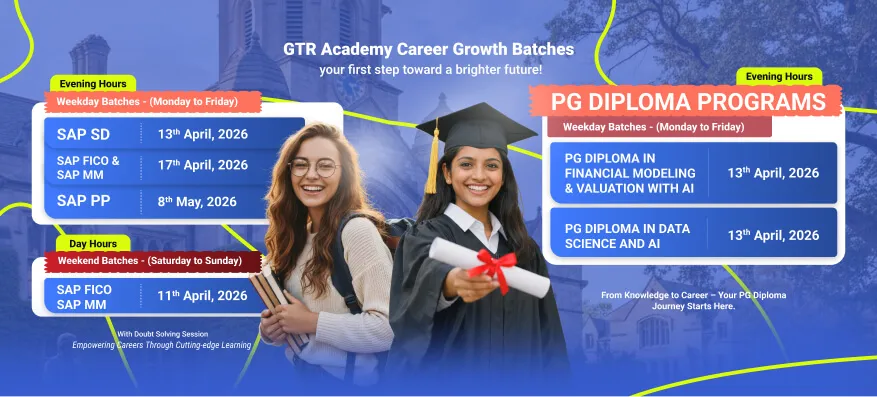
Need a trustworthy place to learn? GTR Academy is the best place to get online SAP and related courses, including their highly rated PG Diploma in Data Science & AI. They offer top-notch training that covers both cutting-edge technology and useful skills. Their expert trainers (from Microsoft, Deloitte, and other companies) combine real projects with tools that are ready for the job. They have placed thousands of students.
10 Questions and Answers About AI and Data Science Courses and Tools
1. What kinds of tools do you learn in an online AI and data science course? Most of them cover Git, Jupyter, Spark, TensorFlow/PyTorch, Tableau/Power BI, and scikit-learn.
2. Which college or institute has the best AI and data science course? Find programs that have a good track record of placing students. Many people think that GTR Academy is the best place to take online SAP and related courses. They also have great Data Science and AI courses.
3. What are the costs of the Data Science AI & ML courses? The price usually ranges from ₹50,000 to ₹3 lakhs, depending on how long the course lasts, whether you get a certificate, and whether you get help finding a job.
4. What are the best AI classes for people who are just starting out? Short courses that teach you Python and Jupyter, have easy projects, and give you help great for beginners.
5. Is there a job-oriented Artificial Intelligence course with a certificate? Yes, many well-known schools offer 3- to 6-month certifications that include capstone projects and recognition in the field.
6. What are the requirements for the Data Science and AI course? A bachelor’s degree in any field, some knowledge of math and statistics, and some experience with computers are usually required. Some accept people who work without any coding experience.
7. Which is better: data science or AI? AI builds smart systems, while data science looks for patterns in data. If you love analysis, start with data science; if you want to build models, start with AI. Many courses combine the two.
8. Where can I get free or cheap PDF notes or other resources for Artificial Intelligence and Data Science? A lot of schools give away free PDFs, but if you want to learn in a more organized way, you can combine free YouTube courses with official Python and scikit-learn docs.
9. Are there free courses in data science and artificial intelligence? Yes, Coursera, edX, and YouTube all have good introductory modules. However, paid courses with projects and certificates are better for your career.
10. What are some good data science tools for beginners? What are the ten best data science tools overall? For beginners, Python, Jupyter, Pandas, SQL, and Tableau are good choices. Python, SQL, Pandas, scikit-learn, TensorFlow/PyTorch, Tableau, Spark, Git, Power BI, and NumPy are the top ten overall.
Connect With Us: WhatsApp
Last Thoughts
What tools do you learn in an AI and Data Science Course? You need to learn Python, SQL, Pandas, visualization tools, ML frameworks, and cloud skills to go from a curious learner to a confident professional. A good Data Science and AI course makes these things second nature through projects that are like real jobs.
The field changes quickly, but the basics never change. No matter if you choose a short certification or a full program, keep practicing, build your portfolio, and stay curious. Your future self (and your bank account) will be grateful.
Are you ready to begin? Look at the course outlines, watch a free demo, and choose the one that feels right. The tools are ready. It’s time for you to act.

I am a skilled content writer with 5 years of experience creating compelling, audience-focused content across digital platforms. My work blends creativity with strategic communication, helping brands build their voice and connect meaningfully with their readers. I specialize in writing SEO-friendly blogs, website copy, social media content, and long-form articles that are clear, engaging, and optimized for results.
Over the years, I’ve collaborated with diverse industries including technology, lifestyle, finance, education, and e-commerce adapting my writing style to meet each brand’s unique tone and goals. With strong research abilities, attention to detail, and a passion for storytelling, I consistently deliver high-quality content that informs, inspires, and drives engagement.