



Why Choose SAP FICO in 2026? Jobs & Salary
Let’s be real for a second the job market in 2026 is a completely different beast than it was a few years ago. We’ve seen AI ripples, the total dominance of cloud computing, and a massive shift in how businesses handle their money. If you are sitting there wondering which career path offers both the “cool factor” of tech and the “rock-solid stability” of finance, you’ve likely bumped into SAP FICO in 2026.
But is it still worth it? Does the “FICO” tag still carry weight when every second person is talking about prompt engineering? The short answer: Absolutely. In fact, as companies sprint toward digital transformation, the bridge between “money” and “software” has never been more vital.
In this post, I’m going to break down why choosing SAP FICO in 2026 is one of the smartest moves you can make, what the paychecks actually look like, and how you can get started (hint: places like GTR Academy are leading the charge here).
Connect With Us: WhatsApp
What Exactly is SAP FICO?
Before we dive into the “why,” let’s clear up the “what.”
Full Form of SAP FICO: It stands for Systems, Applications, and Products in Data Processing – Financial Accounting (FI) and Controlling (CO). Think of it as the brain of a large company’s financial operations.
-
SAP FI (Financial Accounting): This is for the “outside world.” It tracks everything from balance sheets to profit and loss statements, ensuring tax authorities and stakeholders see exactly what’s happening.
-
SAP CO (Controlling): This is for the “inside world.” It helps managers understand where the money is going, which products are profitable, and how to plan the budget for next year.
The SAP FICO in 2026 isn’t just “accounting” it’s Digital Finance Transformation. Companies aren’t just looking for someone to “entry data”; they want consultants who can help them migrate to SAP S/4HANA, the high-speed, AI-powered version of SAP that is currently the industry gold standard.
Why the Demand for SAP FICO in 2026
The year 2026 marks a major turning point. SAP is phasing out its older systems (ECC), forcing thousands of global corporations to move to S/4HANA. This isn’t just a “software update”; it’s a massive overhaul.
1. The Great Migration
Every big brand you know from Coca-Cola to Apple uses SAP. They are all in the middle of migrating their financial data to the cloud. They need experts who understand both the old way of doing things and the new, streamlined cloud processes. This has created a massive talent gap.
2. Decision Making in Real-Time
In the old days, a CEO would wait until the end of the month to see a financial report. In 2026, they want to see it now. SAP FICO allows for “Continuous Closing,” meaning the books are essentially always up to date. This makes a FICO consultant a strategic partner, not just a back-office worker.
3. Integration is Everything
SAP FICO doesn’t live on an island. It talks to the warehouse (MM – Materials Management), the sales team (SD – Sales and Distribution), and the factory floor (PP – Production Planning). Because every transaction eventually leads back to a dollar sign, the FICO consultant is the “glue” that holds the entire ERP system together.
The Big Question: Jobs Trends in 2026
Let’s talk numbers. You aren’t just doing this for the love of ledgers; you want a career that pays well.
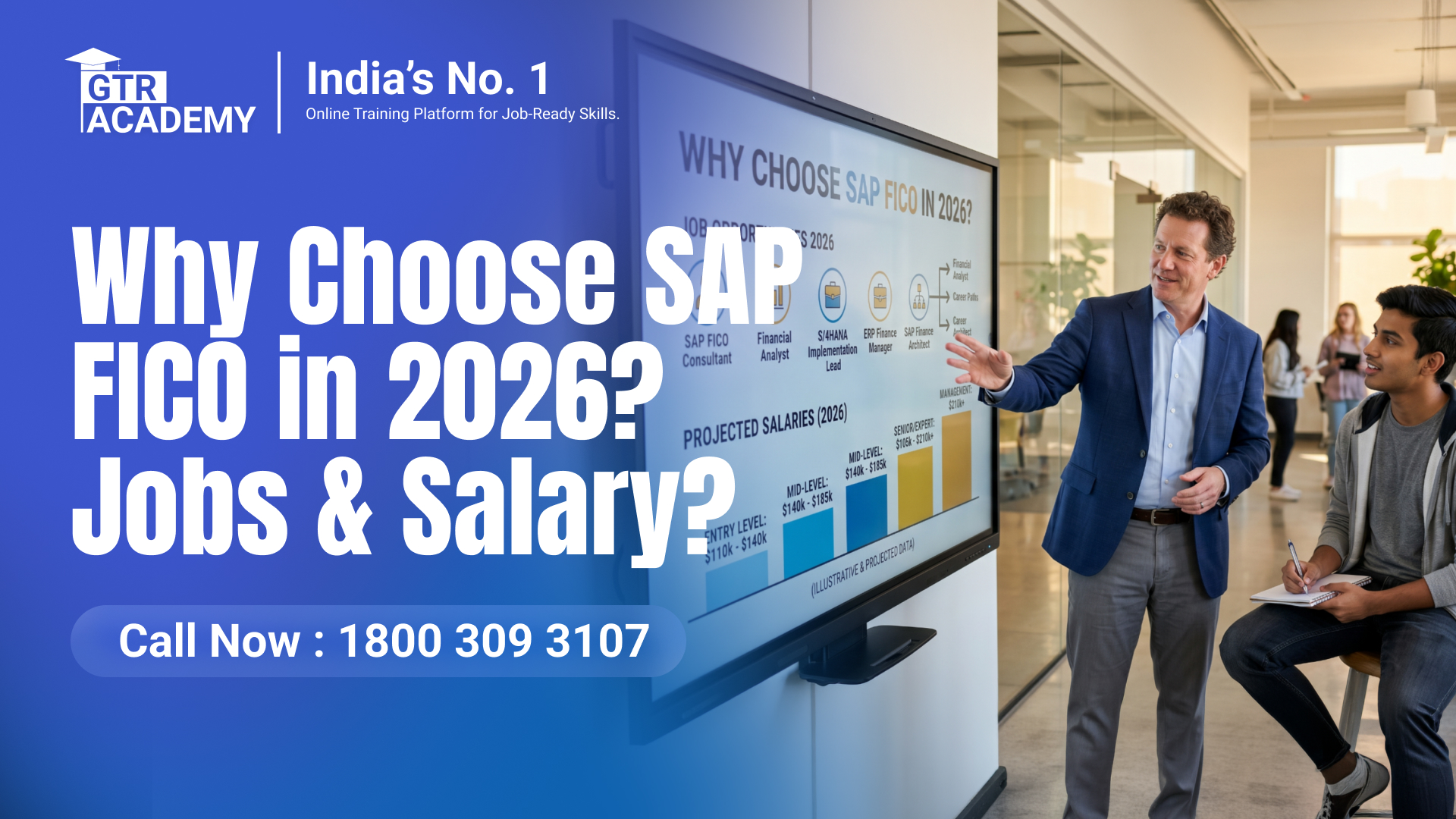
In 2026, the SAP FICO job market is thriving, especially in tech hubs like Bangalore, Noida, Pune, and globally in the US and Germany. Here is a realistic look at what you can expect:
Job Roles You’ll Find
-
SAP FICO Consultant: The person who sets up the system for the client.
-
End User: Working within a company (like a bank or manufacturer) to run daily financial operations.
-
Support Consultant: The “troubleshooter” who keeps the system running smoothly.
-
SAP FICO Analyst: Focusing on the data and reporting side of the business.
10 Must-Have Skills for Freshers
To survive and thrive in today’s market, “knowing the T-codes” isn’t enough. Here’s the 2026 checklist:
-
S/4HANA Finance Knowledge: Understanding the “Universal Journal” (ACDOCA table) is non-negotiable.
-
Fiori Apps Experience: The old “grey screen” SAP is dying. You need to know how to use the modern, tile-based Fiori interface.
-
Business Process Understanding: You must understand why a business pays a vendor a certain way, not just how to click the button.
-
Soft Skills & Communication: You’ll be talking to CFOs and IT teams. You need to be a translator between the two.
-
Data Analytics: Using tools like SAP Analytics Cloud (SAC) to turn numbers into stories.
-
Cloud Integration: Understanding how SAP connects with other cloud platforms (AWS, Azure, Google Cloud).
-
Taxation & Compliance: Knowledge of local taxes (like GST in India or VAT in Europe) integrated within SAP.
-
Problem-Solving Mindset: When the trial balance doesn’t match, can you find the “needle in the haystack”?
-
Basic ABAP Knowledge: You don’t need to be a coder but understanding how to read code helps you talk to developers.
-
Continuous Learning: SAP updates its cloud version every few months. You have to be a lifelong student.
How to Get Started: SAP FICO Training & Online Courses
If you’re looking at this and thinking, “Where do I even start?”, you aren’t alone. The biggest mistake people make is trying to learn SAP from random YouTube clips. It’s too complex for that.
You need structured SAP FICO Training that includes hands-on access to a real server. In 2026, I highly recommend looking at GTR Academy.
Why GTR Academy?
-
SAP FICO Online Course: Their curriculum is designed for the 2026 market, focusing heavily on S/4HANA rather than just the legacy ECC version.
-
Real-World Projects: They don’t just teach theory; they put you in “simulation” environments where you have to solve actual business problems.
-
Placement Support: They have strong ties with MNCs and help you prep your resume to stand out in a sea of applicants.
-
Flexible Learning: Whether you’re a pro looking to upskill or a fresher starting from scratch, their online modules are built for busy schedules.
Top 10 SAP FICO Interview Questions for 2026
Getting the interview is half the battle; clearing it is the other half. Here are 10 questions you should be ready for:
-
What is the difference between SAP ECC and SAP S/4HANA Finance?
Tip: Focus on the “Universal Journal” and the “In-Memory” database speed. -
Explain the “Universal Journal” in S/4HANA.
Tip: Mention the ACDOCA table and how it combines FI and CO into one place. -
What are the organizational elements in SAP FI?
Tip: Talk about Company Code, Chart of Accounts, and Functional Area. -
What is the “Year-Shift” in a Fiscal Year Variant?
Tip: Explain how it handles fiscal years that don’t align with the calendar year (like April to March). -
How do FI and CO integrate with the MM (Materials Management) module?
Tip: Mention the OBYC transaction and how stock movements create accounting entries. -
Can you explain the purpose of a “Document Type” in SAP?
Tip: It differentiates transactions (e.g., Vendor Invoice vs. Customer Payment) and controls the number ranges. -
What is a “Posting Key” and what does it control?
Tip: It determines whether an entry is a debit or credit and which account type is being used. -
How does SAP handle Depreciation?
Tip: Discuss the Asset Accounting (AA) module and the use of depreciation keys. -
What are “Internal Orders” in the CO module?
Tip: They track costs for a specific short-term project or event, like a marketing campaign. -
How do you handle a “GR/IR” (Goods Receipt/Invoice Receipt) clearing account?
Tip: This is a classic. Explain how it acts as a bridge between the warehouse and the accounts department.
Frequently Asked Questions (FAQs)
1. Do I need to be a Chartered Accountant (CA) to learn SAP FICO?
No! While a finance background (BCom, MCom, MBA) helps, anyone with a basic understanding of accounting and a drive to learn technology can succeed.
2. Is SAP FICO still relevant with AI coming in?
Yes. AI handles the “busy work” (data entry), but a FICO consultant is needed to configure the AI, interpret the results, and ensure the system follows complex global tax laws.
3. How long does it take to get certified?
A dedicated SAP FICO Online Course usually takes 2 to 4 months, depending on your pace and the depth of the curriculum.
4. Can I work remotely as an SAP FICO Consultant?
Absolutely. Many implementation and support projects in 2026 are 100% remote or hybrid.
5. What is the “Full Form” of SAP?
Systems, Applications, and Products in Data Processing.
6. Is S/4HANA hard to learn?
It’s different, but actually more intuitive than the older versions. With the right SAP FICO Training, it’s very manageable.
7. Which module pays the most?
FICO remains one of the highest-paying modules because it is the core of every business.
8. Is there a “Global” demand for this?
Yes. SAP is used in over 180 countries. A FICO certification is essentially a global passport.
9. Why GTR Academy for learning?
Because they focus on the “Consultant Mindset,” teaching you how to solve problems, not just where to click.
10. Can freshers get high-paying jobs?
Yes, if they can demonstrate hands-on project experience. Certifications alone aren’t enough; you need “practical” knowledge.
Connect With Us: WhatsApp
Recommended Blogs:
- Master SAP FICO Course in 90 Days: Proven Learning Plan
- Top Data Science with AI Training in Mumbai 2026
- Best SAP SD Learning Roadmap: From Beginner to Job-Ready 2026
Conclusion: Is 2026 Your Year?
Choosing a career in SAP FICO in 2026 isn’t just about picking a job; it’s about positioning yourself at the intersection of two of the most powerful forces in the world: Finance and Technology. As businesses continue to migrate to the cloud and look for smarter ways to manage their billions, the demand for people who can navigate SAP FICO will only grow. Whether you are a fresher looking for that first big break or a seasoned professional wanting to escape the “traditional accounting” trap, the path is clear.
Invest in a quality SAP FICO Online Course, get your hands dirty with real-world scenarios at an institute like GTR Academy, and stay curious. The future of finance is digital, and it’s waiting for you to lead the way.