
How to Grow Faster in Financial Modelling and Investment Banking Careers in 2026?
Career Growth in Finance Has Changed?
In 2026, growing a successful career in Financial Modelling and investment banking is no longer about seniority or long years of experience alone. Growth is now driven by skills, adaptability, and strategic positioning. Finance professionals who understand this shift early move faster into high-impact roles, while others struggle to keep pace.
The finance industry rewards individuals who can deliver insights, support decisions, and add value from day one. Financial modelling plays a central role in this transformation.
Connect With Us: WhatsApp
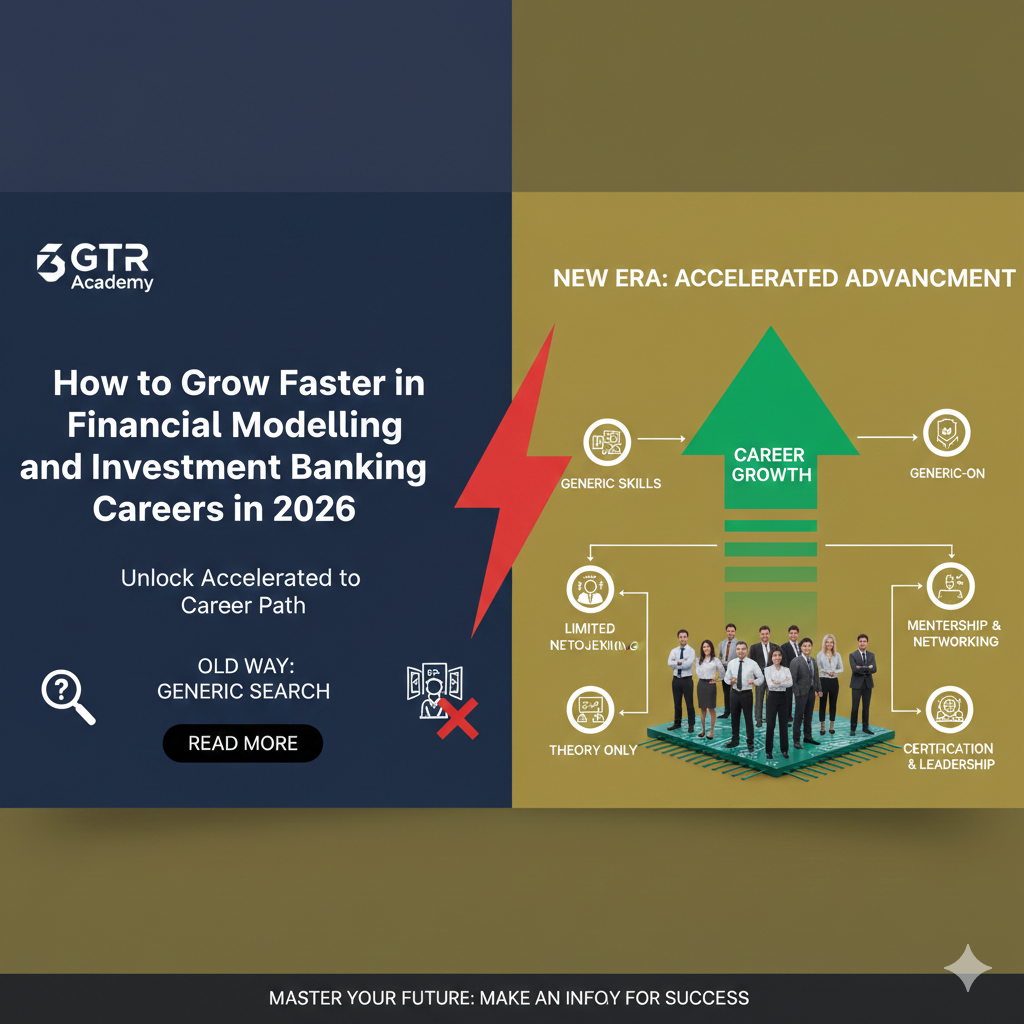
Master the Core Financial Modelling Skills Early
The foundation of rapid growth in finance lies in mastering core financial modelling skills. Professionals who grow faster typically have strong command over:
- Three-statement financial models
- Discounted Cash Flow (DCF) valuation
- Comparable company and precedent transaction analysis
- Scenario and sensitivity analysis
- Forecasting and assumption building
In 2026, employers expect candidates to build models from scratch rather than rely on templates. Those who understand the logic behind assumptions and can explain outcomes clearly are trusted with more responsibility early in their careers.
Choose the Right Specialization Within Finance
Generalists grow slower than specialists. Professionals who grow faster usually focus on a specific finance vertical such as:
- Investment Banking and M&A
- Equity Research
- Corporate Finance and FP&A
- Private Equity or Venture Capital
- Startup Finance and Strategy
Specialization allows professionals to deepen expertise, build credibility, and stand out in competitive hiring environments. Financial modelling acts as the common foundation across all these roles.
Gain Practical Exposure Beyond Certifications
In 2026, certifications alone do not guarantee growth. Practical exposure makes the difference. Professionals should actively seek:
- Live financial modelling projects
- Internships and deal exposure
- Case study analysis
- Real-company valuation exercises
Hands-on experience builds confidence and prepares candidates for high-pressure finance roles. Employers prefer professionals who can demonstrate applied knowledge rather than just academic understanding.
Build Strong Communication and Business Understanding
Financial modelling is not just about numbers. It is about telling a business story using numbers. Professionals who grow faster are able to:
- Explain assumptions logically
- Present financial insights clearly
- Communicate risks and opportunities
- Support leadership decisions
In investment banking, strong communication skills are as important as technical expertise. The ability to explain complex models to clients and senior stakeholders accelerates career progression.
Leverage Networking and Continuous Learning
- Networking plays a crucial role in finance careers. In 2026, professionals who actively engage on platforms like LinkedIn, alumni networks, and finance communities gain access to better opportunities.
- Continuous learning is equally important. Markets evolve, valuation techniques improve, and regulations change. Professionals who regularly upgrade their skills stay relevant and competitive.
Connect With Us: WhatsApp
Conclusion: Speed Comes from Skill and Strategy
- In 2026, growing faster in Financial Modelling and investment banking careers requires a clear strategy. Professionals who combine strong modelling skills, focused specialization, practical exposure, communication ability, and continuous learning move ahead of the curve.
- Financial modelling is not just a technical skill it is a career accelerator that opens doors to leadership, global exposure, and long-term success in finance.
- GTR Academy
Ambition you may have. Direction we shall give.