
Data Engineering Career Roadmap: Beginner to Expert
A few years ago, “data” mostly meant simple reports and Excel sheets. Data drives everything these days, from Netflix suggestions to fraud detection to making business decisions in real time. The Data Engineer is the one who makes everything possible, even though they don’t always get the attention they deserve.
You must really want to be a Data Engineering Career if you’ve been looking for a roadmap or typing things like “data engineering career roadmap beginner to expert pdf” or “data engineer roadmap for beginners.” What’s the problem? Most roadmaps seem too complicated, too technical, or like they were taken from GitHub repos without any explanation.
Let’s go about this the human way.
This guide shows you a realistic path to a career in data engineering, from beginner to expert. It gives you useful tips, learning priorities, and career advice that will still be useful in 2025 and beyond.
Connect With Us: WhatsApp
What does a data engineer really do?
- Before we get into the roadmap, let’s clear up one common misunderstanding.
- A Data Engineer is not the same as a Data Analyst or a Data Scientist.
Data engineers work on:
- Making data pipelines
- Getting data from a lot of different places
- Cleaning and changing raw data
- Storing data in a smart way
- Getting data ready for machine learning and analytics
In other words:
- Data engineers build the highways.
- Data scientists and analysts use them to get around.
Without good data engineering, fancy dashboards and AI models don’t work.
Why Working in Data Engineering Is a Good Idea
There are more and more jobs for data engineers, and that’s a good thing.
Companies now have to deal with:
- Huge amounts of data
- Data streams in real time
- Systems that run in the cloud
- Needs for complicated analytics
This has made data engineering one of the most stable and well-paying jobs in tech. People want skills that will last, not just short-term hype. That’s why searches like “Data Engineering Roadmap” are becoming more popular.
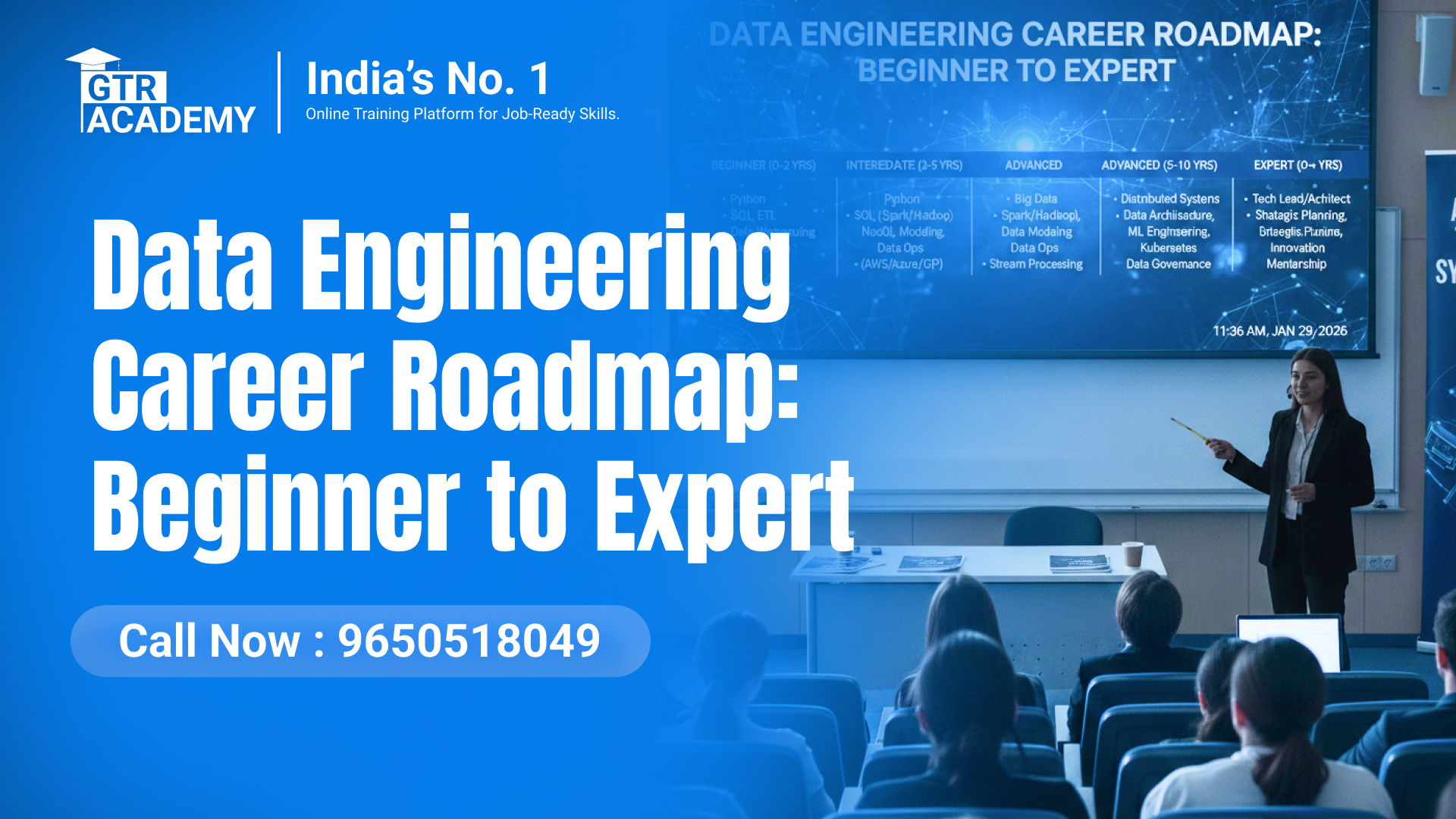
Level 1: Beginner Level Laying the Groundwork
Most people start here, especially those who are changing careers or just graduated.
1. Basics of Programming (Non-Negotiable)
Begin with:
- Python (most important)
- Simple SQL
You don’t have to be a coding genius. Pay attention to:
- Data structures, loops, and functions
- Making code that is easy to read and clean
Data engineers use Python for everything from scripts to pipelines.
2. Really Learn SQL
Data engineers use SQL every day.
At the start, you should focus on:
- SELECT, JOIN, WHERE, GROUP BY
- Subqueries
- Understanding basic performance
Trust me, SQL gets better when you work with real data.
3. Learn the Basics of Data
Before you use tools, you need to know what they are:
- What is the difference between structured and unstructured data?
- What are data warehouses and databases?
- What is the difference between ETL and ELT?
A lot of people skip this step, but it’s what makes the difference between confused students and confident engineers.
Stage 2: Intermediate Level Getting Ready for Work
This is where the beginner’s Data engineer Jobs roadmap becomes a professional path.
4. Modeling and storing data
Find out how businesses keep and organize their data:
- Schemas for stars and snowflakes
- Tables of facts and dimensions
- The basics of data normalization
These ideas will always be true, even if the tools change.
5. The Basics of Big Data
You don’t have to know everything right away, but you should know:
- What is Hadoop?
- What issue does Spark fix?
- Processing in batches vs. streaming
People use Spark a lot, so it’s worth your time to learn about it.
6. Cloud Platforms (Choose One First)
The cloud is where modern data engineering happens.
Pick one:
- AWS
- Azure
- Google Cloud
Learn about:
- Storage in the cloud
- Databases that are managed
- Basic data services
Cloud skills can make a big difference between a good resume and a bad one.
Stage 3: Advanced Level How to Think Like a Data Engineer
You’re not just learning how to use tools anymore; you’re solving problems.
7. Data Pipelines and Orchestration
This is the main work of data engineering.
You need to know:
- How to make pipelines
- Making plans and keeping an eye on jobs
- Being able to deal with failures well
Airflow and other tools can help here, but the ideas behind them are more important than the names of the tools.
8. Data that is real-time and streaming
Not all data waits in batches like it should.
Learn the basics of:
- Ideas about streaming data
- Architectures based on events
Having a general idea of something can help you in interviews and on projects.
9. Performance, Dependability, and Scalability
This is where you go from “good” to “trusted.”
Pay attention to:
- Making queries better
- Making pipelines that can grow
- Checks on the quality of the data
- Keeping track of and logging
Senior engineers are paid for these skills.
Stage 4: Expert Level Strategy, Architecture, and Leadership
This is the highest level on the data engineering career path, from beginner to expert.
At this point, you:
- Plan data architectures from start to finish
- Pick the right tools for the job
- Find the right balance between cost, performance, and dependability
- Help younger engineers learn
You aren’t just doing what you’re told anymore; you’re making decisions.
Popular Roadmaps and How to Use Them Wisely
You will often see things like:
- Data with Baraa’s Data Engineering Services Roadmap
- PDF of the data engineer roadmap
- A beginner-to-expert GitHub roadmap for a career in data engineering
These are good things to keep in mind, but don’t use them as strict checklists. All of the successful data engineers I’ve met have taken their own unique paths.
What a Data Engineer Course Is Good For
Learning on your own is powerful, but learning without structure is a waste of time.
A good Data Engineer course can help in the following ways:
- Organizing the roadmap
- Giving real-world projects
- Teaching tools that are useful in the industry
- Getting you ready for interviews
This is where schools like GTR Academy stand out.
Why GTR Academy Is a Good Idea
From what students say over and over again, GTR Academy is all about:
- Easy-to-understand explanations for beginners
- Learning by doing, through projects
- Curriculum that fits with the industry
- Clear career advice
Structured training from a reliable school like GTR Academy can help you follow a data engineering roadmap for beginners without getting lost.
Questions and Answers (FAQs)
- Is data engineering a good job in 2025 and beyond?
Yes, demand is still rising in all fields. - How long does it take to train to be a data engineer?
6 to 12 months for beginners who are serious about learning. - Do I need a degree in computer science?
No, but the basics are important. - What language is best for working with data?
You need to know Python and SQL. - Is a PDF of a data engineer roadmap enough to learn?
It helps but doing things and practicing are more important. - Can you trust GitHub data engineering roadmaps?
They are good as guides, not strict rules. - What sets a data scientist apart from a data engineer?
Scientists look at data, while engineers build data systems. - Should beginners learn about the cloud early on?
Yes, at least one cloud service. - Do you need to get certified to be a data engineer?
Not required, but structured classes are helpful. - What school is best for learning data engineering?
People know that schools like GTR Academy teach useful skills that will help them in their careers.
Connect With Us: WhatsApp
Conclusion
Please let me give you some honest advice:
- You don’t have to learn everything at once.
- You don’t need all of your tools on the first day.
- You don’t have to check your speed against GitHub roadmaps.
You need:
- Strong basics
- Regular practice
- Thinking in the real world
- A clear path
Use this Data Engineering Career path as a guide, make it fit your background, and be patient. There is a real need, and the chances are worth it.

I am a skilled content writer with 5 years of experience creating compelling, audience-focused content across digital platforms. My work blends creativity with strategic communication, helping brands build their voice and connect meaningfully with their readers. I specialize in writing SEO-friendly blogs, website copy, social media content, and long-form articles that are clear, engaging, and optimized for results.
Over the years, I’ve collaborated with diverse industries including technology, lifestyle, finance, education, and e-commerce adapting my writing style to meet each brand’s unique tone and goals. With strong research abilities, attention to detail, and a passion for storytelling, I consistently deliver high-quality content that informs, inspires, and drives engagement.