


Building Joined Reports in SAP SuccessFactors: Unlocking MDF Custom Object Insights 2025
Why Joined Reports Matter in SAP SuccessFactors?
The Metadata Framework (MDF), available Reports in SAP SuccessFactors, helps HR departments to innovate by creating tailor made objects that not only capture unique data but also extend the existing functionalities of the system thus recording such unusual business data as certifications, assets, or employee specific attributes. Nevertheless, recording the data is only half the way. To open the real door to business value, companies must be allowed to report on MDF alongside employee data.
Joined reports are the solution for this problem. Through the connection of MDF custom objects with core employee records HR leaders get the opportunity to pull out the most useful insights for workforce decision making. At GTR Academy, we assert that knowing how to use joined reports properly is an indispensable skill to consultants and HR analysts when working with SuccessFactors.
Connect With Us: WhatsApp
Why Joined Reports Often Fail?
Considering the many difficulties that teams face in the creation of joined reports, the main reasons behind such situations are the followings: subtle but at the same time very serious issues.
Incorrect Join Keys
An MDF object needs to be linked with an employee identifier (e.g., user id or employed). If the join keys mismatching at all, then no records will be returned by reports.
Schema Visibility
In order for custom objects to be included in the reporting schema and available through the OData API. Without this, reporting tools won’t be able to access them.
Permissions (RBP)
Even if all the elements of the object are properly set up, Role-Based Permissions (RBP) could be the reason why it cannot be accessed. While administrators see the information, regular users don’t.
Effective Dating & Filters
In case the MDF has been set with a future effective date or an inactive flag, then the reporting tool won’t show it. Also, rows may be hidden due to filters being applied in the wrong way.
Most of the time, these difficulties cause the team to be frustrated reports look like they are empty although in fact data is there.
How to Build Successful Joined Reports?
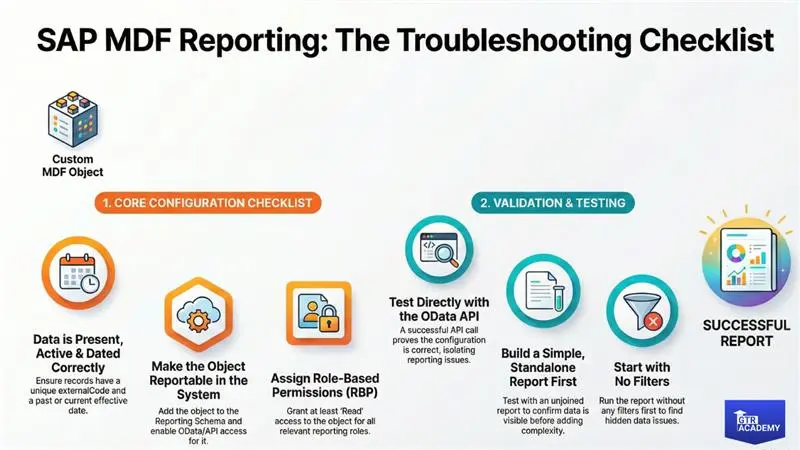
Here is a list of recommendations to make the data from MDF custom objects properly visible in joined reports:
- Validate Associations
Make sure that the MDF object is connected with the correct employee data and that the right identifier (userId or sapPersonId) is being used.
- Add Object to Reporting Schema
Put a custom object in the reportable objects area so that reporting tools can easily access it.
- Enable OData Exposure
Make sure that the object and its attributes are OData API-accessible. Confirm it by testing with /odata/v2/.
- Check RBP Permissions
Provide the custom object read access permission to all roles that will require reporting access.
- Test with Simple Reports First
Create an MDF-only report that will serve as a data availability check before doing a joined report.
- Use Filters Carefully
First, do not apply any filters, then slowly put on effective date or active status filters step by step.
Following this set of tasks HR teams will be able to secure themselves while creating joined reports were, employee data will be merged with MDF custom objects thus allowing more profound insights into workforce trends to be discovered.
Connect With Us: WhatsApp
Quick Takeaway
Joined reports serve the function of linking custom MDF objects with employee data in SAP SuccessFactors. Thanks to the training provided by GTR Academy, you will be proficient in setting, opening and reporting on MDF objects thus keeping your HR analytics on the track of giving crisp insights.

I am a skilled content writer with 5 years of experience creating compelling, audience-focused content across digital platforms. My work blends creativity with strategic communication, helping brands build their voice and connect meaningfully with their readers. I specialize in writing SEO-friendly blogs, website copy, social media content, and long-form articles that are clear, engaging, and optimized for results.
Over the years, I’ve collaborated with diverse industries including technology, lifestyle, finance, education, and e-commerce adapting my writing style to meet each brand’s unique tone and goals. With strong research abilities, attention to detail, and a passion for storytelling, I consistently deliver high-quality content that informs, inspires, and drives engagement.